

Quick Summary
- Shifts HR decisions from guesswork to data-driven foresight.
- Improves hiring, retention, and performance with AI insights.
- Speeds up recruitment with AI resume screening and assessments.
- Predicts turnover and skill gaps early for timely action.
- Supports strategic workforce planning and succession.
- Requires clean data and trained HR staff for effective use.
- The future includes AI handling unstructured data and bias detection.
- Proven to reduce attrition and boost productivity.
Predictive analytics in HR talent management shifts decision-making from hunches to hard data. It lets teams forecast outcomes using real-time and historical workforce data. The impact? Smarter hiring, sharper retention, and better growth paths.
- Models track patterns in turnover, engagement, and skill growth.
- Data-led choices reduce hiring mistakes and surprise resignations.
- Forecasting employee success helps align strategy with talent.
Key insights:
Predictive analytics in HR is about seeing ahead. Not just what happened—but what’s next. It gives HR a new role: forward-thinking strategist, not back-office admin. In a shifting work landscape, workplace policies are evolving fast. They’ll reshape how teams engage and how culture grows.
What Is Predictive Analytics in HR?
Understanding Predictive Analytics in HR
Predictive analytics in HR uses algorithms and machine learning to crunch past data and predict future workforce behavior. It sharpens decisions in hiring, retention, and managing performance. No guesswork. Just data.
How Does HR Data Analytics Work?
It pulls patterns from employee data—tenure, engagement, turnover. For example, if one department shows high exit rates, the model picks up on that. With that knowledge, HR can step in early with a fix.
Used well, predictive analytics in HR gives leaders the edge in workforce planning. It’s not just about reacting. It’s about getting ahead of problems before they start.
Key Applications of Predictive Analytics in HR Talent Management

1. Employee Attrition Prediction
Predictive analytics spots who’s likely to quit—before they do. It uses survey scores, performance trends, and demographics to build attrition models. These models guide HR to act before valuable talent walks.
- Key data:
- Engagement surveys
- Tenure, department, age
- Economic trends and past turnover
This flips the script. Instead of post-exit interviews, companies use AI to hold onto talent.
Smart hiring starts with good data. Predictive analytics—often backed by AI hiring tools—finds patterns between past hires and long-term performance. That means better matches, faster.
2. Talent Analytics in Recruitment
- It looks at:
- Success traits in previous hires
- Personality signals using psycholinguistics
- Gamified tests that show job fit and reduce noise
Using predictive analytics with AI resume screening weeds out the guesswork. It shortlists people who fit the job—and the culture.
3. Other Use Cases
- Succession Planning: Identifies future leaders by watching growth patterns.
- Training Needs: Pinpoints skill gaps early using career path data.
- Team Building: Uses personality data to improve team dynamics.
From hiring to promotions, predictive analytics makes talent strategy smarter, leaner, and faster.
Benefits and Challenges of Implementing Predictive Analytics in HR
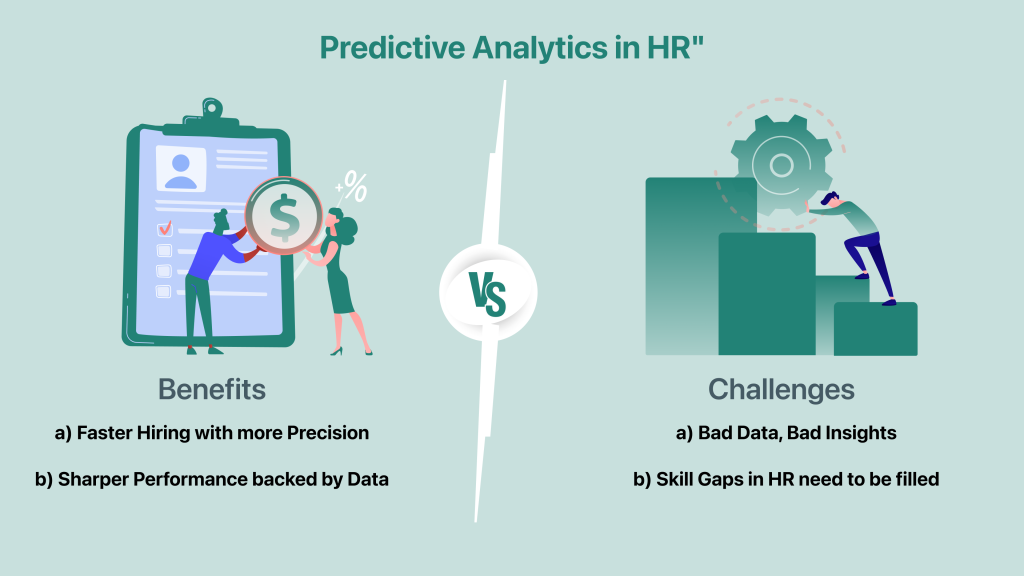
Advantages of Predictive Analytics in HR
- Faster Hiring: AI resume screening speeds up shortlisting by filtering quality candidates fast. Less guesswork, more precision.
- Sharper Performance Management: Spot underperformance trends before they grow. Set focused improvement goals backed by data.
Challenges of Predictive Analytics in HR
- Bad Data, Bad Insights: Garbage in, garbage out. HR must clean and manage data well. Predictive models can’t work with weak inputs.
- Skill Gaps in HR: Teams must learn how to read and act on data. That means training HR pros in analytics—not just tools, but thinking.
Transforming HR into a Strategic Partner with Predictive Analytics
Predictive analytics gives HR a seat at the strategy table. It brings evidence to workforce decisions. Instead of reacting to problems, HR can now spot them coming—and move first.
Making Strategy Data-Driven
- Workforce Planning: Predicts hiring needs. No scrambling, just readiness.
- Talent Growth: Spots high-performers early. Builds pipelines instead of waiting for attrition.
- Retention: Catches risk before it turns into a loss.
Case Studies That Show the Shift
- Company A used engagement surveys and AI resume screening data to predict exits six months early. They cut attrition by 15%. Less rehiring, more savings.
- Company B layered psycholinguistic analysis into recruitment. Their AI hiring tools flagged high-fit candidates. Result: new hires were 20% more productive in year one.
Predictive analytics isn’t hype. It’s how forward-leaning companies already win in talent strategy.
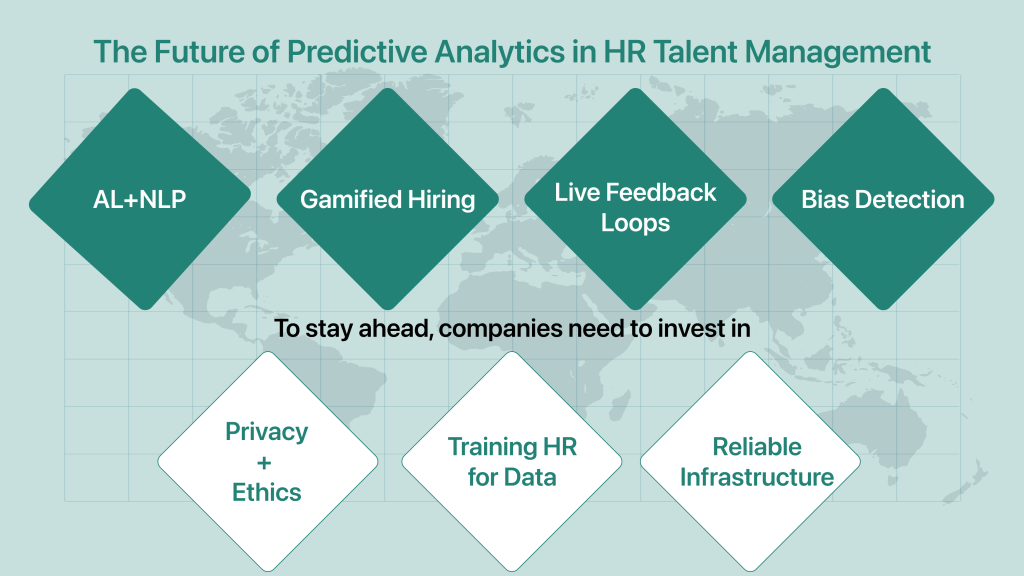
The Future of Predictive Analytics in HR Talent Management
AI resume screening and AI hiring tools are evolving fast. They now pull signals from unstructured data—emails, chat, behavior logs. That means deeper insights into personality, communication, and job fit.
What’s Next?
- AI + NLP: Decodes tone, emotion, and intent. Smarter models. Better predictions.
- Gamified Hiring: Puts candidates in live scenarios. Sees how they think—not just what they say.
- Live Feedback Loops: Real-time sentiment and output tracking. Fix issues fast.
- Bias Detection: AI models flag unfair patterns and adjust automatically.
To stay ahead, companies need to invest in:
- Privacy + Ethics: Don’t cross lines. Respect employee data.
- Training HR for Data: Analytics is a skill, not a dashboard.
- Reliable Infrastructure: Strong data systems are the backbone of smart models.
Predictive analytics in HR is more than a trend. It’s a shift. It changes how companies hire, grow, and lead. And with the rise of AI resume screening and AI hiring tools, talent decisions won’t just be faster—they’ll be smarter.
Analytics won’t just support HR. It’ll redefine it.
About Us
ValueMatrix helps organizations build culturally cohesive teams with AI-powered recruitment and retention strategies. We educate corporate leaders on the importance of involving and encouraging all generations to adopt enterprise values and participate actively to achieve excellence.
Our AI-powered platform transforms talent acquisition with intelligent hiring techniques backed by established psychological frameworks. We partner with HR professionals to conduct unbiased and holistic assessments for aspiring candidates
Key insights.
In conversation with valuematrix.TV, Ajo Jose, CHRO Leader, states,
When we talk about the last five years, the single biggest shift is the move from an experience-based reactive process to data-driven functions. For decades, hiring was based on resumes, gut feelings, and so on. Now organizations see TA as a strategic lever. They are using data and AI not just to fill roles faster, but to analyze applicant success, map future skill gaps, and build more resilient teams. It is actually a shift from evaluating an applicant’s past to analyzing their future prospects.