

“The best workplace is where ideas float, and people feel appreciated and valued”.
This simple tenet underscores the critical role of workplace policies in establishing a positive and productive environment.
In 2025, such policies will take a leap from just compliance to a driving force behind relevant social change.
Today’s businesses realize that a great workplace isn’t just about viability—it’s also about building a more unified and thriving employee future. According to the MHA (Mental Health America) report, 71% of Generation Z and 59% of Millennials are facing the biggest mental dilemma, with the poorest work health scores compared to other generations of workers.
From focusing on mental health and flexible work models to practicing inclusiveness at work, HR policies are reinventing how employees work and connect, which is influencing society entirely. Apart from creating a great work environment, such an approach drives profitability- a win-win for employees and the organization.
This blog talks about the trending workplace practices influencing social change in 2025, how companies adapt to such changes, and how artificial intelligence (AI) can become a catalyst.
1. From Burnout to Balancing Act: Well-being Shift

Employees’ well-being has been widely neglected lately and has become a cliche. With revenge and quiet quitting, organizations prioritize employees’ well-being by addressing underlying issues, like burnout and dissatisfaction, through better communication, appreciation, and support systems. Employees should be dealt with in a flexible and humane way, not just paid. It yields the desired productivity.
Today, organizations plan to create a brain-friendly environment where workers feel valued and supported for sustainable well-being.
Policies to Implement
To establish holistic well-being, organizations are implementing these policies:
- Flexible Work Model: Let employees select their work hours. This will strike the right work-life balance, resulting in a stress-free life with improved job satisfaction.
- Mental Health Facilities: Policies that offer mental health support, like counseling or mental health consultation, help them be fearless in their voices.
- Childcare Help: These facilities alleviate the stress of working parents, encouraging them to deliver their best at the workplace.
AI Contribution
Here is how AI can promote holistic well-being in the workforce:
- Personalized Well-being Programs: AI-driven systems can define customized health programs that focus on specific challenges after assessing the employment history.
- Mental Health Tracking: Continuous real-time assessments of employee mental health help organizations initiate actionable measures, including surveys or emotional analysis using AI.
- Flexible Schedules for the Modern Maverick: Through artificial intelligence, redefining work schedules given their specific preferences and work natures ensures a better work-life balance.
Using AI, organizations can build a workspace where the 360-degree growth of their workers becomes the top priority.
2. Empathetic Leadership
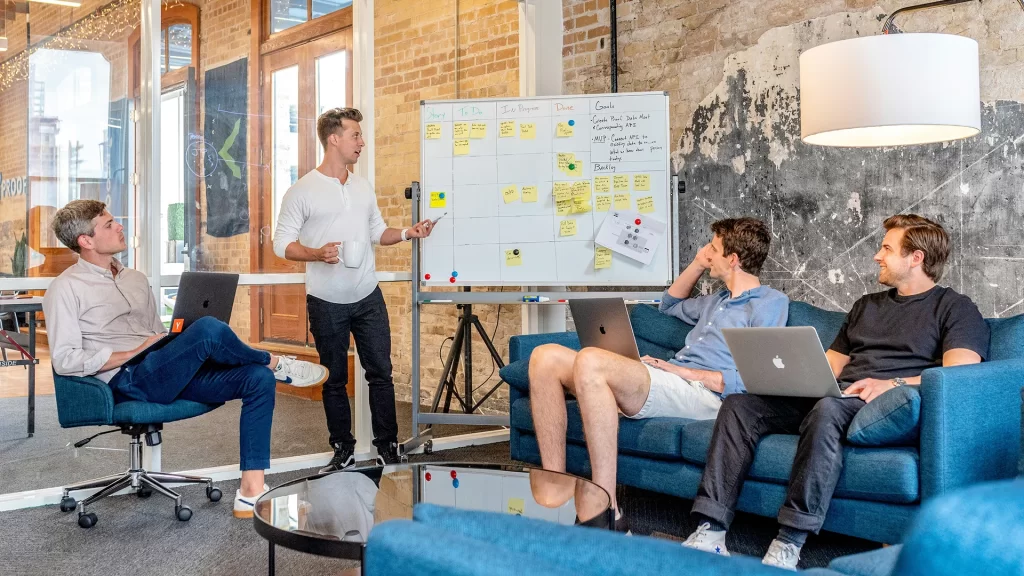
The future workforce demands empathetic leadership, traversing from authoritative leadership.
No more relying on micromanagement, command, and compliance. Empathetic leadership is becoming the essence of the workplace culture and is expected to grow in importance in 2025.
Today, leadership needs to be understanding, approachable, and collaborative. Leaders should listen and be compassionate about their teams’ emotions.
Recent research published in Proceedings of the National Academy of Sciences reported that candidates felt more valued receiving AI-generated messages than human-generated ones, which offered more emotional support.
Besides hitting targets, leaders nurture bonding with team members that impact society.
AI Creating Compassionate Leaders
To nurture empathetic leadership, AI can be a real aid:
- Emotional Intelligence-based Leadership Training: Companies can develop AI-driven training material to infuse emotional intelligence in their leaders for compassionate and effective leadership. By assessing feedback and performance data, AI delivers targeted exercises to improve empathy and team-building skills.
- Mentorship Programs: AI helps assign aspiring leaders to matching professional mentors who can complement their skill sets, assessing their aptitudes, preferences, and career goals. This not only builds meaningful bonds but also helps drive their career growth.
Organizations can develop a caring and compassionate leadership culture, prioritizing empathy while promoting engagement and productivity. Aligning empathetic leadership with updated technology helps organizations address their customers’ ever-changing demands while contributing to societal well-being.
AI’s Role
AI works as a catalyst in elevating the potential of HR in performing these duties:
- Policy Integration: AI tools analyze how policy influences employee performance, helping HR to make data-supported suggestions for policy amendments to shape company culture. As per Gartner, 42% of CHROs plan to implement AI for HR operations, including policy management tasks.
- Data Analytics: 79% of industry experts admit that technologies like automation and AI will be instrumental in their success in the coming years. AI-based analytics tools run silos of employee data to study workforce trends, needs, sentiments and behaviors, enabling HR to make proactive decisions for employee resilience and engagement.
- Improve Employee Experience: AI personalizes employee experiences with customized training, career roadmaps, and adaptive feedback, while ESS Hub offers access to HR information handy to employees.
By leveraging AI initiatives, HR can transition smoothly as a strategic associate, promoting organizational change while nurturing more engaged and productive workers.
3. The Widening Expertise Shortage

Organizations face a skills gap due to a large workforce nearing retirement and technology disruption. There is a constant need to upskill and learn the evolving technologies like AI and automation, which are transforming the workforce ecosystem.
In 2025, a significant proportion of the global workforce will leave, depleting organizations of their most experienced workers. It’s time to bridge this skill gap through proper talent acquisition and retention.
In conversation with ValueMatrix, Navin Patel, Global Head of TA at Affine, offered a grounded perspective:
“It’s more of a hype, I would say, than reality. Recruiters are there, but I think like any human, people require to be taught about how AI can help them. Just telling them this is AI and go and use it — that will not help.”
This insight directly addresses a core challenge: AI readiness is not about tool availability — it’s about capability enablement.
AI Contribution
Yes, AI can be the savior once again and help reduce the skills gap through retirements and technological disruptions:
- Reskilling and Upskilling: 34% of CHROs are drafting development plans to upskill the workforce to use AI in their jobs, thus helping bridge expertise gaps. AI-driven training systems offer personalized learning modules that add to employee skills.
- Strategic AI Organization: Gartner recommends that Chief Data and Analytics Officers (CDAOs) should come forward to recognize and bridge AI roles by upskilling or recruiting the right brains. It includes building multidisciplinary groups and tweaking the company framework to advanced AI levels.
- AI Readiness: Gartner research suggests that while multiple organizations plan to embrace AI, implementation is slow due to skills gaps. CIOs can beat these challenges by setting clear AI visions considering evolving technology options.
In addition, the absence of hands-on training is also a challenge. According to Gartner’s survey of 3,375 employees, six in 10 admitted they don’t get the on-the-job training required to perform their duties effectively.
To overcome this threat to the skill pipeline, organizations should adopt collective intelligence: technology-driven expertise so that knowledge can seamlessly flow between experts with skills and new employees.
4. AI’s Onboarding as an Auxiliary Force
Here is the Hype Cycle for organizations to understand emerging technologies, track risks and opportunities, for make ideal investment choices.
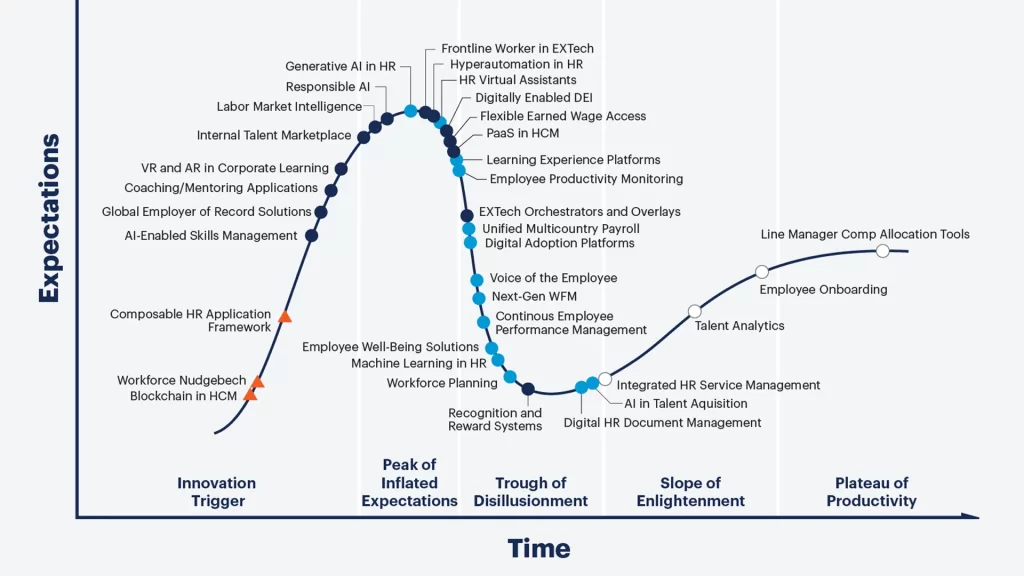
Source: Gartner
Here are ways AI can help businesses establish conducive workplaces.
- Automation and Administrative Tasks
Improved Efficiency by Automation: AI can liberate CHROs to focus on critical business initiatives by automating repetitive tasks like document generation and administrative functions. As per a Gartner survey (same survey stated above), 42% of CHROs use AI for daily routine tasks and document development.
Improved Productivity: Automating repetitive work improves productivity by up to 30%, as AI does tasks that need human resources earlier.
- Informed Decision Making and Talent Management
Data-Driven Insights: HR can make better hiring decisions with data-supported insights from AI. Gartner suggests that AI will revolutionize personalized L&D by delivering customized learning experiences to the workforce, given their career goals, challenges, and personal preferences. This concept addresses diverse employee requirements, promoting engagement and effectiveness in training modules.
Future AI Challenges and Remedies
By 2025, almost 60% of businesses will implement a responsible AI system for their HR operations and deliver better employee experience and trust, as per Gartner, Inc.
While AI is rewriting HR policies and offering actionable intelligence for an inclusive work culture, the associated challenges are still unfolding. AI is as unbiased as it’s fed with data; hence, it must be diverse. We should ensure all data sets imply an impartial and ethical approach while feeding AI tools.
In addition, data breaches are a threat. By fusing technology with ethical values, companies can build a viable culture where workers feel valued and trusted. This drives resilience and a future-ready workplace.
Inclusive Workplaces Changing Societal Norms
Nonetheless, workplace policies in 2025 will change the entire social ecosystem. The workplace scenario has flipped from the traditional pyramid system of HR to entirely synergistic cultures, prioritizing employee well-being and welcoming and warm workstations to turn to for a fair, connected, and friendly environment.
With capable HR powered by AI, organizations are well equipped to face more significant challenges, like an AI-backed workforce and dynamic regulatory codes.
In the tapestry of societal growth, workplace policy is gaining substantial ground. By 2025, they will become the driving force, weaving our desired future. As the old proverb says, ‘The best time to plant a tree was 20 years ago. The second best time is now.’ We are sowing seeds of change today, within the fertile ground of our workplaces.
In 2025, organizations expect to create an employee experience that echoes beyond compliance, where corporate policies are proactive forces for social good.
About us
ValueMatrix helps organizations build culturally cohesive teams with AI-powered recruitment and retention strategies. We educate corporate leaders on the need to involve and encourage all generations to adapt to enterprise values and participate actively to gain excellence.
Our AI-powered platform transforms talent acquisition with intelligent hiring techniques backed by established psychological frameworks. We partner with HR professionals to conduct unbiased and holistic assessments for aspiring candidates.