
Table of contents
- How has AI changed the recruitment landscape?
- How does AI in talent management drive candidate engagement?
- Rise of Virtual Coaches and Mentors in driving candidate engagement
- Reducing human Bias in hiring to drive engagement
- Gamified skill assessments and psychometric evaluations
- How do behaviour-based games and psychological evaluations help in reducing bias?
- Employee sentiment analysis in talent management
- Transforming employee experience
- Conclusion: The Road Ahead
The history of AI in talent management is brief. It started with predictive analytics in its most primitive form. The data sets were too small to be meaningful; it could tell you a handful of statistics about employees, like performance ratings given by managers and training completion rates. Only a few big companies with deep pockets, like IBM and Microsoft, could afford to experiment with it.
Cut to 2025, AI talent management technology has come a long way. It has gone beyond Applicant Tracking systems or Resume Screening. The next generation of AI technology in the hiring space will exceed everyone’s wildest imaginations.
The generative AI market in talent management is projected to exceed $1.7 billion by 2032. More than 50% of this expected value is related to recruiting and hiring technologies. While the technology helps hiring managers to scout high-quality talent by scaling up their outreach and engagement, new generative AI is also helping job seekers land job opportunities by prepping them for interviews, optimizing their resumes, and finding culture-fit companies.
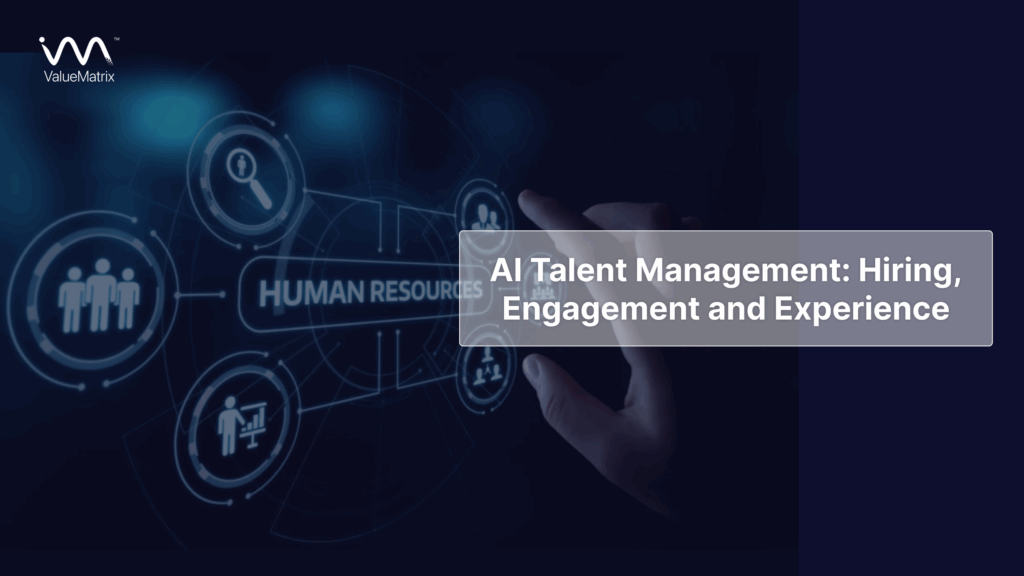
Three aspects of AI Talent Management where you see the most impact are Recruitment, Engagement, and Employee Experience.
How has AI changed the recruitment landscape?
Gone are the days when headhunters kept a fat Rolodex full of names they were poaching.. Recruitment has become far more sophisticated than cold calling. Here is how AI is changing the Recruitment landscape.
Reskilling
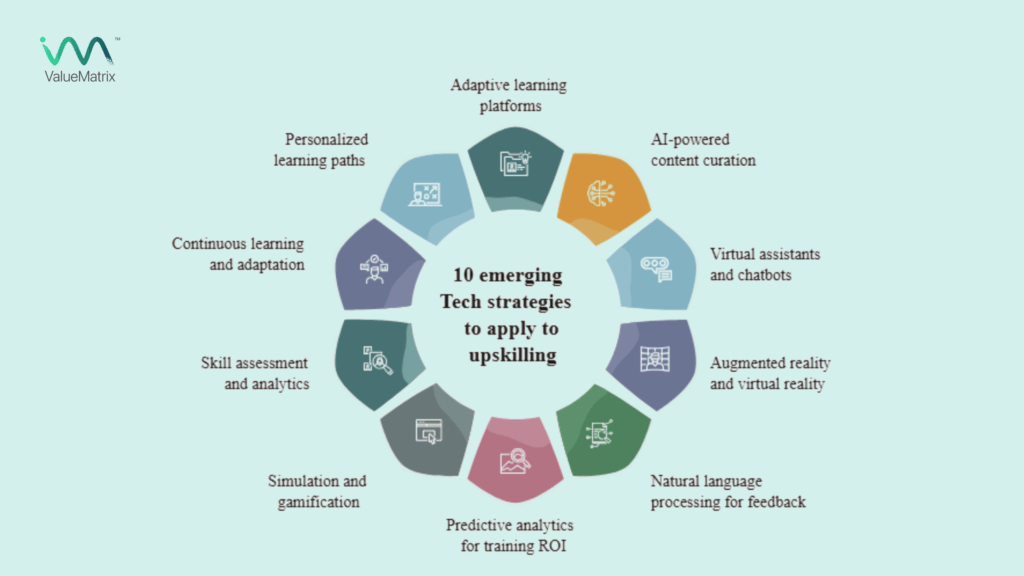
Companies are undergoing an AI metamorphosis, and their business models are evolving to meet changing needs, which means that many roles that existed before the AI revolution will become obsolete. But that doesn’t mean layoffs.
If your role is rendered obsolete by AI, you can always acquire a new set of skills to either stay relevant in your company or stay afloat in the job market.
Here’s how AI can help old dogs learn new tricks
The biggest challenge for organizations in these changing times is to recognize the skills that’ll map to the jobs of tomorrow. This requires evaluating the present skills of the employees, deep researching the skills for the future market, and creating a framework to connect the dots between the two.
You could imagine the gargantuan task it will be for companies without the help of AI.
AI could design a reskilling course that employees can undergo in their own time to enhance their skills and advance their careers through more personalized and targeted training.
Artificial Intelligence can also identify competency gaps, recommend new skills, and create a tailored learning path for the employees.
AI can also read the market and create programs that are highly valued by employers.
Ways AI can help you reskill
- Skill assessment and analytics
An AI talent management software can assess employees’ profiles and identify the important skill sets the organization will need for the future. AI can then help the CHRO’s team identify the gaps between the workforce’s present skills and the skills required for the future.
- Personalized Learning Paths
AI can also monitor changes in the interests of employees and modify their learning recommendations accordingly. AI can also adjust the difficulty level of learning content to an employee’s capability through the material. This ensures that they’re being challenged without burning out. The goal is to prevent boredom while encouraging engagement.
- Virtual assistants and chatbots
AI virtual assistants and chatbots can go from curating personalized content to sending weekly quizzes, assessments, and surveys in a jiffy. Chatbots can also give feedback, coaching, and encouragement to employees on their performance.
- Predictive analytics for training ROI
Virtual reality lets people learn in entirely digital environments. While AI is what gives employees the insights, recommendations, and actions for training, it’s channels such as AR and VR that can help make the material and learning experience more impactful.
Internal mobility
After reskilling the workforce to suit the future needs of the organisation, the next important step to cover is internal mobility.
Your reskilled employees will not go back to their previous roles; they will undertake new tasks and responsibilities, which means reshuffling them to new positions. You can think of internal mobility as the next piece of the puzzle after reskilling.
With the attrition surging worldwide, providing internal mobility to employees is a need of the hour. The cost of replacing an individual employee is approximately twice the employee’s salary.
That means losing a settled employee with an annual salary of $80,000 can cost the organization as much as $160,000.
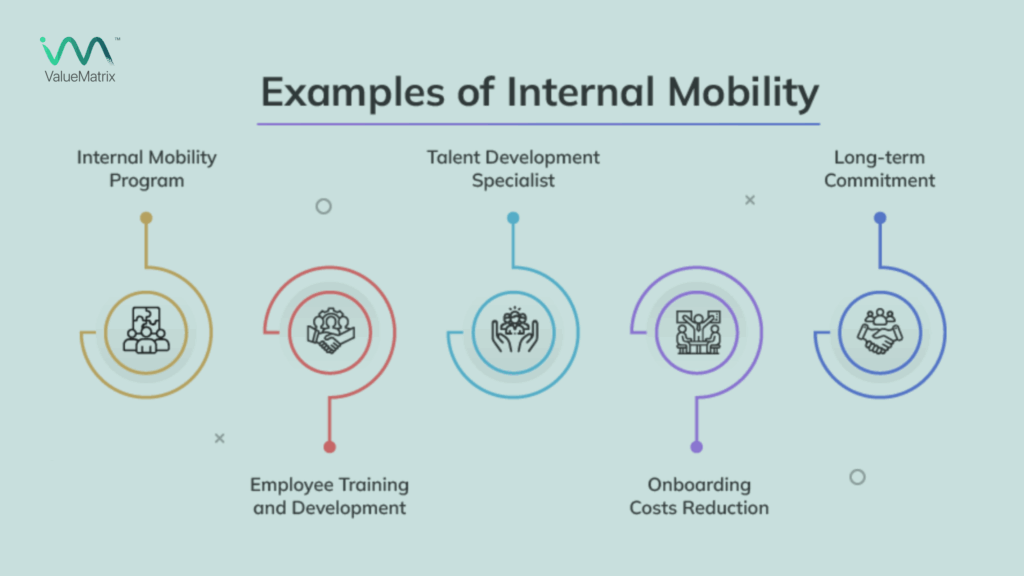
Internal mobility not only helps you save dollars on new hiring, but it also helps you save precious time you would otherwise spend on recruiting and training new talent.
Plus, internal mobility not just boosts retention, it boosts your employees’ morale too.
LinkedIn’s Workforce Learning Report found that 94% of workers said they’d not leave their company if their employer invested in their careers. This proves that when you provide growth opportunities to your employees through internal mobility, you not only elevate the careers of your employees but also boost your retention.
How does AI help a company boost its internal mobility?
- Unveiling Hidden Potential
AI algorithms parse reams of your employee data, which includes their past performance reviews, project contributions, and internal communications, and identify their hidden skills and talents that might not be too apparent on a resume.
- Predictive Talent Matching
AI has analytical prowess to predict organizational needs of the future; this will buy your HR the time it needs to develop its workforce accordingly. It also marks employees with the potential to develop skills critical for upcoming projects, companies will undertake in the future, new business ventures, or emerging technologies, so that the organization can invest in training and mentorship programs to ensure that the pool of internal talent is ready when the time comes.
For example, AI could spot someone with a strong analytical mind and a knack for data visualization, and pick him for training in data science to nudge them towards his natural talent.
- Personalized Learning Journeys
AI can also give tailored recommendations to each employee based on their skill level and career aspirations. AI talent management platforms have the potential to even suggest mentorship opportunities, or they can tell employees to participate in specific projects to help them build a roadmap from their current skill set and their desired career path.
For example, AI can recommend an employee who likes marketing to participate in a social media marketing project, where he can gain valuable experience and also get a first-hand on-the-job experience.
- Building Dynamic Teams
AI can analyze not just individual skills but also study team dynamics. It considers factors like primary, complementary, and adjacent skills, and recommends a team make-up that will be very high-performing and collaborative.
Workforce Planning
Transforming workforce planning for human resources managers.
AI workforce planning uses data and algorithms to forecast talent needs. What it does is identify skills gaps, optimize scheduling, and allow HR to plan ahead of time and hedge against any shortfalls that might arise in the future.
Leveraging AI for Strategic Workforce Development
AI talent forecasting works by screening your company’s historical data and predicting future hiring needs. The system analyzes patterns like the number of people you typically hire each quarter, departments with the highest, and the number of people who leave the company each quarter. It then looks at their future plans, like product launches, entry into new markets, etc., and makes an educated guess on the type of skills and workforce the company will need to fulfill those future plans.
The technology even identifies the skills that are not widely available among your employees and directs their hiring efforts towards recruiting people with those skills. It can even project different growth rates of the companies and their consequences.
So does this information help the HR?
HR managers can start sourcing candidates for hard-to-fill roles years in advance, before the shortfall season hits them, they can dissuade existing employees from leaving the organisation by providing better incentives or challenges, and ensure the organization never faces sudden talent shortages that could derail business objectives.
Conducting Skill Gap Analysis with AI
AI examines employee skills data and matches it to current and emerging business needs.
AI is good at identifying existing skills that can be leveraged in the future, finding skills gaps that need to be bridged, and suggesting optimal training programs required to bridge these gaps.
Optimizing Workforce Scheduling with AI
AI scheduling programs can also automate staff schedules and simultaneously optimize for factors such as employee availability and preferences, Business demand fluctuations, and productivity patterns. The result is delegating manual work to AI and reducing administrative workload for managers. This buys them more time for strategic work.
Tracking and Improving Employee Engagement
AI tracks communications, surveys, and emails across the organization with the help of Natural Language Processing, and assigns a score. These insights allow HR to learn what engages employees and what their pain points are.
How does AI in talent management drive candidate engagement?
Candidate Engagement refers to the process of creating an interactive process for job applicants, which is transparent, positive, and engaging. Where there is an open loop of feedback and queries, and the candidates don’t feel ignored.
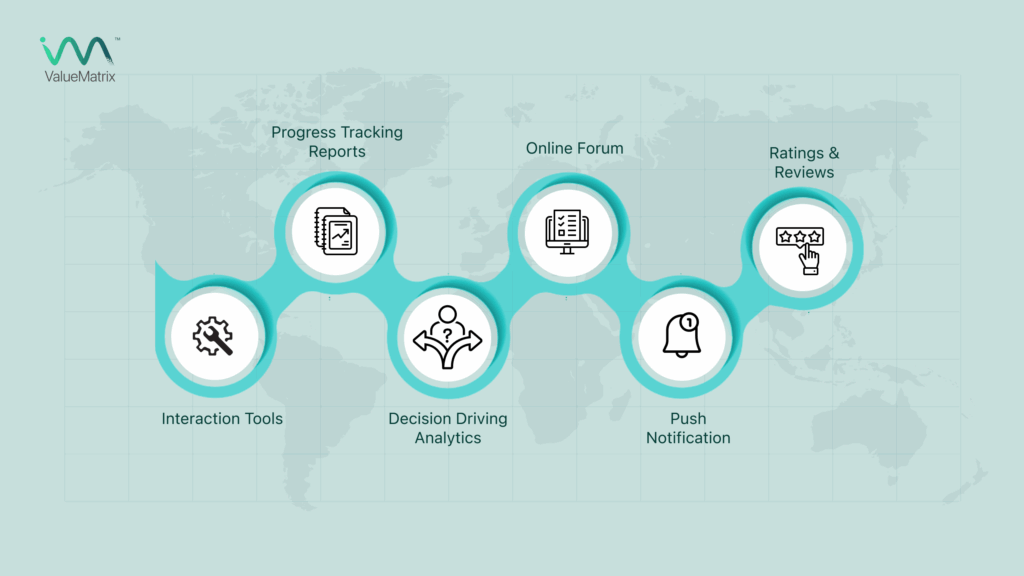
Rise of Virtual Coaches and Mentors in driving candidate engagement
As discussed previously, Virtual Coaches are like your personal job counselors who work without taking a day off. Your AI mentor can take a stock of your profile, like your current role, skills, and career aspirations, and then draft a game plan that’ll be exclusive to you.
Thus, AI mentors help create every employee’s unique journey to their goals.
Some advantages AI mentorship has over humans
- Availability, Scalability, and Personalization: AI shines in terms of accessibility. It’s available 24/7, scalable to thousands of users at once, and personalizes feedback based on a wide array of data inputs. A human coach, even at their best, has time and cognitive limitations.
This is like your personal life coach, living in your phone round the clock, available to handhold you whenever you need it. The best part? An AI mentor doesn’t have off days.
- Data-Driven vs. Intuitive Guidance: AI mentors work with big data, like pattern recognition and statistical models. That’s why they can offer suggestions faster than any human could. The best part? Analytics doesn’t forget anything about you; it remembers every input about you it has scanned from your past employment records, work engagement data, and skill assessments.
So you know the advice given is completely immune to emotions, recency bias, or unreliable human memory.
Reducing human Bias in hiring to drive engagement
Traditional hiring has always been vulnerable to preferences. People always play favourites, whether they accept it or not. Hiring was also not untouched by this human flaw.
Here are a few types of unconscious bias that govern our behaviour towards others:
- Affinity bias: when someone favors another person because they share certain characteristics. This is the most common type of unconscious bias in the recruitment sector.
- Beauty bias: This bias makes one believe that attractive people will make better workers.
- Gender bias: Gender bias is when one believes that one gender is inherently better than another.
- Halo bias: This bias makes you look at only the positive features of a person while ignoring their negative traits.
- Horns bias: This is the opposite of halo bias; horns bias means focusing too much on one’s negative aspect, while ignoring positive characteristics.
Removing Bias In Job Descriptions
Bias can creep into the recruitment process as early as creating the job description. An employer or recruiter can write a job description. And that can discourage certain groups of people from applying altogether.
AI talent management tools can remove slanted language in job adverts, job descriptions, emails, and employer branding.
For example, words like “Dynamic” and ” Bold” might scare shy people away from applying.
- Assessing workforce diversity
Some tools can help you find blind spots in your workforce diversity by reading your demographics metrics.
For example, it can figure out if one particular zip code or university is being overly represented in the workforce and shake things a bit.
- Screening interviews
In addition to screening resumes to identify viable candidates early in the recruitment process, AI can now conduct early interview rounds, further eliminating the potential for bias. These are usually text-based chat-style apps that can identify various characteristics of candidates beyond basic keyword analysis. Tools can go much deeper to assess suitability for roles based on less overt characteristics and responses to interview questions.
- Candidate AI Usage in Job Applications
Alongside AI usage on the recruiter side of the hiring process, we’re increasingly seeing candidates using AI in talent management to gain a tactical advantage by using AI to accentuate their advantages. Candidates using
AI talent management tools to create a resume are becoming increasingly commonplace, with numerous AI tools now able to make a full resume based on a few simple text inputs.
AI tools can also be used by candidates to clean up their digital footprint.
There are various resume analysis tools that are now available for candidates to ensure their resume gives them the best chance of being selected based on their achievements, experience, and skills, and not by gaming the keyword requirements.
Gamified skill assessments and psychometric evaluations
These are games based on behavioral science where you sit in front of a screen and play time-restricted games that assess you on human qualities like greed, decision-making, and risk-taking under pressure. These games evaluate how you handle “Fork-in-the-road” situations, meaning if there are two paths in front of you, which one will you choose? And based on your choice, it gives out a detailed psychological roadmap of the candidate.
Predictive Analytics algorithms scan your previous records, like performance reviews, KPIs, and project completion rates, etc., and predict their future success in the company. It runs their past data through ML algorithms like Decision trees, Random forests, and Neural networks to accurately forecast a candidate’s future performance in the company.
How do behaviour-based games and psychological evaluations help in reducing bias?
They record and evaluate your real-life reactions to the situations on the screen, like mouse clicks and facial expressions, and do not factor in any kind of identifiers, like your school or familial background. It goes deep in your psyche and does not deal with the superficial.
These behaviour-based evaluations have no parameters to judge you on wealth and status markers and solely focus on your real-time responses to moral and ethical conundrums that you might face at your work.
Employee sentiment analysis in talent management
AI-powered Sentiment analysis can dive deep into an employee’s mind by analyzing their written words and decoding their intentions. Sentiment analysis has the power to offer a deeper view of a person’s mind.
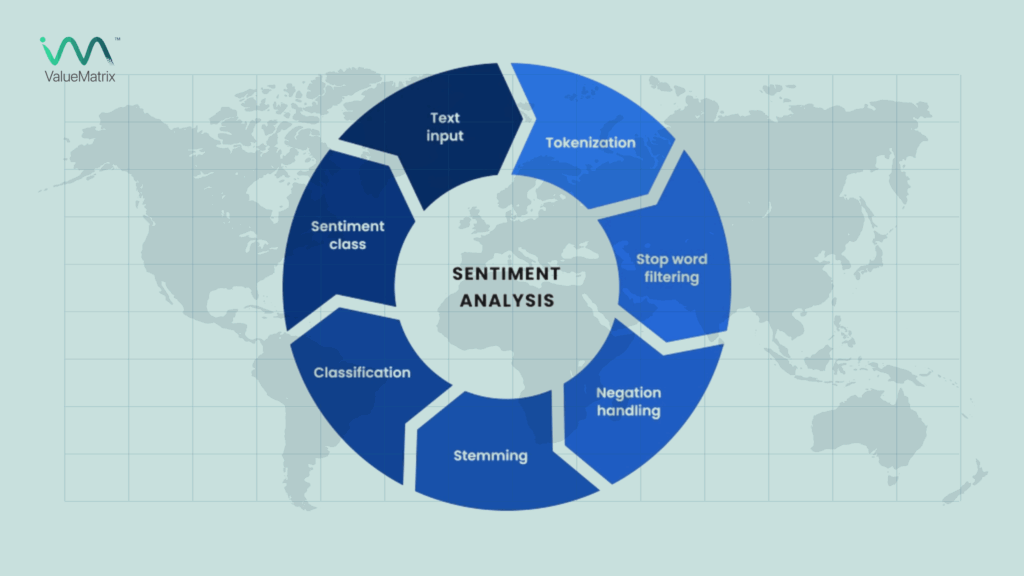
Here are some of the ways Sentiment Analysis helps you hire better employees.
Candidate Screening:
- Resume and Cover Letter Analysis
The algorithm parses every written word carefully. And looks for language that might seem confrontational, aggressive, dismissive, or collaboration-averse. Likewise, it also scans for positive language traits such as engaging, enthusiastic, or conflict-averse. When it has done both, it presents a full report card of a candidate’s personality.
- Social Media Insights
Analyzing a candidate’s social media profiles can help algorithms see a candidate’s online behaviour outside of work. Everyone can turn up their professionalism at work, but what about when they feel they aren’t being watched?
Feedback Analysis:
Sentiment analysis can also help identify pain points and improve the overall candidate experience.
Transforming employee experience
A few ways AI has been impactful in transforming Employee experience after onboarding.
Here’s how AI talent management is driving career development
- Clear Career Trajectories
AI maps progression based on real data, showing how professionals in similar roles have advanced.
- Targeted Internal Job Opportunities
AI proactively recommends personalized job openings and projects aligned with skills and ambitions.
- Leadership Visibility & Project Alignment
When employees signal interest in a career path, AI alerts key leaders to involve them in relevant projects or programs.
AI Talent Management Tools for Personalized Learning
These personalized AI talent management career tools offer tailored, real-time learning paths that evolve and grow with the employees.
- Real-Time Skills Assessment & Development: Employees can learn about their skill gaps and receive customized training recommendations based on areas they need to improve.
- Adaptive Learning Journeys: Instead of static plans, AI can give you hands-on experience of working in the real world.
- Industry Intelligence: You can get the latest news of your industry before everyone else.
How is adaptive AI in talent management learning enhancing employee experience?
Adaptive learning is also known as personalized learning. It has changed corporate training forever by personalising the learning experience for the employees.
How Does Adaptive Learning Work?
Adaptive learning platforms watch your progress through your online assessments very closely. Once you’re finished, it reviews your performance and gives you feedback based on how you performed. It tells you things you did well, things you can improve, and suggests the next modules based on your score.
These platforms give analytics like employee progress, engagement levels, and performance metrics to present a full picture of an employee’s development.
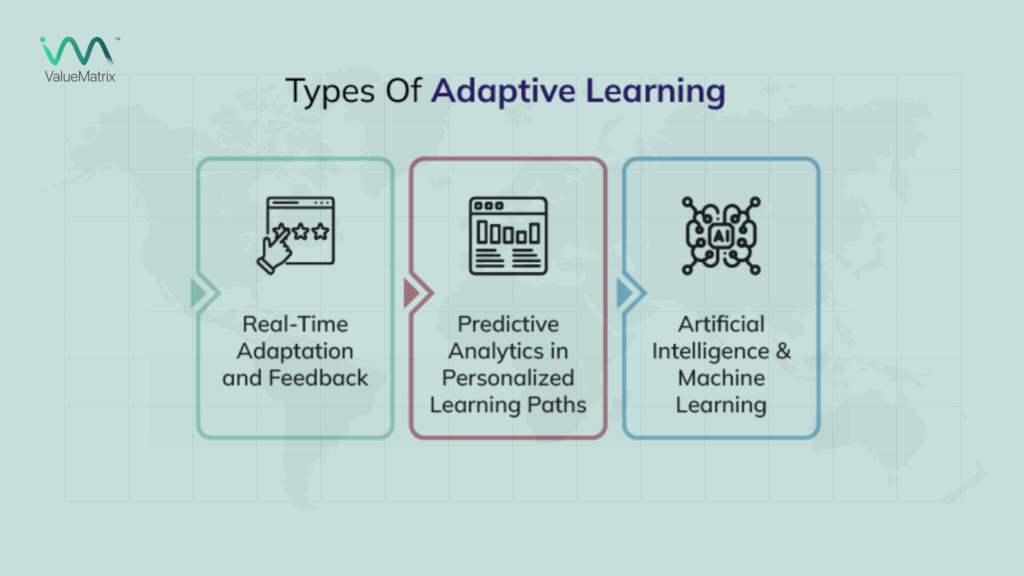
Different Types of Adaptive Learning with Examples
There are many types of such learning platforms. Each one has its unique set of features.
- Content-based platforms
These courses can adjust in real time to match the learner’s skill and knowledge level.
- Assessment Driven Platforms
These platforms use adaptive assessments to identify where an employee stands in their knowledge and skills. And based on the results, it can recommend training materials especially catered to them.
Challenges and Ethical Considerations of AI in the Talent Management Space
Is AI decision-making transparent?
Here are some of the ethical challenges companies are facing.
The black box problem
The black box problem is the lack of transparency in the AI algorithms. Most of the time, recruiters are unaware of the process an algorithm uses to randomly select a candidate from a pool. This becomes a huge problem in fixing bias because you can’t fix what you don’t understand.
Bias In AI Recruitment
Fixing bias in AI recruitment is a never-ending effort. Companies should be transparent and detail every reasoning or recommendation their platform makes.
Likewise, even candidates deserve to know the reasoning these tools make.
Job seekers are more likely to apply to companies that are willing to explain their hiring decisions.
The Digital Exclusion Problem
Another problem is that sometimes, we can’t see which data is omitted from an AI’s black box. While AI systems aim to cast a wider net for talent, these tools sometimes leave certain candidates behind. AI’s training data often favors candidates with a lot of digital footprints, i.e., candidates who are often younger, tech-savvy individuals.
People who don’t have a huge online footprint could be at a disadvantage.
How can recruiters be efficient empaths?
Even with AI, recruiters have a lot on their plates. They have to form a personal connection with the candidates while also keeping an eye on the clerical, mundane tasks. Sometimes, they can be stretched too thin trying to maintain the hiring rate.
This is where AI comes in handy. AI offers automation of mundane tasks while the recruiters can focus on engaging with the candidates and making them feel like they’re not talking to bots.
Conclusion: The Road Ahead
AI can’t doesn’t have the human ability of nuance and emotional intelligence. We live in a data-driven world, but finding a culture-fit employee still depends on the discerning human eye. A person is beyond the sum of data points. A recruiter brings years of experience in talking to candidates from all walks of life to figure out the best candidates for the organization.
Creating A Better Candidate Experience
With AI, acquisition teams can ensure consistency and personalization at scale.
For instance, chatbots can answer candidate queries 24/7. These automated communication workflows can provide updates at every stage, reducing the anxiety or frustration that can come with the job search.
Humans + AI = The Future of Talent Management?
AI should be seen as an opportunity to reinvent recruitment with the help of human touch, as opposed to looking at it as an adversary. The challenge for the future remains delineating tasks between AI and humans and figuring out who does what best.
Allowing AI to handle high-volume, mundane tasks gives space to recruiters to focus on the big picture and strategize for the future. Recruiters must learn how to crunch numbers and interpret data. Data is nothing but numbers on a screen; it’s humans who give meaning to it.
FAQs
There are many subscription-based models that you can adopt if you have a small to mid-sized company. When you’re scaling up, you can go for complete integration of AI tools in your Human Resource Information System, but until then, it is better to integrate AI as per your needs as opposed to giving in to peer pressure.
AR/VR have become popular tools for virtual office tours and team introductions, especially for employees who work in a remote setting. They have also been popular in fun meetups and playdates where remote employees can join these events from their homes without missing out on the fun.
Yes, and it’s increasingly necessary for retaining talent and building holistic leaders. Success requires intentional programs like rotation initiatives, internal opportunity marketplaces, and leadership incentives that reward developing talent organization-wide rather than hoarding it within silos.
About Us
ValueMatrixI is an AI-powered talent intelligence platform that helps companies hire better, faster, and without bias. We go beyond resumes to assess skills, behavioral traits, and cultural fit using advanced AI and proven psychological frameworks. Our platform delivers data-driven insights that improve hiring accuracy, reduce time-to-hire, and elevate candidate quality.
ValueMatrix AI enables hiring teams to make confident hiring decisions and build high-performing teams at scale.