
Table of contents
- Defining Workplace Personas
- What Role Do Workplace Personas Play in Determining Success or Failure? 🤔
- What is Meant by Workplace Personas in a Team Environment? 👥
- How Do Workplace Personas Influence Team Success? 🌟
- Which Personas Drive Team Success? 🚀
- Leveraging AI for Persona-Driven Hiring: The ValueMatrix Advantage
- FAQs on Workplace Personas ❓
Understanding and strategically managing workplace personas is vital for business growth and sustainable team excellence. In every organization, we find different personalities, some of whom inspire team success while others affect productivity to a great extent. This blog looks at different workplace personas and how they affect team performance.
Don’t we wonder how some teams succeed effortlessly, while others encounter problems each day? It might come down to the different workplace personas within these teams. Personas are the natural personalities of people in relation to their habits, behaviors, and working methods. By understanding and fine-tuning these personalities, teams can enhance productivity and create a harmonious workplace.
Defining Workplace Personas
The concept of workplace personas refers to the different personality characteristics and behavioral patterns which team members bring to their work environment. People naturally adopt specific roles and behavioral patterns when working together on group projects and team-based initiatives.
Workplace personas describe the different personality types which team members bring to their work environment. The different members of a team function as distinct characters which make up the workplace personas. The team achieves its overall dynamics through the distinct combination of traits and strengths which each persona brings to the group.
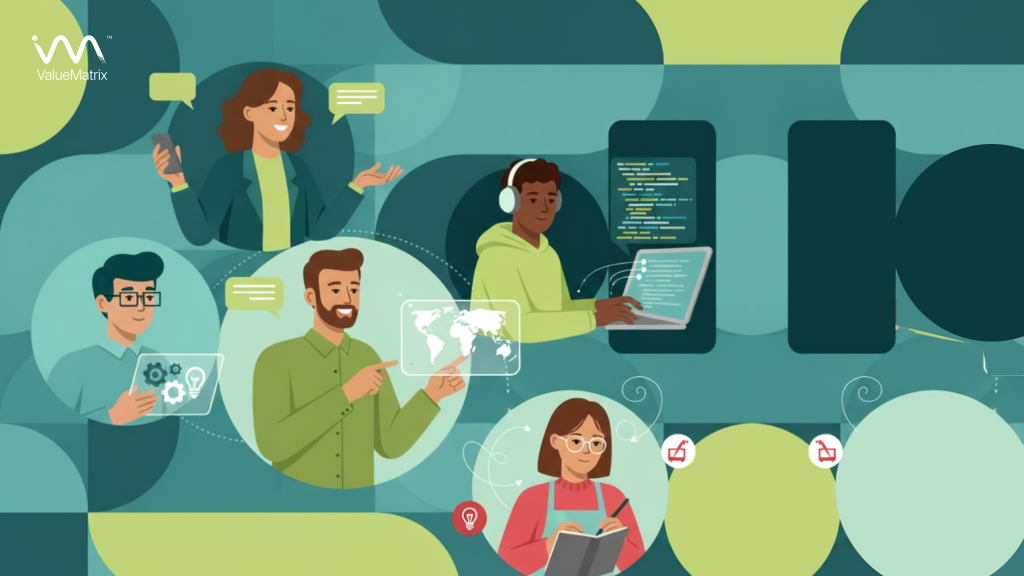
The workplace contains five main personas:
- The Leader takes charge of projects because they possess charisma and confidence while making decisions for the team.
- The Innovator brings creative ideas to the table through their constant stream of new concepts.
- The Communicator persona excels at teamwork because they maintain excellent collaboration skills.
- The Analyst persona relies on data analysis to provide factual information which keeps the team focused on concrete evidence.
- The Implementer focuses on executing plans through practical action while converting concepts into tangible results.
Each team member contributes essential elements through their unique persona which helps explain workplace communication patterns. Team performance reaches its peak when different team members’ strengths receive proper recognition and work together in harmony.
What Role Do Workplace Personas Play in Determining Success or Failure? 🤔
Workplace personas shape the fabric of any organization, influencing communication, morale, and results. According to recent studies organizations that actively recognize and manage team dynamics personas are 33% more likely to report above-average productivity.
However, not all workplace personas contribute positively. When disruptive personas dominate, companies face increased turnover, conflicts, and waning morale. Workforce planning and effective team building now depend as much on understanding these personas as on skills and experience. Research shows that teams with a high diversity of positive employee personality traits consistently outperform those with unchecked disruptive traits.
What is Meant by Workplace Personas in a Team Environment? 👥
A “workplace persona” is not a job title. It is a combination of behaviors and attitudes that are shaped by the company culture and leadership, as well as group dynamics.
- Personas evolve as organizations evolve.
- In hiring, a clear understanding of HR personas for teams helps leaders build balanced, resilient teams.
- Organizational psychology in teams suggests that when personas are recognized early, they can be harnessed for targeted coaching and conflict prevention.
By correctly mapping these personas, managers can harness the energies in the team efficiently and create a forward-looking path towards success.
How Do Workplace Personas Influence Team Success? 🌟
In a successful team, each persona plays a crucial role. Let us take a look at how these personas work together to drive success:
1. Different Perspectives: Different personas mean different perspectives. They lead to innovation and out-of-the-box thinking among the team members.
2. Balanced Skill Sets: Each persona brings in a set of diverse skills, and this can help teams achieve a proper balance. For instance, one person’s weakness is counterbalanced by another’s strength.
3. Better Communication: Information sharing is also enhanced between the communicators and listeners in the team. This creates an environment where feedback flows freely.
4. Improved Collaboration: Teams can achieve improved collaboration as team members notice the contributions of their colleagues. It also enhances trust and reliability inside the team.
5. Higher Productivity: When team roles are assigned based on persona strengths, productivity increases. It also leads to smoother workflows as everyone is focused on tasks aligned with their natural abilities.
On the other hand, workplace personas can sometimes hamper team success. When certain personas dominate, it can create friction and tension. A few examples include:
- Conflict of Ideas: Too many leaders in one team can cause ego hassles and clash of ideas, leading to difficulties in decision-making.
- Lack of Communication: If communicators are not present or active, there can be miscommunications, which can hamper good teamwork.
- Imbalance in Contributions: Basing contributions heavily on one type of persona can create burnout or boredom amongst the team members whose talent is underutilized.
Understanding the personas involved in the context of the team means is somewhat akin to putting together a jigsaw puzzle. Each piece or persona fits into a larger picture of how a team can work most effectively. By including a proper combination of different personas in a team, managers can ensure success.
Which Personas Drive Team Success? 🚀

In every organization, there are personas that not only bring out the best in themselves but also enhance the overall team output. These personas are necessary for team dynamics and productivity. Here are some of the other important personalities that lead to team success.
- The Visionary: Ignites advanced thinking and innovation. 👁️
The Visionary is the person who has almost endless creativity. They bring in stimulating new ideas and help the other team members in embracing change.
- The Builder: Delivers practical results and nurtures others. 🏗️
Builders are essential because they know how to bring about results and lay the foundations for future progress. They are practical and aim to foster a learning environment where everybody is growing.
- The Friend/Socializer: Invigorates harmony and trust among colleagues. 🤗
The Friend, or the Socializer in the workplace, is the glue that binds the team together. This is the person who provides an atmosphere of trust, communication, friendliness, sympathy, and compassion.
- The Networker: Links teams to more opportunities and resources. 🤝
Networkers are the link between the internal team and the outside world of opportunities. They are great at making connections between departments and organizations. A Networker makes certain that the team has access to the various resources, partnerships, and information that are vital to their success.
- The Warrior/Achiever: Motivates others with a sense of purpose and desire for achievement. 🛡️
Warriors or Achievers are those individuals who love challenges and have high goal orientation. Their burning intensity and energetic nature stimulate all those around them. They can visualize the finish line, and their teammates know they will inspire them towards success.
Who Hinders Team Success? 🚩
While some personas are business-building, others may create even bigger problems. These personas, if not treated correctly, can take the team off track. Let us take a closer look at some that may hinder team progress.
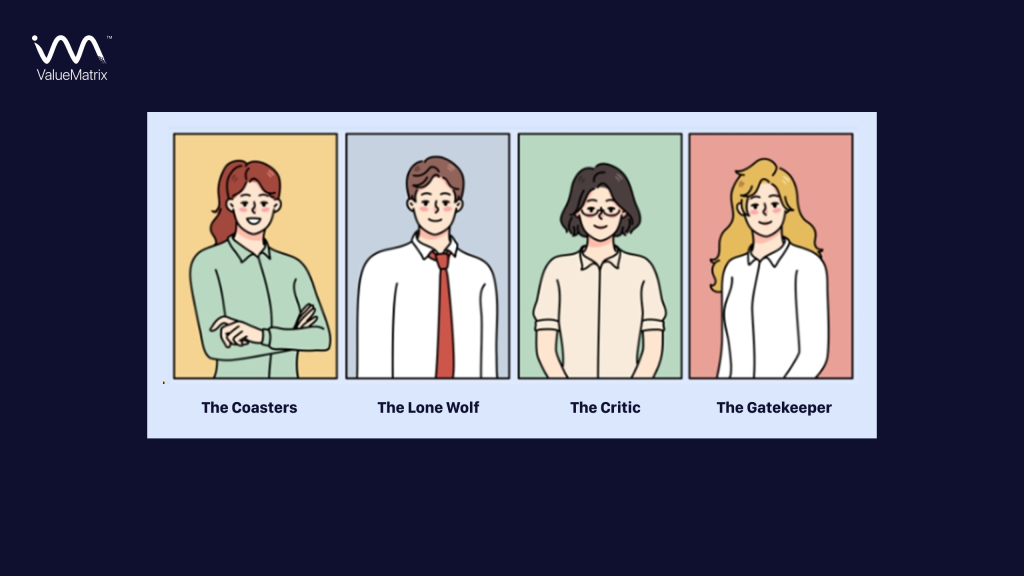
- The Coaster: Lacks motivation, brings negativity or avoids responsibility. 🛋️
Coasters are the ones usually doing the minimal amount of work required, and their attitude is sometimes contagious. If left unchecked, this can foster resentment from the motivated ones of the group who want to contribute. Leaders should take up the responsibility to change the focus of the energies of Coasters.
- The Lone Wolf: Struggles with collaboration and prefers isolated work. 🐺
The Lone Wolf is the complete individual who usually prefers to work alone. Teamwork is a concept unique and hard to mentally grasp for them. They can usually find no means of communication with or through the others. Oftentimes, this leads to the silo concept beginning in a group.
- The Critic: Focuses on flaws, reducing team confidence and innovation. 🧐
Critics constantly focus on what is wrong with the others in the team. This erodes their confidence and impacts the entire team’s performance in quick time. It is essential for a critic to not just criticize but also offer positive or constructive feedback, which can benefit everyone.
- The Gatekeeper: Hoards information, blocks change, or stifles fresh ideas. 🚪
Gatekeepers are the people who have vital information and resources, but usually hoard them. This contributes to bottlenecks in the forward progression of the projects and causes frustration in team members. Also, their resistance to change inhibits the spirit of innovation itself. It is of the utmost importance that Gatekeepers embrace transparency and openness.
What Do Studies Show?
A 2025 global study published in the Journal of Workplace Psychology found that high-performing teams share an 80% overlap in positive employee personality traits—such as openness, conscientiousness, and effective communication.
Companies that understand, identify, and intentionally build teams around positive workplace personas consistently report better results, stronger cultures, and improved retention.
How To Discover and Measure Workplace Personas? 🔍
To optimize team success, we need to understand workplace personas. This isn’t just about labeling people. It is more about recognizing behavior patterns that can affect team productivity. So how can one effectively assess personas?
Observe the interactions. Do the persons you observe work harmoniously, or do they criticize one another? Are they building bridges or creating divides? Such clues provide valuable insights.
Gather feedback. Anonymous surveys or one-on-one conversations can provide valuable information about team interaction and give the team an overall analysis of its strengths and weaknesses.
Encourage open discussion concerning perceptions and roles. Allow discussions on both the favorable and unfavorable items that affect team members.
Use personality inventories or psychological tests. Some of the tools, such as the Myers-Briggs Type Indicator or the DISC profile, when administered as part of a systematic program, will provide a greater understanding of the various personalities of team members.
What Happens When Teams Have More Positive or Negative Personas? 📊
The mix of workplace personas within a team directly shapes its effectiveness and outcomes. But what does the research say about the consequences of persona ratios?
Case Studies & Industry Data
- Case Study: Tech Startup “BrightOps”
A 2024 study on BrightOps, a rapidly scaling SaaS company, found that teams with over 60% positive personas (Visionaries, Builders, Socializers) achieved 2x revenue growth and 35% higher employee engagement compared to teams with more negative/disruptive archetypes.
- Negative Persona Prevalence
Organizations with heavy clusters of negatives (Critics, Lone Wolves, Gatekeepers) had more cases of deadline misses, increased stress, and 50% greater turnover, per the SHRM 2025 Workplace Culture Report.
The Tipping Point
- Teams with at least a 70:30 split of positive to disruptive personas consistently outperformed more “balanced” or negatively tilted groups.
- Early identification of negative personas and positively transforming them is essential to avoid undermining a team.
- With open dialogue and proactive training, teams can achieve a balance that leverages the strength of each persona.
How Can Companies Cultivate More Positive Personas? 🌱
Creating a team of productive personas in the workplace environment is like nurturing a fertile garden. It demands intent, care, and an ongoing work effort. Let us look at some valuable concepts for creating productive personas and enhancing team dynamics.
Hiring Practices, Onboarding, Training, etc. Focused on Persona Development
It is important to have hiring practices that select personas that are in harmony with the desired personas for the workplace. Interviews can be conducted with behavioral questions about situations in which applicants have been in the past. This can help assess how they would fit into the desired team interactions.
After hiring, the onboarding process is important. An effective plan can assist in quickly developing these new personas through associating them with personnel having the desired characteristics of the personas. Working with them on projects assists in developing belongingness and team spirit among the newly hired personnel.
Programs for training, workshops, and seminars in soft skills such as communication skills, empathy, and leadership skills are important in developing positive persona development. By adopting these, different personas are inclined to discuss, think, analyze, and grow.
By attempting to promote mentoring in the team, new candidates can be partnered with persons already possessing the desirable traits of the desired personas. The technique is one of learning from peers. It is often very effective and makes the implementation of desirable behaviors relatively more easily learned.
Managing and Transforming Difficult Personas Within a Team
Every garden has its weeds, so every workplace has its difficult personas. The difficult ones can be turned into useful contributors in the course of time if they are dealt with properly.
The first thing to do in dealing with difficult personas is to learn the basic reasons for their disruptive behaviors. Is stress involved; is it a lack of knowledge? Is there a misunderstanding? There is no doubt that frank and open discussions will lend an air of wisdom to the pursuit of determining the basic needs of the group. Encourage the group to vent their feelings openly.
After the identification of the causes, address the issue by incorporating conflict and stress resolution training, changing their roles into ones better suited to their skills, etc.
Continuous feedback is another means of changing personas. Criticism and positive reinforcement will help people learn the changes necessary to modify their behavior.
An inclusive environment allows team members to feel comfortable providing their feedback. This not only transforms team dynamics, with teammates supporting one another, but also enhances the overall team character.
Leveraging AI for Persona-Driven Hiring: The ValueMatrix Advantage
The current approach to team development needs to move away from traditional methods which include resume screening and interviewing. Forward-thinking organizations use ValueMatrix AI-powered HR technologies to discover workplace personas which results in better productivity and innovation through development.
What is ValueMatrix?
ValueMatrix operates as a modern talent intelligence system which applies AI technology and psychological science to create unbiased and exact matches between employee and candidate profiles.
The ValueMatrix platform provides organizations with a full talent management solution.
- It uses Big Five Personality Traits as established psychological models to develop comprehensive personality assessments, which help identify workplace archetypes that boost team collaboration.
- It assesses candidates by examining their qualifications, cultural fit, and behavioral tendencies to find the most suitable match for team dynamics and company values.
- The automated analysis system minimizes human prejudice during candidate screening through objective evaluation which enables organizations to find suitable candidates based on their potential and personality traits rather than their CVs.
- The platform uses predictive success metrics to forecast employee performance and engagement levels which enables leaders to choose candidates through data-driven insights and reduces employee turnover.
- The ValueMatrix system provides ongoing support for persona development through its continuous analytics which create customized onboarding and learning programs that guide employees toward success-oriented personas.
Benefits at a Glance
- Identification of positive and productive workplace personas
- Better employee retention and improved employee engagement.
- Enhanced team performance and collective success
- Efficient hiring processes in line with organizational culture
ValueMatrix AI platform enable HR teams and leadership to construct high-performing teams through innovative tools which establish an enduring competitive advantage in the rapidly evolving business world. For more information about ValueMatrix and how it empowers persona-driven talent management, visit https://valuematrix.ai.
Conclusion
Positive workplace personas are not developed overnight. It is a long process beginning with the hiring process, including several aspects of training and transformation of the difficult personas. Each of these methods is vital in developing a productive, happy and cohesive group.
The mix of personality types, skills, and energies adds up to the important keystones of success of the group, with more productivity and a happier atmosphere of work for all those concerned. The leaders in an organization, both in HR and management, can consider the points detailed in this blog as their compass as they deal with the multiple personas at their workplace and create successful teams.
FAQs on Workplace Personas ❓
A workplace persona is a behavioral archetype representing the attitudes, motivations, and social dynamics employees bring to the workplace.
Workplace personas affect collaboration, productivity, and culture, all of which shape the performance and adaptation of teams.
Workplace personas can be identified through personality assessments, 360 feedback, behavioral interviews, and increasingly, through the use of AI analysis tools.
Yes, negative personas can be improved through coaching, transparent feedback, and structured development.
Workplace personas represent the underlying psychological patterns that inform team dynamics, satisfaction, and success.
The conscious hiring of personas makes for balanced teams effective in meeting goals and cultural requirements.
About Us
ValueMatrix is an AI-powered talent intelligence platform that helps companies hire better, faster, and without bias. We go beyond resumes to assess skills, behavioral traits, and cultural fit using advanced AI and proven psychological frameworks. Our platform delivers data-driven insights that improve hiring accuracy, reduce time-to-hire, and elevate candidate quality.
ValueMatrix AI enables hiring teams to make confident hiring decisions and build high-performing teams at scale.