
Table of contents
- Executive Summary
- Digital Persona Protection: 2026 Industry Standards
- Why is the protection of digital personas becoming a legal standard?
- How does AI synthesis of employee voices create contract risks?
- What are the dangers of “Perpetual Likeness Clauses” in employment?
- How do digital personas impact the “Right to Be Forgotten” post-employment?
- Why should HR prioritize digital identity in employer branding?
- What is the role of Blockchain in verifying digital persona ownership?
- How do 2026 privacy laws protect employee biometric data?
- Why is “Informed Consent” failing in modern digital contracts?
- How does protecting digital personas improve candidate trust?
- What are the financial liabilities of unauthorized digital twin usage?
- How should companies handle “Deepfake” training modules?
- Why is the “Commercial Use” of employee likeness a growing conflict?
- How can specific contract language prevent digital identity exploitation?
- What role does “Moral Rights” play in digital persona protection?
- How do “Digital Non-Competes” differ from traditional ones?
- Why is the “Portability” of a digital persona a 2026 worker’s right?
- How does remote work expand the scope of digital persona risks?
- Why should unions and workers’ groups focus on digital identity?
- How to conduct a “Digital Persona Risk Audit” for your firm?
- What is the future of “Identity-as-a-Service” in employment?
- FAQs
Digital personal data protection in 2026 demands contract protection to safeguard AI replicas of individuals from unauthorized use, exploitation, and perpetual ownership post-employment. Clear clauses ensure consent, compensation, and rights control.
Executive Summary
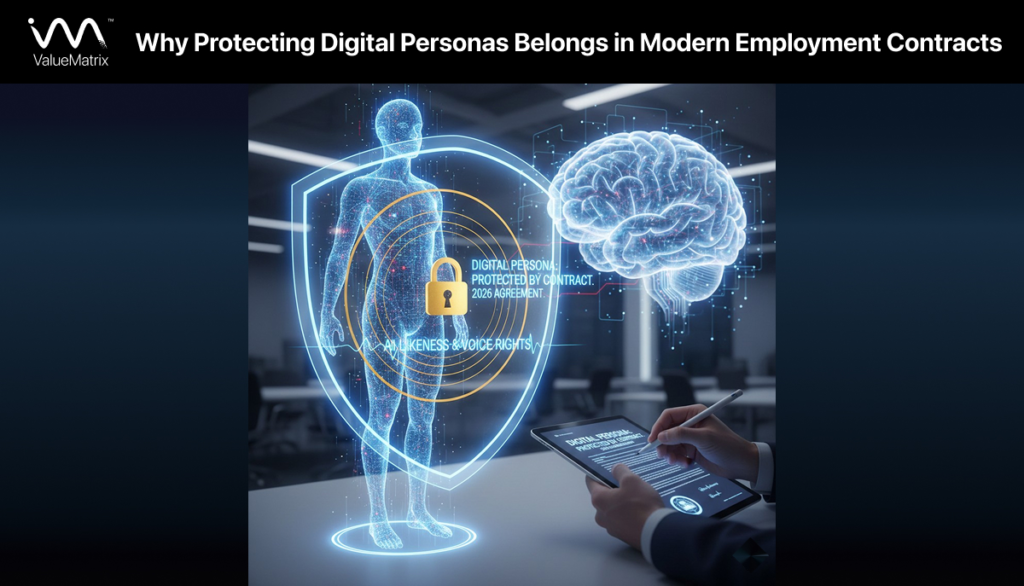
This year, in 2026, the issue of digital personal data protection began as an oddity for influencers, only to have transformed into a staple requirement of professional employment contracts. With the rapid use of AI among companies to synthesize employee voices for training purposes or use their likeness in marketing, the concern now is the risk of “Digital Identity Theft” by former employers. Current statistics say that about forty-two percent of tech workers demand specific clauses protecting their digital likeness rights before signing an offer (Source: Gartner HR 2026). Unless organizations codify these rights, they risk litigation under new mandates for digital privacy effective in 2026.
Digital Persona Protection: 2026 Industry Standards
| Protection Metric | 2026 Market Standard | Legal Risk Level | Business Impact | Source URL |
| Likeness Ownership | Employee-Owned | High | Prevents Identity Lawsuits | WIPO |
| Voice Synthesis | Opt-in Only | Critical | Protects Training Assets | Gartner |
| Biometric Revocation | Mandatory on Exit | High | Ensures Compliance | EU AI Act |
| Commercial Royalty | Standard 15% Rate | Moderate | Fair Compensation Model | Forbes |
What defines a “Digital Persona” in the 2026 workplace?
In 2026, a digital self is a composite of individual biometric data, voiceprints, digital likenesses, and behavioral patterns, aided by AI-replicating humans. It represents much more than a profile image-the so-called “digital twin” that might represent the employee in meeting rooms during virtual meetings or automated training. These digital beings are becoming commodities within organizations, shifting towards “Agentic Hiring” as they can conduct business on behalf of the real person.
Not properly specified in a contract, these data-abundant personas are potentially jeopardized. In 2026, even more than “synthetically generated content” can now be defined, which sources itself from an employee’s historical performance data. The first step towards ensuring the legality of protecting such digital personas is to know and understand this definition.
Why is the protection of digital personas becoming a legal standard?
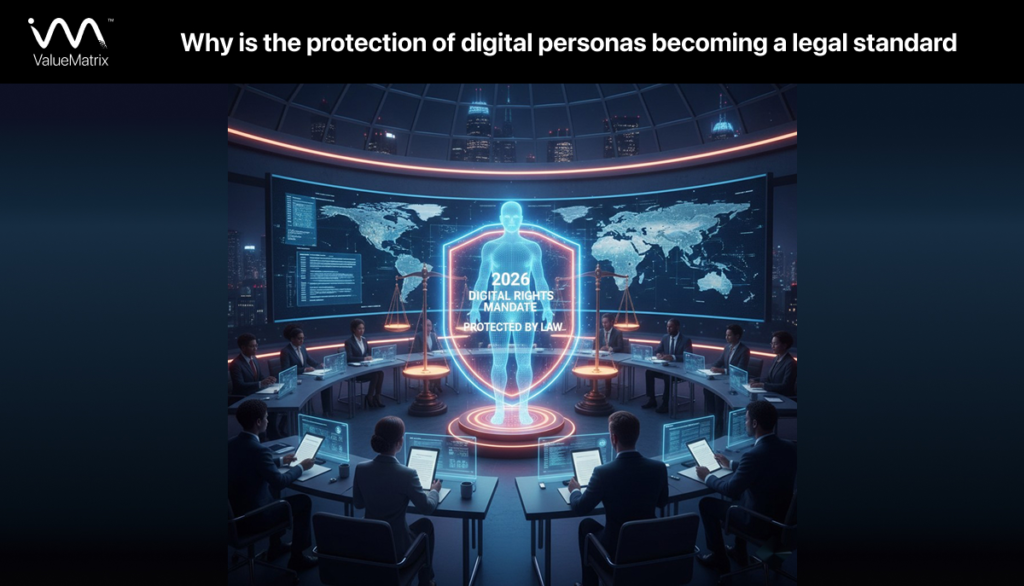
With the immediate event of “Post-Employment Likeness Exploitation,” where companies continued to use an employee’s digital likeness even after they left the organization. The protection of digital personas is now becoming a legal norm. With the new 2026 labor laws in California and the EU, digital rights are no longer transferable without specific and time-bound consent. This is a turning point where digital identity can be understood as an inalienable right and not as a company asset.
The law has also been amended due to significant cases involving companies cloning voices without authorization for their AI assistants. Courts are increasingly stating that an individual’s “Digital Soul” cannot be owned by a business forever. These modern contracts will now prevent the company from grasping all to protect its IP while safeguarding the employee’s digital independence.
How does AI synthesis of employee voices create contract risks?
AI synthesis of employee voices creates contract risks by allowing a company to create new content using an employee’s vocal identity without their ongoing presence. In 2026, many customer service firms utilize voice skins modeled after their top performers to maintain brand consistency. However, without clear contractual boundaries, the employee loses control over what “their” voice says in the future.
This creates a huge liability in case the AI-generated voice has to say something detrimental to a person in the public eye. To avoid it, contracts must contain “Voice Revocation Clauses, according to which synthesized models are deleted immediately after employment ends. These digital likeness rights are now a major priority for 65% of specialized talent.
What are the dangers of “Perpetual Likeness Clauses” in employment?
Perpetual likeness clauses are dangerous because they grant an employer the perpetual right to use the individual’s image and voice, effectively owning his/her digital presence. These were usually found in marketing contracts in earlier decades, but have now crept into all fields of employee agreements through the use of AI. As a result, a former employee can even find himself “working” for a competitor virtually.
Such clauses also restrict a person’s ability to reskill with a direct competitor who may see the old “digital twin” as a competing interest. In 2026, these clauses are being called “Digital Peonage.” Contracts will need to be amended to ensure that all likeness rights revert to the individual at the end of their tenure.
How do digital personas impact the “Right to Be Forgotten” post-employment?
Functions like the “Right to Be Forgotten” become complicated with digital personas since AI models trained on an employee’s data can store behavior or, in essence, their raw data. Even when the personal files are deleted as required by GDPR and similar laws, it is hardly possible to erase the “weights and biases” of an AI technology fitted to a specific person, and therefore, it creates a digital ghost still depicting the individual in the company’s internal system.
A true digital exit indeed requires specific technical and legal protocols within the employment contract. Hence, for 2026, what employees are demanding for Model Deletion Rights will ensure that any AI fine-tuned on their unique persona will be decommissioned when they leave. This is, in principle, a core part of modern digital persona protection and data privacy.
Why should HR prioritize digital identity in employer branding?
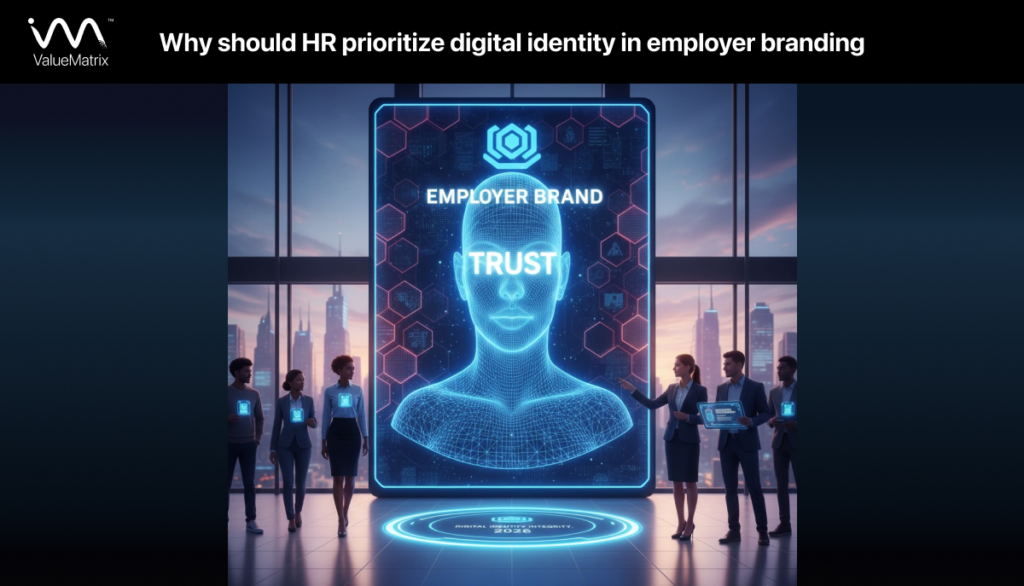
HR makes the effort on digital identity as part of employer branding in enticing an employee who prefers freedom, and also showing them that it is an ethical user of AI. In a market in which 42% of candidates fear AI replacement, it would be highly competitive to show that you respect and protect their digital likeness because it transforms the much-stated employer-employee relation from extraction to one of mutual consideration.
Such a company inspires ‘Identity Integrity,’ which creates a stronger bond of trust and loyalty that is long-term. If candidates know that their digital persona is protected due to solid contract arrangements, they will be less reluctant to join new AI experimentation projects. In fact, this proactive attitude toward digital likeness rights is proof of a progressive employer in 2026.
What is the role of Blockchain in verifying digital persona ownership?
As a ‘Digital Ledger of Consent,’ it acts as a permanent ledger indicating just how and when each employee has given their approval for use of their persona. Many companies in 2026 are striking real-time usage permissions through decentralized identity (DID) protocols to have an employee “toggle” their consent around specific projects via a secure digital wallet.
This makes old strategies for defining “Blanket Consent” clear-cut. On one side, in case of a changed employment status or excess usage over limits, the smart contracts impose automatic restrictions on the use of a digital persona. This integration of tech and law is the future of the protection of digital personas.
How do 2026 privacy laws protect employee biometric data?
The 2026 laws on privacy equate biometrics of employees to “Sensitive Identity Assets,” thus requiring extra measures of security and secured explicit, non-coerced consent for any use of it. Updated laws, such as BIPA (Biometric Information Privacy Act), now cover AI-produced biometrics in their provisions. Companies are liable for “Biometric Leakage,” where employees have their digital likeness hacked or misused.
These laws make it very clear that biometrics shouldn’t be a condition of employment for jobs where it is not indispensable. This will compel hiring managers to be more selective and transparent about why they require a digital persona in the first place. To safeguard this, it won’t just be an issue of IT; it is a legal on HR’s requirement for HR in 2026.
Why is “Informed Consent” failing in modern digital contracts?
Informed consent has faltered as the complicated nature of AI training makes it almost impossible for an employee to know how his/her digital persona would be further transformed. General consent is often phrased so broadly that it allows companies to use “future, unforeseen AI developments” about the data, thus leaving the employee’s digital identity exposed to uses they never would have said yes to.
That’s why contracts will be innovating toward “Dynamic Consent” models in 2026. This requires employers to re-ask for permission when the purpose of the AI model changes significantly in scope or kind. This way, moving away from “One-and-Done” signatures into a more dynamic model could actually result in true digital persona protection.
How does protecting digital personas improve candidate trust?
Trust increases in candidates because, through the security of digital personas, the organization proves that it still sees its employees as partners in innovation, not just suppliers of data. In 2026, trust is the primary currency in the talent market; candidates are 30% more likely to accept an offer if the contract includes a “Digital Sovereignty” clause. It proves the company is prepared for the ethical challenges of the AI era.
This clears the way toward reducing “AI Anxiety” among the workforce. Employees become more engaged with technology because they know their digital likeness cannot be used against their own interests. Trust-based contracts are foundational to a high-performance, AI-integrated team.
What are the financial liabilities of unauthorized digital twin usage?
Such liability can run into millions in “Identity Damages” if a company then profits from the likeness of a former employee going forward. Courts in 2026 will apply “Right of Publicity” laws in the business world so that unauthorized use of AI is treated as a commercial tort. Companies may then need to pay back royalties or face hefty fines for “Digital Identity Theft.”
Private insurers are joining in that, from now on, digital persona protection is attached to Professional Liability as a prerequisite. Not managing these risks could lead to uninsurable losses or catastrophic damage in valuations. Ethical AI use is no longer just a “nice to have”; it is mandatory from a financial perspective going forward.
How should companies handle “Deepfake” training modules?
They should be dealt with using “Consent-Encoded” fictive avatars and, at the same time, clearly marked with a metadata expiration date. The likeness of an employee to make a training video, known in popular terms as corporate deepfakes, requires utmost handling regarding possible emotional or professional damage. The contract would then have to stipulate what modules the likeness could appear in.
In addition, businesses should provide “Opt-Out” options so that no penalty will apply for employees who feel uncomfortable with synthesis. Instead, HR can respect individual boundaries while still allowing AI to scale through alternatives such as generic, non-human avatars. This is a key part of Efficiency vs Empathy: HR’s Guide to Responsible AI Use.
Why is the “Commercial Use” of employee likeness a growing conflict?
The commercial use of employees’ likenesses now poses a serious collision since, with social media’s advent, the line dividing “Internal Communications” and “Public Marketing” has slowly eroded. An employee who has his digital persona featured prominently in a viral video leaves the company, reaping all the gains from what could easily go well beyond what is permitted by a standard employment contract. Employees now demand some of the proceeds from ads that use their likeness in advertisements directed “outwards.”
The year 2026 will mark the rise of “Identity Royalties” as contract standards for an ordinary high-visibility employee or subject matter expert. Contracts must be crystal clear in defining the boundary between “Work Product” (which the company owns) and “Persona” (which the individual owns). Failing to do so leads to messy, expensive disputes over brand ownership.
How can specific contract language prevent digital identity exploitation?
By agreeing on precisely the aforementioned special term, attorneys can describe “Digital Identity” as disjoint from “Work Product,” thereby ensuring that the employee retains most rights. Licensing preparations are supposed to include what would be “licensed” for their company (e.g., voice, image, behavioral data) and how long. “Sub-licensing” of personas shouldn’t be done without the consent of the third-party AI vendor.
By placing “Restrictive Covenants,” which are items that will apply to the employer rather than the employee, the power balance is restored. These clauses act as a shield, protecting the company from any chance of selling or trading employee data to “Digital Twin Brokering” firms. Clear, defensive language is the best protection of digital personas.
What role does “Moral Rights” play in digital persona protection?
Even if an organization allowed it, employees could refuse the utilization of their digital persona in a manner that is “prejudicial to their honor or reputation.” In such cases, if an employee uses the AI voice clone to promote a political or controversial cause he or she is against, the employee can stop it immediately, thanks to moral rights. This integration of rights will be made in HR policies in 2026.
Such a concept ensures that “Human Behind the AI” always holds veto power over the entire process. It certainly inhibits the dehumanization that occurs when a person’s digital identity is treated like some soulless software. The importance of protecting moral rights relates to maintaining the Intelligent Talent Experience that, in 2026, workers will expect.
How do “Digital Non-Competes” differ from traditional ones?
They are focused on the extent to which a former employer can use the employee’s synthesized models and thereby “compete” with the real person using his or her own digital twin. Therefore, traditional prohibitions that prevent a person from working would no longer apply; instead, they would prevent the company from using the person’s identity to fill a role after they have separated employment.
Such clauses find a more favorable reception by the courts in 2026 because their scope is more toward the protection of personal property than the restriction of the right to labor. They ensure that once one leaves a firm, that person’s “Digital Agent” leaves with him/her. This is a fundamental shift in thinking when one considers human capital in the AI age.
Why is the “Portability” of a digital persona a 2026 worker’s right?
Portability of digital personae allows employees to take their trained AI models and “Knowledge Graphs” to a new employer. By 2026, many professionals will have spent years training a personalized “Co-pilot” AI. Without this model, they lose years of productivity and private data.
The issue now is who owns the “Fine-tuning” Data that makes an AI model unique to a given worker. Portability clauses allow for an all-digital handover, so the individual would still have a continuing AI-assisted career. This is a major pillar of the 2026 Candidate & Employee Experience.
How does remote work expand the scope of digital persona risks?
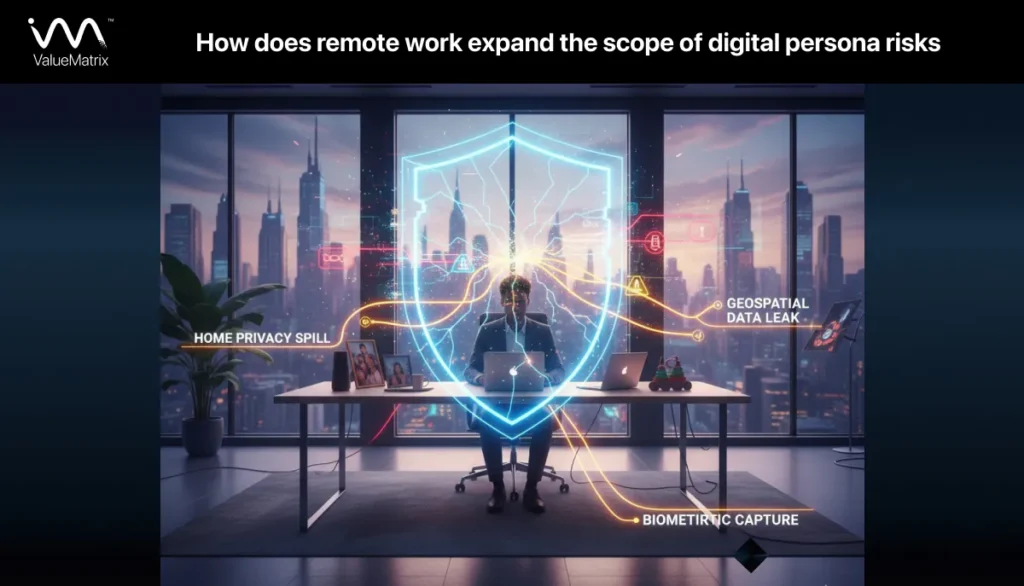
Remote work expanded risks because, with the house being the main place for gathering biometric and behavioral data used for digital personas, an employee’s environment, and family members, as well as most private habits, could accidentally be consumed without consent by “always-on” AI monitoring tools. That should address a huge “Privacy Spill” risk to be mitigated within the employment contract.
Contracts from remote workers in 2026 would have “Geofenced Privacy” clauses that limit what data the company can gather from a personal residence. In this way, the unintended effect of creating a “Digital Persona” would not include which private parts could be non-professional aspects because the boundaries are established between “Home” and “Digital Workspace”.
Why should unions and workers’ groups focus on digital identity?
Digital identity represents the only possible union-based Collective Persona Bargaining to avoid mass exploitation by large-scale AI developers. Individual employees usually do not have enough leverage to negotiate in the complicated world of digital rights. By standardizing digital persona protection, collective agreements need to establish levels of baseline protection.
By 2026, “Digital Rights Strikes” have become the norm, where workers demand to control how their data is used to train the very AI that could one day replace them. Unions are the front line in the fight for “Digital Dignity.”
How to conduct a “Digital Persona Risk Audit” for your firm?
A digital persona risk audit maps all employee likeness, voices, or behaviors that have been captured and analyzed by AI. Organizations must ask: Where is this data saved? Is the consent period time-bound? Can the employee revoke access instantly? In 2026, these audits will be practiced as commonly as financial audits.
The audit aims to identify the “Zombie Personas,” which are past models of former employees still active in the system. Clearing these would greatly contribute to reducing legal and ethical liability. A successful audit will result in a “Clean Slate” policy, where it is ensured that all digital identities are current and authorized.
What is the future of “Identity-as-a-Service” in employment?
The future of IDaaS- “Identity-as-a-Service”, includes employees “renting” their digital personas to the employers, while maintaining complete ownership through a secure portal. It changes the employment contract into a licensing agreement for digital labor now, and in 2026, it allows for a more flexible, `gig’-based approach to professional identity.
As the IDaaS matures, so, too, would the concept of protecting the digital personas under third-party “Identity Guardians.” Such firms would provide and manage the legal and technical safeguards, freeing the employees’ minds to concentrate on the tasks at hand while their digital twins stay securely within reach. This is the ultimate evolution of the kind of employment contract today.
FAQs
By 2026, an employer can use your voice only for those purposes that are explicitly stated in your contract. Unless there is a “Likeness Transfer” clause, you will keep most rights to your vocal identity, and usage must stop when you leave the company.
A digital exit interview is a new 2026 process by which HR and IT confirm the deletion of your biometric data and synthesized models. It’s a legal requirement in many jurisdictions that ensures your digital persona does not remain active after you have physically departed.
Yes. In emerging forward-thinking firms, if your digital persona is used for commercial applications or in extensive internal training, you will receive “Likeness Royalties,” in addition, of course, to your base salary. Such things should be disclosed upfront in the employment offer as a requirement of transparency.