

The Age-Old Debate
This question has been bothering leaders: Does productivity thrive on intense competition or collaborative efforts? This blog post focuses on the same important point and aims to give some answers to CHROs and CEOs who have to deal with multifaceted organisational issues. We closely examine in detail their nuanced impacts on competitive vs collaborative teams, the important roles psychological safety and teamwork play in the resulting outcomes.
Through data collection from Deloitte, the Harvard Business Review, and Google’s Project Aristotle, and grounded with real-world examples from Pixar and Southwest Airlines, we prove that the means used by either approach alone will not yield excellence sustained over time. Discover that such really high-performing organisations would not have been productive without a smart synthesis of these two forces, intentionally designed to pull the best attributes of both individual drive and collective achievement. This guide will empower you towards creating an ambience of ambition, meeting shared success, thus transforming the face of your organisation’s delivery.
What is Collaboration, Really?
Collaboration is more than just people working in the same place. It actually means to people or groups that combine their knowledge, skills, and efforts with a whole lot of active pooling of resources and sharing of responsibilities in the true sense toward one common, unifying objective that is beneficial to them all. This is what collection intelligence is about: taking really complex problems and turning them into opportunities for different viewpoints from up to four or five different angles in order to approach solutions.
With awe, I must say-much energy exists between and among the members of a worthy team. And with this energy, respect and bonding begin to take shape. Thus, Team A becomes a cohesive unit instead of a simple collection of people. Remarkably, it is true that teams with meaningful engagement manifest newness and depth beyond anything that one person or even one department might ever hope to achieve on its own. The organisation, throughout this shared journey, builds an intense bond-a bond of mutual responsibility and purpose among the people.
It is driven, fundamentally, on the strength of the group, incorporating every voice, every skill, and every contribution that might become actively woven together into the overall success of the larger mission. In short, ‘we’ come before ‘me.’
Sharing Goals, Sharing Success
In such a complete collaborative environment, people understand what exactly the main object of the team is and how their own work feeds into it. So, award-winning individual success is not independent from but very much tied to group success. Such active interdependence will eliminate all departmental silos and create an environment where proactive help and open communication will be constant. People naturally find ways to advance one another’s accomplishments instead of looking for roadblocks, knowing that what they achieve together helps everyone. This, of goal setting and enjoying collective accomplishment, can become powerful intrinsic motivators for ongoing and more altruistic work.
The Power of Diverse Perspectives
Gathering people from very different backgrounds, domains, and levels of experience brings an immediately rich spectrum of very different skills, insights, and viewpoints into collaboration. Such intellectual diversity is not nice to have; it makes for a much better fundamental asset for the production of significantly more creative, robust, and frequently out-of-the-box solutions to the various complexities. It helps avoid blind spots that one-membered vision would tend to miss. With free flow of ideas, more problems are diagnosed earlier, solutions are well vetted, and implementation tends to be easier. So very real teamwork accepts and embraces such rich interchange; it thrives on this rich interchange, affirming that it is the engine of true innovation.
What Does Healthy Competition Look Like?
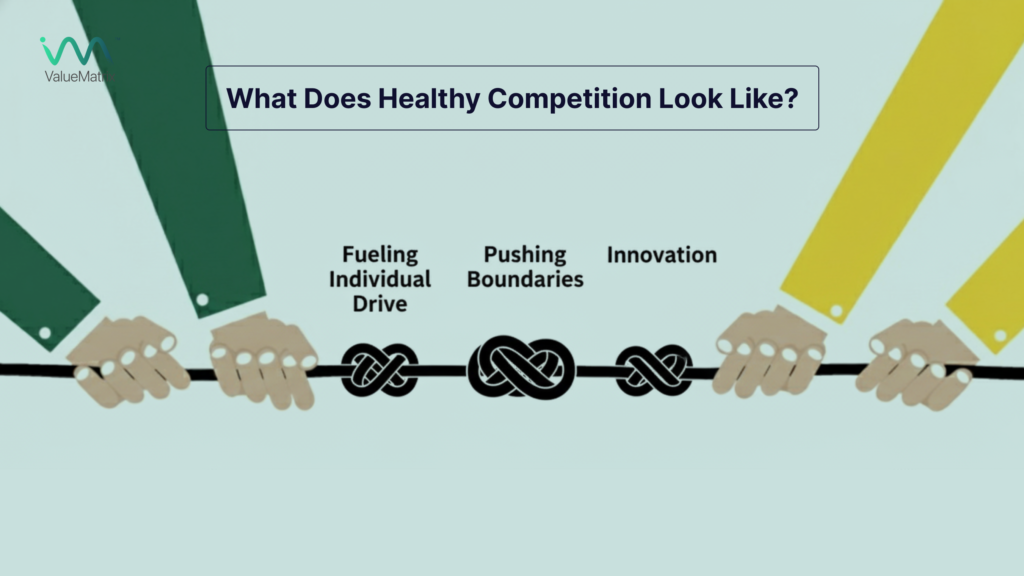
Without a doubt, healthy competition is an extraordinarily potent and constructive force within an organisation if created with careful consideration and managed prudently. This goes beyond animosity; put simply, it is about pushing individuals and teams to surpass their own already accepted expectations. The drive ignited in turn encourages creative thought: people ponder smarter, faster, or better methods of winning.
By setting higher goals, this can ramp up innovation: in so doing, teams are under pressure to create best-in-class solutions or processes. Under appropriate conditions, the wise design and governance of competition allows one to create an almost rocket-fuel effect, allowing people to reach higher, get better faster, and push toward excellence. The most important part remains the stipulation of clear guardrails, so that it never degenerates into an unhealthy, toxic, or unethical game.
Fueling Individual Drive
For many, the mere presence of a challenge or an established benchmark can exert favourable stimulation. Competition wields this power, as it is a subjective imprint, allowing for a certain gain to pursue. This provides a medium for people to gauge their own capabilities and progress; hence, it creates an irresistible urge to increase their personal performance set against that of peers. This often evicts compelling individual performance, with employees concentrating on skill development, learning, and self-improvement strategies to gain an edge. The process can slowly develop a lively atmosphere where everyone’s input is welcome.
Pushing Boundaries and Innovation
Healthy competition could compel team members or participants to seek alternative means toward achieving their respective objectives. This impels them to question techniques, challenge traditional assumptions, and experiment with different types of problem resolution. This constant pressure, producing competitive advantage, could create a strong culture of continuous improvement and radical innovation for the organisation. On its way, it could discover expedient processes, superior products, or even the creation of entirely new markets that would not have come into existence without competition.
Why Does Too Much Competition Backfire?
But while controlled competition has its safe place, it soon leads to pernicious destruction in any particular organisation when it has become unrestrained or excessive competition. It nibbles away at the tenuous fabric of trust holding teams together and enables dysfunctional behaviours such as information hoarding and territorialism. This withholding certainly carries great danger for effective teamwork, but even worse is that it also promotes resentment, animosity, and sabotage among colleagues.
When tussles for personal competition become the only or at least the main focus of attention, the collective interests and, really, the overall goals take a back burner. In time, this dynamic creates deep-seated and difficult-to-resolve HR-related problems that may, in the end, do tremendous damage to long-term productivity and employee retention.
Excessive competition as such shifts the emphasis from achieving the collective team goal to nothing but the individual win, often at the cost of the greater organisational health and mission.
Eroding Trust and Information Hoarding
Under these circumstances, in winner-takes-all environments, sharing useful information and cooperating even on insights seems to hand over an edge based on competition. Hence, this perception amounts to those either individuals or teams actively hoarding knowledge, insights, and resources due to non-transparency and lack of open communication. This destroys all interpersonal trust; therefore, true teamwork becomes impossible. Critical insights are kept sheltered within individual silos, leaving holistic problem-solving impossible and severely hindering the overall performance and innovation capacity of the company.
The Hidden Cost of Burnout
Studies indicate that while the pressure to outperform next month might be the most forceful, it is also the most burdensome and therefore often untenable. Poorly managed intense competition becomes the source of chronic stress, anxiety, and the feeling of always being “on.” They start burning themselves out quite fast and end up dissatisfied with their jobs and experience mental problems, or they may carry more spills than normal at work. The only short run that output spikes yield is very little compared with the inevitable, huge, deep, and expensive losses they incur regarding employee well-being, morale, and ultimately long run sustainable productivity.
How Does Psychological Safety Unlock Teamwork?
Psychological safety is much more than just a ‘nice-to-have’: it is the core of a business upon which all effective collaboration and high-purpose teamwork works. The other name of this safety is nothing but a perfect condition when people feel truly safe to take interpersonal risks. They may speak up freely with their ideas, ask questions that they perceive to be “dumb,” admit to errors, question existing concepts, or raise constructive objections, all without fear of diffusion, ridicule, or retribution.
There can never be any progress in team-building efforts devoid of such basic safety; it is just humans who hold back their most meaningful contributions. Leaders have the enormous task of actively creating and perpetually reinforcing this all-important environment.
Being open and vulnerable, asking questions, and giving honest feedback are seen as acceptable and are supported in a respectful manner instead of being judged or retaliated against.
Creating a Safe Space to Fail and Learn
Unlike most business cultures that earn the title of innovative, psychological safety affords a condition of risk where individuals may act courageously in attempting new ways or new grounds. One that is free from the burden of dire consequences. Teams learn when they fail big-time rather than apportioning blame. This whole learning loop creates a sustainable, continuous learning, adaptability, and resilience culture, with the capability to swiftly and effectively respond in a marketplace of constantly shifting conditions or crises.
The Foundation of High-Performing Collaborative Teams
It is psychological safety that provides an environment and culture where those in the team feel emboldened to have deeper, freer, and more open-level engagement. Superficial fears cannot play a role in this environment. Thus, feeling safe, they will be willing to open up with creative solutions, challenge indifferent status quos, and defend other parties worthy of their support. Such trust and mutual honesty enable collaborative teams to address far more complex and ambiguous issues with the common belief of success.It is what turns a pool of talented individuals into a strong, unified, and agile team capable of achieving greater results than those expected, teamwork at its peak.
What Do the Numbers Say About Collaboration and Competition?
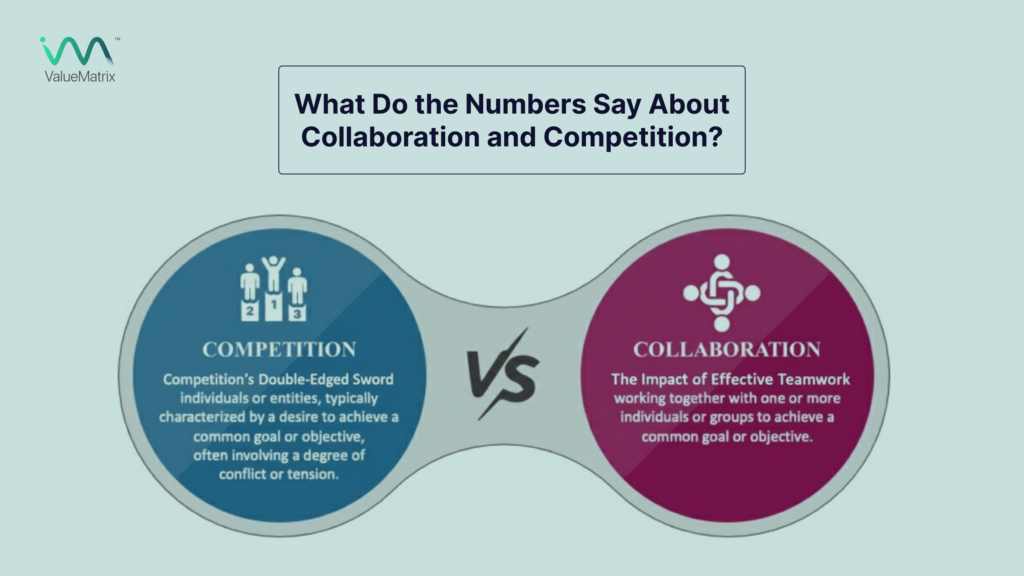
The discussion regarding collaboration versus competition isn’t theoretical; by evidence, they really show measurable impacts on outcomes for organisations. Studies continue to show that a well-balanced, intentionally designed, primarily psychological safety- and teamwork-driven agenda is evidenced as being better than either extreme applied in isolation. Leaders could use such compelling insights and statistics to inform and strengthen their talent management strategies.
This average couple indicates that it gives evidence of the tremendous difference made by a mature and healthful strategic thought-out and planned combination of competition and collaboration.
Statistic 1: The Impact of Effective Teamwork (Deloitte)
Major studies by Deloitte investigate the direct and strong correlation between collaboration and the complete performance of the whole organisation. For one, such research shows that organisations with bin order collaborative work are 5 times more likely to be identified as high performing, whereas their counterparts, being less collaborative, are not. This sums up the strong and undeniable association between effective teamwork and outstanding business performance across various measures.
Statistic 2: Competition’s Double-Edged Sword (Harvard Business Review)
Perceived usually as simply positive, however, contains risks under its management if not managed carefully. Research in one of the most prestigious journals, such as the Harvard Business Review, presents a somewhat sophisticated view: while internal competition boosts short-term output by up to 5% for an individual, this is offset with a very high price. The study shows that this kind of competition can bring about an observable 10-15% decline in total performance of the team due to lowered levels of information sharing, rising internal frictions, and breakdown in trust. The scale of that balance is articulated here.
Statistic 3: Psychological Safety and Performance (Google)
Probably the best-known research on team dynamics is called Project Aristotle by Google. In this multiyear, intensive internal study, hundreds of Google teams were carefully scrutinized to tease apart the key factors in team effectiveness, and found their most ground-shaking discovery in that number-one predictor of team effectiveness, psychological safety.It consistently outperformed such high-flying contenders as the amount and caliber of individual skill sets, compensation, or even the tenure of team members. It emphasises this factor as the nurturer and enabler of really high-functioning collaborative teams.
How Have Leading Companies Mastered This Balance
Some of the world’s most innovative and successful organisations have cracked the code for the effective integration of collaboration Vs competition. They don’t just stumble upon a finely-tuned balance; they design their very culture and processes and set their leadership principles to strategically maximise the benefits of both human drives. Their compelling success stories yield tremendous practical lessons for any CHRO or CEO who seeks to balance their talent strategies for maximum performance and sustainable growth.
These case studies exemplify how deliberate designing of the organisation and leadership engagement create the right mix of team dynamics that lead to outstanding results.
Case Study 1: Pixar Animation Studios’ Creative Synergy
There is something about Pixar that is much talked about, and that is not only its animation but also the culture it has created, where it works deeply collaboratively and creatively freely. They have an unusual system called Braintrust, in which a cross-section of creative heads is invited to talk openly, and brutally, sometimes downright harshly, about the discussed merits of a project under development. It is a very intense competition of ideas where they have to undergo the most intense scrutiny. Beneath this, however, there is a culture of great psychological safety and mutual respect. The one firm commitment that competes with everything else in this environment is to make the film better, not for one person to be ”right” or win the argument. It is this deep commitment to shared creative excellence in a safe environment that continuously carries their innovative storytelling success to the highest degree.
Case Study 2: Southwest Airlines’ Employee-Centric Approach
Southwest Airlines has always been outstanding when it comes to employee engagement and customer satisfaction levels, which are at the top in the industry. They create a really booming internal culture that could combine competition with friendly competition. For instance, one can find such examples in teams competing against one another for subsequently achieved metrics like best on-time performance or highest customer service score (individual competition).
Still, the lurking culture is that of teamwork in cross-functional support. Employees are allowed and are supposed to go beyond their departments to assist one another, knowing that only the collective success of the airline matters. There is then this fine balance; an individual is encouraged to reach for greatness (competition) but always in a context reinforced by a collective success and mutual support (collaboration), thus producing a very resilient and high-performing workforce.
Did You Know? The Brain on Teamwork vs. Rivalry
The most powerful chemical reagent factories in our bodies are the brain, with each one behaving differently in figuring out cooperation and competition. Released during cooperative activity or membership in an environment, oxytocin is frequently called the “bonding hormone.” This chemical instils a sense of affiliation, trust, and empathy in its users. Released by the brain in intense competition, especially when victory has an obvious goal or major reward attached, dopamine bursts portray feelings and motivational rushes.
With these insights into the base neurochemical principles, leaders can increase competitiveness regarding team design, programming, and incentives. In defining leadership, it isn’t about the work; it’s about understanding people, acknowledging that we have very basic human biology.
The Neurochemistry of Connection
The release of oxytocin during any collaboration leads to empathy, social bonding, and trust among the people sharing the work within a group. In collaborative teams, this neurochemical reaction proves to be a highly efficient mechanism to enhance communication, open sharing of information, and the collective resolution of problems. It encourages people to share their vulnerabilities, be honest about their mistakes, and to ask for help of which, in turn, greatly increases psychological safety and unity within the team.
The Dopamine Rush of Winning Alone
That significant dopamine rush that comes with winning a competition can act as an impressive motivator in itself, driving very focused individual effort. It can bring someone to do their personal best or even go beyond what they’ve ever done. Yet the real challenge that leaders encounter is in being able to harness this great individual drive without letting it deteriorate into an actively corrosive zero-sum competition that ultimately destroys trust, impedes any form of genuine teamwork, and leads to larger dysfunctions in the organization.
Conclusion: The Smart Synthesis for Sustainable Productivity
The collaboration versus competition debate is, in its purest form, a spurious choice. Given that neither extreme can truly and consistently ensure high productivity or robust health of the organisation on its own. Real success and everlasting success come from a conscious, focused, and flexible integration of the two. The leader needs to learn the fine art of understanding when to pressure for an individual performance advantage and when to push for a joint contribution to the collective genius.
Tying the knots of psychological safety and teamwork cannot be an afterthought, but the foundational infrastructure upon which successful dynamics must rest. On this strong foundation, healthy competition is then able to act as a speedy enabler rather than a ruthless and separating destruction.
This strategic synthesis implies designing systems, processes, and cultural norms that assertively promote individual drive and collective achievement. It is about establishing clear goals, ensuring fair and transparent metrics. It is imperative to create a saturated culture wherein winning together for the company’s mission is ultimately appreciated as the most meaningful recognition for all stakeholders.
Finding Your Company’s Unique Mix
Every business, every group, and every project is unique. Hence, your organization’s different and most suitable mix of competition versus collaboration will weigh considerably against your particular industry, established corporate culture, and one’s imminent strategic goal.
The ongoing challenge for CHROs and CEOs will be to monitor, assess, and adjust this delicate balance with great skill. This requires good listening to teams and a careful eye to any indicators of imbalance or toxicity. It creates a conducive environment for individual aspiration and collective success to not just co-exist but thrive in synergy. Hence, it will require concrete and intentional actions from these leaders.
Strategic Insight: Importance of Value Matrix in Improving Team Dynamics
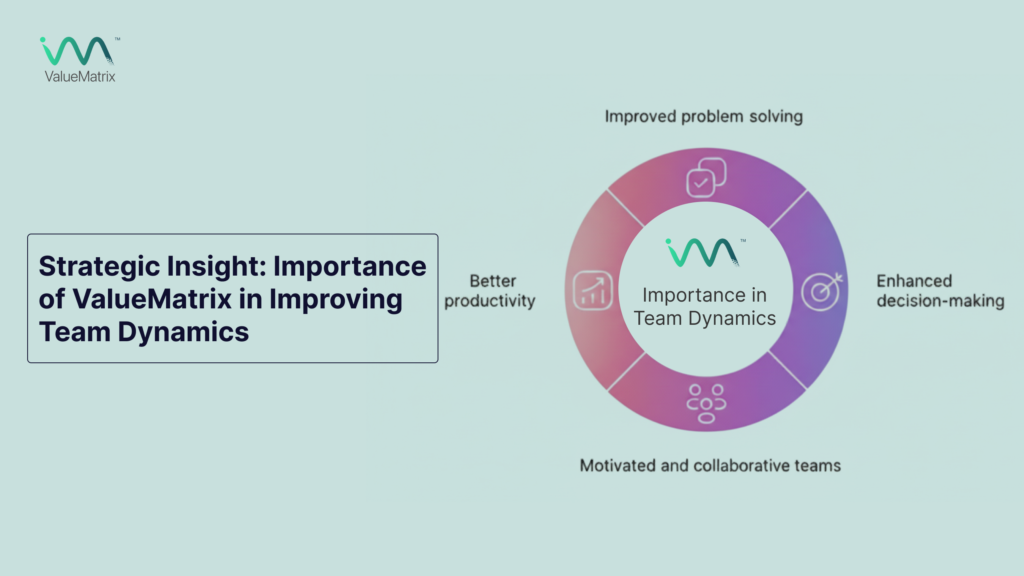
It’s more than just a conversation among human beings. ValueMatrix provides an important capability framework for the objective evaluation of team activities by a leader. Values or strategic importance to the organization are plotted against the thrust or cost that the task or initiative incurs to discover possible drains on energy in teams. In this sense, high-value collaborative and competitive activities can be chosen, so teams do not spend effort on low returns, thus maximizing overall productivity and impact.
FAQs
Rarely pure competition. There are usually some boundaries and an overarching collaborative goal. In turn, competition that is totally external to others or against a set standard is comparatively more positive.
The best way to measure psychological safety is to do is through anonymous reporting surveys that would use some measures, like the one from Amy Edmondson. Examine the contents of the comfort in acknowledging mistakes, listening to concerns brought up, and assuming that teammates will not penalise recklessness or vulnerability.
Arguably, the most significant mistake is failing to establish a strong foundation of psychological safety first. Without such a foundation, heavy collaboration or competition is bound to lead to adverse outcomes of mistrust and burnout.
Sure. For example, the sales team is usually equipped with competition tied to competition (individual drive) for the internal aspect, but they come together as a team, for example, in the examples of their pitching on their large accounts or sharing best practices, collaboration (team support). The balance is the key.
Psychological safety and teamwork come into play more for remote teams because in-person cues exist less. Leaders must create opportunities for informal collaboration, develop trust, and ensure clear communication to avoid competitive isolation and destruction.
About Us
ValueMatrix is an AI-powered talent intelligence platform that helps companies hire better, faster, and without bias. We go beyond resumes to assess skills, behavioral traits, and cultural fit using advanced AI and proven psychological frameworks. Our platform delivers data-driven insights that improve hiring accuracy, reduce time-to-hire, and elevate candidate quality.
ValueMatrix AI enables hiring teams to make confident hiring decisions and build high-performing teams at scale.