

Table of contents
- The Ailments of Modern Hiring
- Why Are Our Hiring Systems Broken in the First Place?
- What Are the Biggest Recruitment Friction Points?
- Stop Losing Top Talent: Speed Up Your Process
- How to Fix Your Bad Candidate Experienc e?
- Is Your Job Description Hurting Your Search?
- Use Data, Not Just “Gut Feeling,” to Make Decisions
- Build a Stronger Company Brand to Attract the Best
- Making the Final Offer and Welcoming Your New Hire
- FAQs
The Ailments of Modern Hiring
In the contemporary era, the hiring process poses a major challenge for many companies.The companies depend, sometimes without judging, on a broken hiring system that wastes time and allows really good people to slip away. The real issue is identifying and effectively removing these recruitment friction points, which seem to cause so much havoc. This blog will take you through key problems and then suggest easy, straightforward ways in which you can make your hiring process better, faster, and more successful.
References And Statistics
| Category | Key Fact/Figure | Implication for HR | Source (Section) |
| Financial Cost | Unfit hires can cost any company up to double that person salary, i.e. 200% of the individual’s annual salary. | Hiring mistakes are awful from a financial perspective, and we need to have an objective tool for assessing the situation. | Statistics |
| Reputation Damage | 72% of job seekers will spread a negative word about their experience during the hiring process. | A bad candidate experience directly impacts the employer brand and the talent pool in the future. | Statistics |
| Candidate Drop-Off | 53% of candidates who withdrew stated slow hiring as one of the reasons for their withdrawal. | Speed and transparency in hiring decisions are imperative to secure good talent. | Section 2 |
| Communication Failure | Around 50% of all candidates will withdraw from hiring because of lack of communication or ghosting. | Diligently communicating (this also means rejection) must be done without question. | Section 2 |
| Best Practice Goal | Aim for a Maximum Time-to-Hire of 4 to 6 weeks (28-42 days). | Implement clear internal deadlines and automate tasks (e.g., scheduling) to meet this deadline. | FAQs |
| Decision-Making | Unstructured interviews based on “gut feeling” lead to inconsistency and bias in hiring quality. | Some standardization of questions and objective scoring is the solution (structured interviews). | Section 6 |
| Retention Strategy | Making improvements to the way candidates are hired will lower the post-hire turnover rate, as seen in the ASK Call Center (from 74% to 30% turnover). | A good hiring process is a precondition for long-term retention of employees. | Case Studies |
| Efficiency Win | Personio streamlined hiring for their critical role, thus achieving 40% of time savings. | Establishing clear lines of role and accountability and limiting layers of approval will remove bottlenecks. | Case Studies |
Why Are Our Hiring Systems Broken in the First Place?
Hiring processes prove tough in the pursuit of a candidate, and the reasons for the same are often elusive. The problems would stem from practices bequeathed by antecedent generations or systems subject to perhaps a lack of exactitude in meeting present-day challenges. Over time, these deep-rooted systemic problems cause stress and discomfort in participants hiring manager and the jobseeker. And thus, the important step for real change is to uncover these root causes.
The Problem with “Post and Pray”
This is when a company simply places an advertisement “somewhere” on the Internet and is just “hoping” that someone suitable will magically become aware of it and apply. This is no plan at all. Generally speaking, this method draws plenty of unqualified candidates into the pool, wasting time on everyone’s part.
Too Many Layers of Approval
There tend to be cumbersome approvals in the real decision-making situation of most hiring within organisations. They become a liability of delay. Good candidates-all in the market-do not wait for your company’s decision; they accept offers elsewhere.
Ignoring the Candidate Experience
Usually, organisations focus mostly on their demands, overlooking how candidates feel about the process of applying. Candidates feel worthless after a bad experience, which in the long run tarnishes your employer brand, making it extremely difficult to monitor.
These basic flaws refer to not making hiring systems work appropriately for the organization and future talent. When one understands what malfunctioned, one can reconstruct a process that benefits its existence and the talent of the future.
What Are the Biggest Recruitment Friction Points?
Recruitment friction points are likened to annoying roadblocks stopping candidates from applying for your jobs. These are the very irritations that drive great applicants to withdraw from hiring processes.Fixing these seemingly petty, insignificant problems goes a long way in attracting and retaining the best talent.
Long, Complex Application Forms
Filling out interminable forms doesn’t appeal to anybody. If your online job application requires people to input information that is already on their resume, then often they will shut down the application page. This is particularly true if the application is being filled out via a phone, which the majority of people are doing these days.
Slow or Zero Communication
The company becoming quiet after an application or interview is a red flag. A candidate can tolerate a few weeks, but waiting for two months without any response is unbearable. Such silence makes the candidate think that the company is incompetent or simply doesn’t care.
Unstructured and Biased Interviews
If every person on your interview panel subjects candidates to different random questions, you have an unstructured interview. Such randomness opens the door for hidden biases to shape decisions. It also creates difficulty in comparing candidates fairly, leading to the selection of the wrong candidates.
These frictions damage your talent pipeline like leaking buckets. If such friction remains unresolved, you will forever lose good candidates. Identifying and resolving these frictions will create a cool hiring experience.
Stop Losing Top Talent: Speed Up Your Process
These days, the best candidates available in the job market can easily slip through one’s fingers. If your hiring process is slow, the time it takes to make an offer can cost an organization top talent. Therefore, speed becomes not only a matter of efficiency but also a show of decisiveness in a business and value for the good people that you employ.
Set Clear Time-to-Hire Goals
There should be a target timeframe according to which every single position takes to fill. For example, “We target 21 days from first application to final offer.” Such goals keep your team focused and moving faster towards task completion.
Automate Simple Tasks (Scheduling, Screening)
Then, clear out all of the busywork that can be automated using smart tools: Software programs can typically put together the report that discovers resumes that meet your needs based on skill requirements. Chatbots can automate most responses to frequently asked applicant questions. Set your interview appointments using online scheduling tools, which save everybody a lot of back-and-forth.
Decide Faster and with Fewer People
Evaluate how many interviews you really need. Limit it to only the most important. Apart from this, cut down the number of signatories needed to approve a new hire. Apart from these, empowering hiring managers to efficiently make decisions quickly will also speed things up.
To put it simply, hiring should be made leaner and much quicker so that you can have the top talents before they are snatched away. This is the key to staying competitive by building a great team without much delay.
How to Fix Your Bad Candidate Experience?
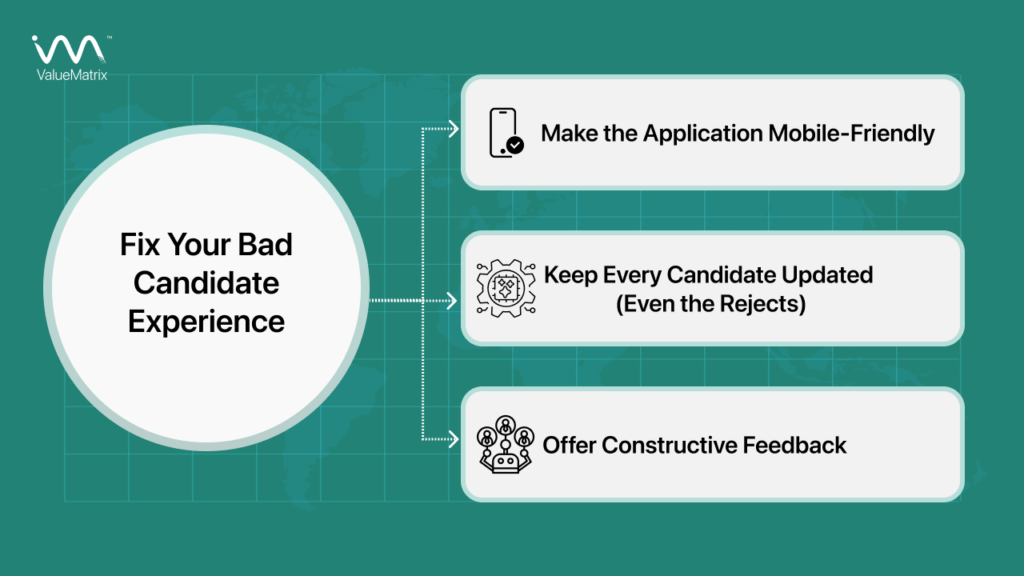
The right candidate experience extends beyond politeness to be a strong business tool. Candidates who had an excellent experience, though rejected, would consider the organization for future applications. They would even speak very highly of your organization, adding to your brand’s further appeal.
Make the Application Mobile-Friendly
The majority of the workforce searches and applies for jobs on mobile phones. The online application form must thus be simple to fill out on the small screen. An uncomplicated, speedy mobile application will ensure that many more completed applications are sent.
Keep Every Candidate Updated (Even the Rejects)
An automated yet polite message should go to every candidate at every stage of the selection process. Inform the applicant, even with the automated emails, of their state regarding the application review status. Not laid for too long in great doubt about whosoever is with the candidate status.
Offer Constructive Feedback
It is not good enough to decline those candidates after the successful ones have gone through the final interview round with a standard email. Try to mention one or two areas in which that person can improve. That little act of kindness would let the candidate leave with a much better feeling toward your organization.
After all, with such attention, a bad experience is converted into a good one. The survival of great candidate experience will enhance the attractiveness of your firm, ensuring that even rejected candidates leave with good impressions.
Is Your Job Description Hurting Your Search?
An unnoticed bogey in your job description is poorly written. It’s that which invites the wrong applicants – those who do not fit the profile – or scares off the right ones – those who would be a great fit. A post should be big on heart, that is an emphatic advertisement creating something that makes the heart race in the employees of your coming talent.
Focus on Outcomes, Not Just Tasks
State what the person will be accomplishing in the role rather than just saying daily duties. Refer to the impact he or she will have on the company, such that candidates can see the bigger picture and thus be more inspired by the job.
Use Simple, Inclusive Language
Avoid very uncommon jargon that sounds bizarre and long. Use words that might sound even more appealing to a diverse audience and include all. Different groups-for example, women or minority candidates-should not find your language to be unwelcoming, intentionally or unintentionally.
Be Clear About Salary and Benefits
As candidates want to know the salary range for a job almost from the start, it turned off some applicants. A job seeker gets really irritated, hiding information about salary. By showing transparency on pay, time shall be saved, and those who show interest with sober expectations would be you in terms of the task itself.
The clear job description acts as a filter, besides signaling suitable and right talents, while setting the stage for a less bumpy hiring track. It remains your foremost instrument that can either dissolve or create many of your hiring problems.
Use Data, Not Just “Gut Feeling,” to Make Decisions
In fact, hiring is way too serious and way too expensive to leave decisions to personal feelings and intuitions. Data applied where it may expose what really works and what’s broken in the hiring process. Emotions were taken out of the big decision, and better, more reliable employees were hired, which ultimately benefited the business.
Track Time-to-Hire and Source-of-Hire
Time-to-hire refers to informing an individual about the velocity of filling roles. If that takes time, then you know you have some bottlenecks. Source-of-hire details, which job boards, websites, or methods are producing your top employees, so you can stop wasting money on sources that do not return quality candidates.
Measure the Quality of Your Hires
Don’t just track who you hire; track how well they perform after six or twelve months on the job. This quality-of-hire data is extremely critical: it tells you whether or not your interviews, tests, and screening methods find successful and business-impacting employees.
Use Simple, Standardized Assessments
Set up a structured exercise or test for all applicants competing for a particular job. It could range from a simple skills evaluation, a task for submission of a work sample, to even a structured problem-solving task. This provides you with the objective information to compare candidates against each other rather than mere opinion.
In summary, data shift hiring from the art domain to a scientific endeavor. This scientific way really builds your reliance in deciding, thus preventing costly mistakes and improving upon your already good acquisition mechanism.
Build a Stronger Company Brand to Attract the Best
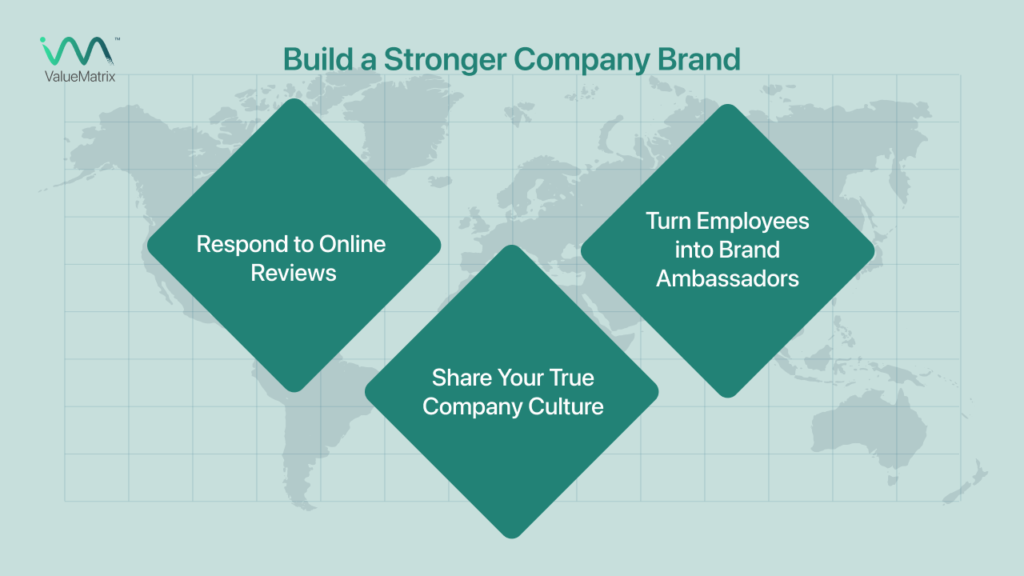
The employer’s reputation for your company stands as one of your powerful magnets for attracting good talent. From that point onward, with a great employer brand, talent will attract rather easily, almost by magnetic force. Individuals will hear all good things about your company and want desperately to work there; therefore, expenditure in terms of money and effort towards sourcing new hires will probably diminish.
Turn Employees into Brand Ambassadors
Your current happy employees are good for some real-estate recruitment and ultimately, the best reference for the company. Encourage your employees to share their positive stories online and in their personal network. There is nothing better to promote your company than a true story shared by someone already within.
Share Your True Company Culture
Practice that which you preach. Do demonstrate your values in action as opposed to merely stating them. Use pictures, short video ads, and all the truths you can muster on your career page and social media. Let potential employees witness firsthand what it is like working with your company, the daily lives of groups, the interaction within the teams, and how you establish values in your company.
Respond to Online Reviews (Glassdoor, etc.)
All job incumbents access such sites as Glassdoor, Indeed, and LinkedIn while reading the reviews of companies prior to applying. Respond professionally and mindfully to each review, whether positive or negative. Company speakers are hardly seeking, hardly are concerned about, and display little effort at feedback about the people that comprise it or for its clients.
Thus, beginning with a strong employer branding would hence make an organization very hard its attract desirable preferences. This will go a long way in creating all necessary organic recruitment for quick, easy, and proactive initiation into the organization, easing the entire process of hunting for great-taught skills.
Making the Final Offer and Welcoming Your New Hire
Moving toward the end of the hiring process is very critical, as is the beginning of the recruitment process. A clear and enticing final offer, plus solid first weeks (onboarding), are the keys to success for the newcomer.
Offer a Clear and Competitive Package
Write a friendly offer letter. It should explain every part of the compensation in detail: the base salary, any bonus, and the benefits package. Get ready to explain how it translates into competitive and fair pay in exchange for a person’s work, vis-à-vis similar careers in the marketplace.
Streamline the Onboarding Paperwork
People do not love consuming the first day in a job doing wasteland-filling forms. Make new hire paperwork easy and fast using digital means. Process as much as possible before the official day of joining; they can then focus on meeting the new team and understanding how to do things on the job.
Follow Up After the First 90 Days
The first three months are paramount for the new employee. Have checkups regularly with the new employee and the direct manager throughout this period. This arrangement ensures that the new hire has all the needed support, all questions are cleared, and that what they see is indeed what they are getting from their work. Such a strong start proves itself very helpful for retention; it is very typical in the long run.
An offer that flows smoothly and training organized and friendly ensures that the new employee feels appreciated and eager to offer their contributions. In actual fact, this is the last step to be taken in molding a successful hire into a long-term admired employee.
Conclusion: The Cure for Your Hiring Ailments
Answering “What ails your hiring process?” will take careful examination of practices and a dedicated effort toward change. The goal of removing broken hiring systems and fixing recruitment friction points will ultimately tackle the single largest issue in the hiring process challenges. Meanwhile, developing an improved, speedier, fairer, and novel-sounding efficient process will catch the best talent. Start one by one with clear, little steps; track all this; you will see your hiring transformation improving year after year.
Statistics: The Hard Truths of Bad Hiring

- Cost of a Bad Hire: A bad hiring decision usually costs the employer between 100-200% of the yearly salary of that person when considering lost productivity, training costs, and an overall negative influence on the team.
- Candidate Experience Impact: About 72% of job seekers are likely to share a negative hiring experience online or directly with others, significantly harming the company’s employer brand and future talent attraction efforts.
Case Studies: Real Companies, Real Fixes
Case Study 1: ASK Call Center – Reducing Employee Turnover Rate by 59% within New Hires
Company Challenge: An inbound call center ASK experienced as much as a turnover rate of 74% for the new hires during the first 15-week span. Ordinary interview procedures couldn’t find quality candidates, and this led to wasted hours talking with unsuitable people.
The Solution: Move on from using the temp agency then to direct hiring. Crucially, they would introduce the pre-employment assessments right at the beginning of the application process. These included basic skills tests and a personality profile to objectively measure job readiness and fit.
The Result: With the introduction of objective testing, ASK reduced its new-hire turnover from 74% to 30%, which amounts to a 59% reduction. Time spent interviewing unqualified candidates translated to annual savings of about 1,200 hours in recruiting time.
Case Study Number Two: Personio: Decreasing Duration for Hiring by 40% in Technical Roles
Company Challenge: The human resources software company was at its bottom for holding that important discovery under the technical engineering roles. The entire process was being too stretched, vainly communicated expectations between the HR team and hiring managers, and rather often, replayed slow submission of candidate feedback.
The Fix: Creation of a very strict project map that has simplified the interview process. They reduced it to 3:
1) HR interview,
2) Team Lead interview, and,
3) a final “virtual on-site day.” They enforced strict commitment for all candidates to be given feedback within 1-3 working days and written clear and understandable documents regarding the expectation of candidates in the interviewing and feedback process at the technical teams.
The Result: Within just four weeks after launching the new process, Personio realized a considerable positive outcome. The hiring procedure for the most important role became 40% faster, significantly boosting the chances of winning over the best tech candidates.
FAQs
A ghosting candidate ceases communication with a recruiter-silent but apparently missed interviews, has simply disappeared from a position starting on its first day. Candidates often ghost because the hiring process is slow, unprofessional, or clear on anything.
Most professional positions should take from job opening to job offer in 4 to 6 weeks (28-42 days). The best candidates are usually off the market after 10-14 days, thus needing to hurry up.
Structured interviews mean that all candidates for the same position will be asked identical questions following an identical order of presentation of questions. The scoring or grading of the responses will also be scored or graded by an instrument of standardized scoring, which helps reduce bias and enables fair comparisons.
Absolutely yes. Transparency matters. The salary range being hidden becomes a very great friction point, frustrating candidates, and wasting both parties’ time. Including it benefits attracting the right candidates from the very beginning.
Be fast, be polite, and be very out in the open. At the early stage, it becomes an automated personalised email. For final round candidates, a personal call or email with brief, constructive feedback is highly recommended to maintain a positive employer brand.
About Us
ValueMatrix is an AI-powered talent intelligence platform that helps companies hire better, faster, and without bias. We go beyond resumes to assess skills, behavioral traits, and cultural fit using advanced AI and proven psychological frameworks. Our platform delivers data-driven insights that improve hiring accuracy, reduce time-to-hire, and elevate candidate quality.
ValueMatrix AI enables hiring teams to make confident hiring decisions and build high-performing teams at scale.