


“Talent wins games, but teamwork and intelligence win championships” – Michael Jordan.
Hiring the best individual talents does not ensure lasting success. It is also about building – nay, crafting high-performing teams. A team of professionals that not only work together but also think together, solve problems, and push each other to achieve more than what individuals alone can accomplish.
Research backs the importance of such teams. A widely popular research byMcKinsey and Company found that employee productivity improves by 20-25% in companies where they work collaboratively and feel connected. This increased productivity isn’t a feel-good factor. A high-performing team offers many more results – it creates a lasting business impact through improved collaboration, better decision-making, and innovation.
In this article, you will learn:
- Why the psychology and team dynamics matter more than just talent and resources
- How psychological safety and open communication can help in driving better results
- What’s the difference between intrinsic and extrinsic motivation, and how does it help in shaping the team’s success
- How the style of leadership can have a massive impact on the team’s success
- Key traits that define high-performing teams
- How today’s organizations can build and sustain high-performing teams with the help of hiring and development strategies
So, What Makes a Team High-performing?
Some teams excel under tremendous pressure. On the other hand, others struggle even with the same resources and opportunities.
You can find the answer with the help of human psychology. It’s all about how the team members behave, feel, and think in a collective environment.
More often than not, psychological factors – including trust, communication, motivation, and leadership – within successful teams are of greater importance than we frequently acknowledge. In this article, we will explore these psychological principles and try to understand what leaders, organizations, and individuals can learn from the science behind high-performing teams.
Understanding How High-Performing Teams Are Built
What Makes a Team High-Performing?
Any high-performing team has a core of individuals with a shared vision. They also have a common purpose, mutual accountability. And most importantly, they have a shared passion to succeed together. Such teams consistently deliver better results than others, not due to the talent they have (it plays a role, though), but because of how they function as a cohesive unit – communicating and challenging each other in the march to success.
These teams harbor a deep sense of trust and ownership of their actions. They operate in an environment that offers psychological safety. These qualities take them above and beyond the run-of-the-mill teamwork expectations. The team members actively support each other. They share ideas and confront challenges with an open and collective mindset. They focus on solutions, not blame.
One of the most popular examples of such teams comes fromGoogle’s Project Aristotle. It was a research initiative that sought to understand what makes teams effective. After analyzing over 180 teams across two years, Googleconcluded that psychological safety –the belief that you would not be punished for making a mistake – was the most critical factor for high performance. Other factors included dependability, clarity, structure, and the impact and meaning of work.
The Difference Between “Good” and “High Performing”
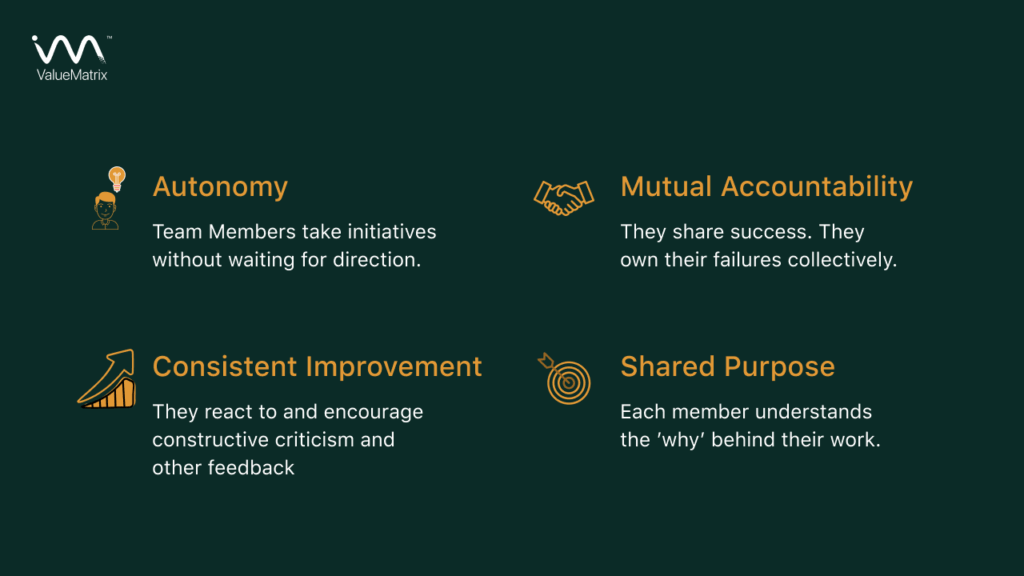
While several teams may work well enough to meet expectations, high-performing teams go a step beyond. They show:
- Autonomy: Team members take initiative without waiting for directions.
- Mutual Accountability: They share success. They own their failures collectively.
- Consistent Improvement: They react to and encourage constructive criticism and other feedback.
- Shared Purpose: Each member understands the ‘why’ behind their work.
Such teams operate with a firm psychological contract – an unspoken agreement that everyone is committed not just to the result but to supporting each other in their journey. This contract fosters trust, respect, resilience, and collaboration – even in high-pressure situations.
Whether it’s the small agile product teams in a tech startup or cross-functional project teams in a multinational corporation, the defining characteristic remains the same. The team performs not because they must, but because they are driven to.
The Psychological Foundations of Performance
Every high-performing team has a strong foundational base of key psychological factors. These factors can be how individuals behave, what their motivations are, and how they interact within the group. There are several tools, structures, and processes designed for a team to function well. But these aforementioned psychological factors will often determine if a team succeeds or not.
Core Psychological Theories That Are At Play
1. Maslow’s Hierarchy of Needs
Maslow’s classic framework proposes that people prioritize fulfilling their basic needs, such as self-esteem, their sense of belonging, and safety, before actively pursuing bigger achievements. For a team, it means creating a sense of belonging and esteem. It also means creating that sweet spot where member will feel respected and want to meaningfully contribute.
Teams that meet these psychological needs are naturally more engaged, collaborative, and motivated.
2. Tuckman’s Stages of Group Development
In 1965, Bruce Tuckman, an American psychologist and researcher, proposeda model of group development. He called it the Forming, Storming, Norming, Performing model. And that model is still pertinent in today’s modern world. It depicts how teams go through predictable stages of evolution:
- Forming: In this stage, the members are cautiously optimistic. They begin to get acquainted and to know each other well.
- Storming: At this stage, Tuckman thinks there will be a clash of priorities. Team members collide because of differences of opinion, ideas, personalities, and perspectives.
- Norming: After the initial storm, the team starts trusting its members. The roles get clearer with a more aligned vision and purpose.
- Performing: At this stage, the team is fully functional with all the necessary success ingredients. It’s in an autopilot mode with high-class autonomy and collaboration.
Understanding these stages helps leaders guide teams through friction towards productivity rather than mistakenly identifying natural growing issues as failures.
3. Social Identity Theory
People are psychologically wired to seek a sense of belonging and identity through group affiliations. Social Identity Theory proposes that members perform better when they strongly identify with their team. Having a collective identity motivates people better and allows them to function better under pressure. These team members understand ‘who we are’ as a group and hence create a collective identity with common goals and rituals.
Psychological Safety: The Cornerstone of Success
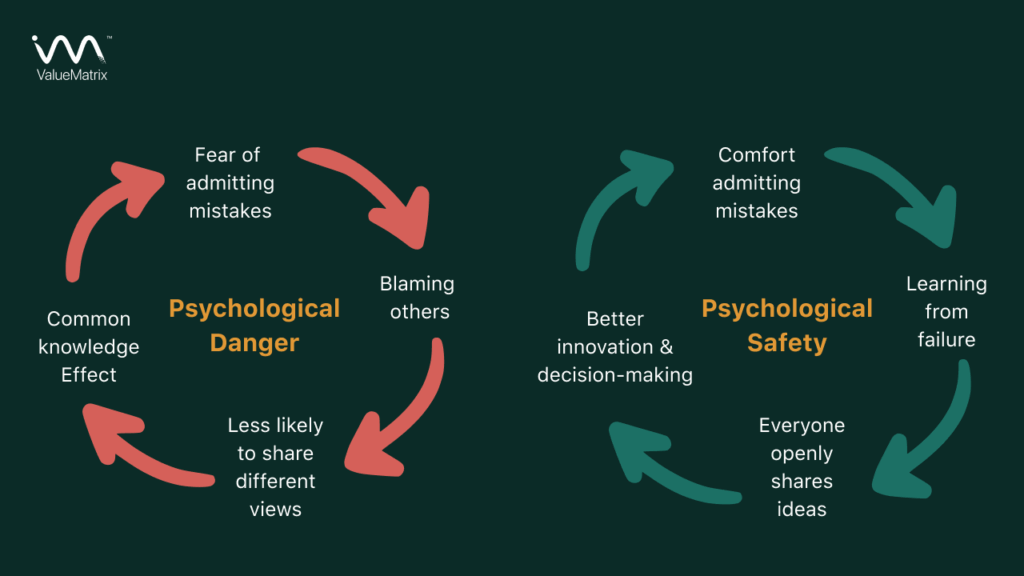
Harvard Professor Amy Edmondson proposed the concept of psychological safety in her research. She suggested that in a psychologically safe environment, team members are not afraid of interpersonal risks as it won’t lead to humiliation or punishment. Psychological safety helps create an environment of open communication and learning and the team is better equipped to innovate and deliver results.
As mentioned earlier, Google’s Project Aristotle showed that psychological safety was the most crucial factor for a team’s success. Teams that provide psychological safety are successful because members aren’t afraid to ask questions. They challenge assumptions and even admit mistakes without fear.
The Science of Motivation and Engagement
Understanding Intrinsic and Extrinsic Motivation
Psychology makes a clear distinction between intrinsic motivation and extrinsic motivation. Motivations driven by purpose, personal growth, and curiosity are labelled intrinsic. On the other hand, rewards, recognition, or fear of consequences drive extrinsic motivations. Typically, a high-performing team thrives on intrinsic motivation. It has a shared purpose as well as the satisfaction of meaningful work.
What’s The Role of Purpose and Autonomy
According to Daniel Pink’s work in “Drive”, autonomy, expertise, and purpose are the main driving factors to excel in knowledge-based work. Teams that have the freedom to make their own decisions are more naturally committed and productive. These teams develop relevant skills and show a better understanding of the broader mission.
Shared Goal Creates Focus
Clear goals help a team create a nice psychological energy.Research shows that having clear goals and objectives drives up the team’s performance by nearly 25%.
Key Psychological Traits of High-Performing Teams
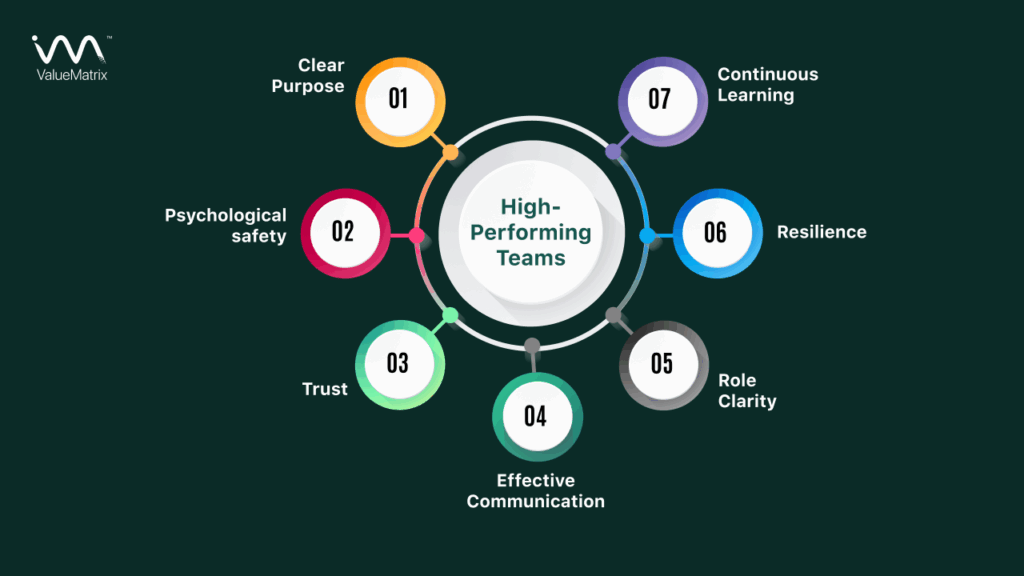
High-performing teams don’t appear out of thin air. They are built on core psychological traits that allow members to effectively work together. We will learn some of the key psychological characteristics that define such teams:
- Psychological Safety and Trust: Trust is the base of high standards and performance for any high-performing team. Without trust, you cannot have proper collaboration and get results. They simply cannot innovate as the members do not know whom to rely upon. Teams with high psychological safety are more likely to come up with diverse ideas and quickly adapt to change.
- Open Communication and Feedback Mechanism: Another key characteristic of any high-performing team is that they have transparent and frequent communication. They have clear communication channels where the members appreciate feedback and perceive criticism as a growth tool. They specialize in active listening, ensuring everyone is heard and valued.
According toa study, communication patterns – more than individual intelligence, skill, or personality – are the most important predictors of a successful team. The best team communicates frequently, face-to-face, and most importantly, equally among all members. - Growth Mindset and Resilience: Carol Dweck defines growth mindset as the way to develop required abilities and intelligence through consistent effort and learning. High-performing team truly embodies this mindset. They convert challenges into opportunities. They appreciate feedback, work on it, and see failures as stepping stones.
Additional Attributes as icing on the Cake
A complementary trait to this mindset is being resilient. Resilient teams have strong morale even under dire circumstances. They can adapt according to situations and resolve conflicts. They can recover from failures quickly and can achieve their long-term objectives in a better way. Multinational companies like Microsoft have actively integrated the principles of a growth mindset into their corporate culture. These companies focus more on learning than on perfection and encourage experimentation.
- Shared Purpose and Values: As a high-functioning team, it is important to precisely align goals so as to drive collaboration. When every team member understands the “why” behind their work, they can focus better and achieve superior outcomes. A shared goal works as a north star for the team. It guides decision-making and behaviour patterns, particularly during challenging times. APwC’s Global Culture Survey of 2021 found that 72% of employees say a clearly defined sense of purpose creates a thriving business culture, transformation, and improves performance.
- Ownership and Accountability: High-performing teams take ownership of individual tasks as well as of the team’s collective outcomes. Taking accountability leads to a disciplined, trusted culture without any room for the blame game. Generally, the accountability within such teams is driven by the members themselves rather than flowing across the hierarchy. Team members expect each other to work at the highest standards. They will actively address any issues or workflow gaps and celebrate wins together.
The Role of Leadership and Communication
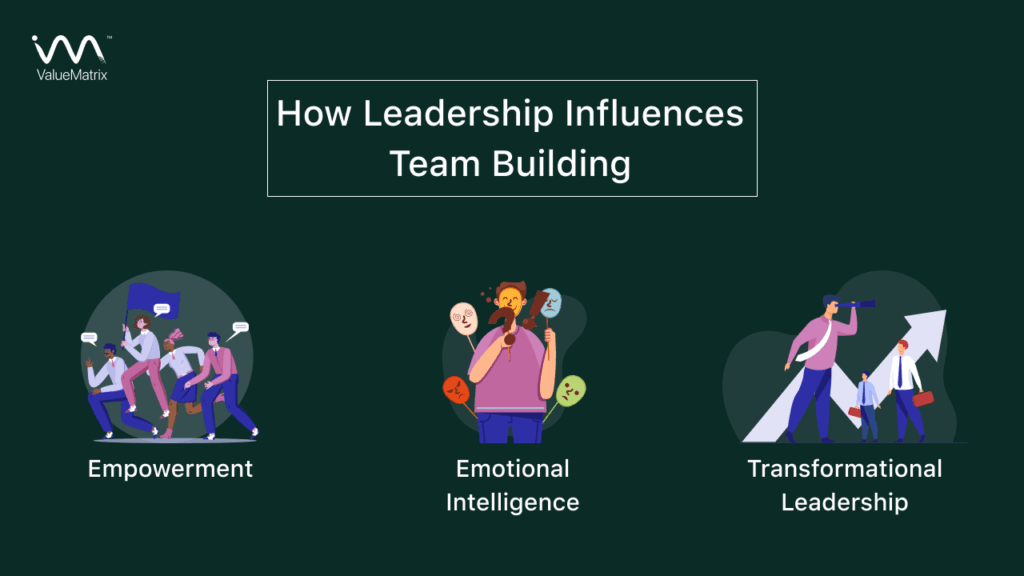
Even the most talented teams need solid leadership to convert their potential into high performance. Leadership guides a team’s culture, communication patterns, and psychological safety. These factors further dictate the team’s efforts to deliver results collaboratively.
1. Influence of Leadership
The Psychology of Leadership shapes how teams work together. When teams are led by transformational leaders, they don’t just function; they improve and often exceed expectations. They know how to make people work towards a shared goal. They build trust through empathy, encourage growth, and focus on what drives people, not just what gets done. That’s a big contrast to transactional leaders, who stick to checklists and short-term results. The difference shows – leaders who lean into empowerment and trust are about twice as likely to build teams that consistently perform at a high level.
2. Building Empathy and Emotional Intelligence
Emotional quotient (EQ) means the ability to manage, understand, and influence emotions. It is one of the non-negotiable traits for effective leadership. Teams led by high EQ leaders show improved morale and collaboration. These leaders build trust faster and resolve conflicts more effectively. They also cultivate a sense of belonging within their teams. Empathy, which is a core component of EQ, allows such leaders to understand their members’ perspectives. It also helps them to tailor communication styles and support their team in such a way that it promotes psychological safety and engagement.
3. Using Communication as a Psychological Tool
Effective communication isn’t just about passing information back and forth. It’s about understanding each other’s point of view and resolving conflict effectively. In great teams, communication is multidirectional, frequent, and has a clear purpose. A key feature here is creating a feedback culture. Best-performing teams view feedback as a continuous process rather than a periodic event. Moreover, clear communication leads to defining roles and expectations. It helps minimize friction and promotes accountability.
4. The Impact of Leadership on Psychological Safety
Leadership directly impacts the team environment. It decides whether the members feel safe enough to speak up, share ideas, and admit their mistakes. Leaders are the key figures in creating such a secure environment.
Simple acts like leaders accepting their mistakes, asking for feedback, and showing vulnerability can go a long way in setting the tone of openness and trust within the team. When leaders prioritize empathy, clarity, and inclusion, they create a ripple effect where each member feels valued, heard, and motivated to perform at their best.
Building a High-Performing Team
Understanding the psychology behind high-performing teams isn’t difficult. The tricky part is taking those insights and applying them to your team. How can leaders and companies apply that understanding to build and keep these incredible teams going strong? It’s never just luck; it comes down to deliberate choices, bringing on the right people, and having solid systems in place.
Hiring for Psychological Fit, Not Just Skills
Technical skills and experience are definitely factors, but a team’s success often comes down to its culture and psychological strength. The best teams are those where individuals share core values and are genuinely willing to collaborate, no matter how demanding the situation. During hiring, leaders should look beyond resumes and evaluate for:
- Emotional intelligence
- Adaptability to feedback
- Collaboration skills
- Connect with the company’s vision
Psychometric tests like personality assessments, behavioural interviews, and situational tests can help in understanding if a candidate is likely to thrive in a competitive performance culture.
Investing in Team Development
Keeping a team performing at its peak means constantly investing in its growth and learning. This isn’t just about making individual team members better; it’s also about strengthening what the team can achieve together. Key initiatives to achieve this can be:
- Workshop on collaboration, communication, and feedback.
- Team building exercises focused on empathy and trust.
- Regular retrospectives to reflect on what’s working and what needs changing.
- Coaching and mentoring programs to cultivate a growth mindset.
Creating Rituals and Norms that Reinforce Performance
High-performing teams have their unique rituals. They follow specific routines. Their work norms support their culture. These practices build psychological safety and also boost collaboration significantly.
Some examples can be:
- Daily stand-ups
- Feedback sessions
- Knowledge sharing forums
- Recognition rituals
Measuring and Reinforcing Positive Behaviours
What gets measured can be managed. And what gets recognized gets repeated. High performing teams have clear metrics beyond the usual KPIs to include cultural and behavioural indicators such as:
- Collaboration quality
- Levels of psychological safety
- Feedback participation rates
- Engagement and well-being scores
Leaders can encourage desired behaviors in a few key ways. They practice recognition patterns, peer shout-outs, and open feedback systems. AGallup study found that employees who get recognized are way more engaged and dedicated to their company’s mission and purpose.
Why Psychology Matters More Than Ever?
You cannot create high-performing teams by luck or talent alone. You need to build such a team intentionally, based on communication, trust, and shared purpose. Having a deep sense of the psychological dynamics will help create an environment that drives people to their best work together.
Throughout this piece, we have explored how psychological concepts like emotional intelligence, psychological safety, trust, accountability, and growth mindset form the cornerstone of team excellence. These aren’t just “soft skills”. Instead, they drive productivity and innovation.
Companies that grasp this change will truly excel. It’s about shifting from managing people as resources. Instead, it’s about nurturing them as human beings. People have deep psychological needs.
Such organizations consistently outperform others. They build cultures where team members feel safe. People express themselves freely. They’re not afraid of taking chances. They embrace their responsibilities. Plus, they all collaborate with a single purpose in mind.
The evidence speaks for itself. We have seen different studies from global giants showing teams rooted in these psychological principles consistently deliver better results. But perhaps the most important takeaway is this:
High-performing teams don’t just achieve outcomes. They elevate the people within them.
Building a high-performing team can be complicated. But it need not be done alone. We, at ValueMatrix, understand these traits and their applications. Our product can help you get the most out of your data and hire better to build such a high-performing team.
In the corporate world increasingly defined by uncertainty and sudden changes, this might be the most valuable performance metric of all.
About Us
ValueMatrix helps organizations build culturally cohesive teams with AI-powered recruitment and retention strategies. We educate corporate leaders on the importance of involving and encouraging all generations to adopt enterprise values and participate actively to achieve excellence.
Our AI-powered platform transforms talent acquisition with intelligent hiring techniques backed by established psychological frameworks. We partner with HR professionals to conduct unbiased and holistic assessments for aspiring candidates.