
Key Takeaways
- AI is transforming employee engagement from a reactive, survey-based process into a continuous, proactive, and personalized experience.
- AI tools can deliver personalized feedback, recognition, learning recommendations, and real-time support that make employees feel valued and motivated.
- Predictive analytics and sentiment analysis help HR teams spot disengagement, burnout, and attrition risks early so they can intervene before problems grow.
- The biggest benefits of AI-driven engagement include higher productivity, better retention, stronger goal alignment, and more data-informed HR decisions.
- AI is most effective when it supports, not replaces, human managers, with empathy, leadership, and judgment still playing the central role.
- Responsible adoption matters because privacy, bias, technostress, and over-reliance on automation can undermine trust if AI is not governed carefully
Introduction
In 2026, employee engagement has become a critical priority for organizations seeking to drive productivity, retention, and overall workforce satisfaction. Traditional engagement methods, such as annual surveys and generic recognition programs, often fail to capture employees’ real-time sentiment. This gap is where AI in employee engagement is transforming the landscape, offering tools that are not only responsive but also predictive and adaptive. By leveraging AI-powered employee engagement platforms, organizations can continuously monitor performance metrics, communication patterns, and feedback to better understand employee needs.
The role of AI in employee engagement goes beyond simple automation. Modern systems can provide personalized feedback, automate recognition for achievements, and even recommend targeted learning and development programs. These capabilities contribute to AI’s benefits for employee engagement, including higher motivation, reduced attrition, and improved overall satisfaction. As organizations explore the future of AI in employee engagement, the focus is shifting from reactive strategies to proactive engagement that anticipates challenges before they escalate.
Additionally, AI trends shaping employee engagement include conversational assistants, predictive analytics, and sentiment analysis, enabling HR teams to implement more agile, data-driven strategies. Organizations are also addressing AI adoption barriers in employee engagement, such as data privacy concerns and integration challenges, while maintaining ethical standards through AI for employee engagement in HR strategies and ethical issues.
By embedding these advanced technologies, companies are creating a continuous, personalized engagement experience that aligns with both individual career growth and organizational objectives. AI for employee engagement is no longer optional; it is a strategic enabler for building resilient and future-ready workplaces.
How AI is Transforming Engagement
Personalized Feedback and Recognition
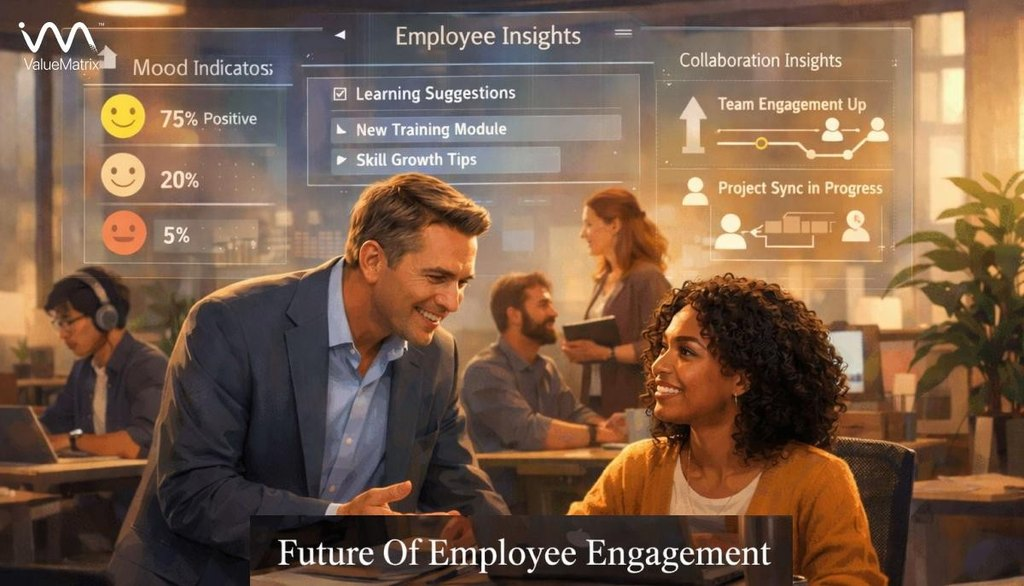
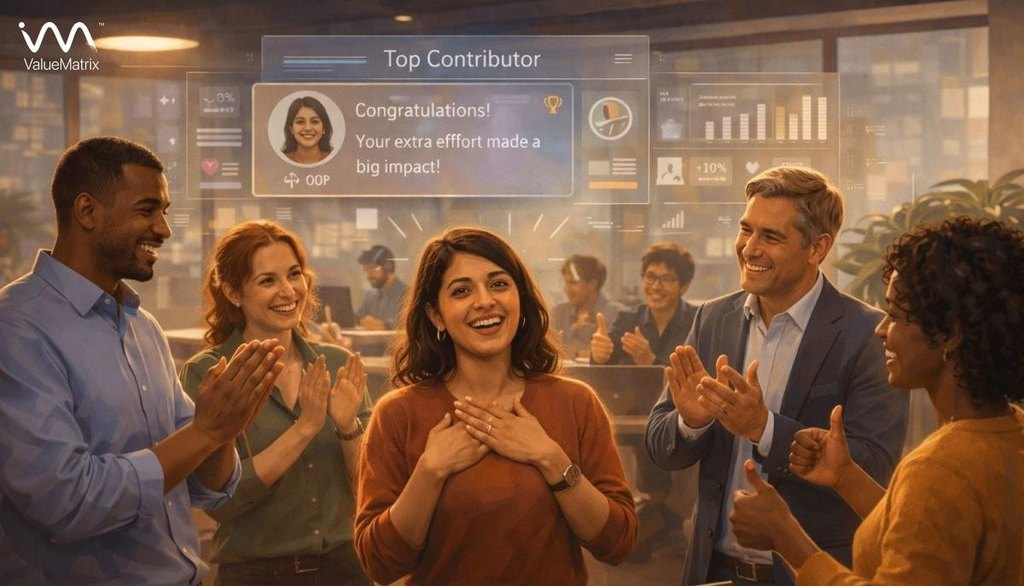
AI-powered employee engagement platforms analyze performance, collaboration, and contributions to provide personalized feedback and recognition. By celebrating meaningful achievements, employees feel consistently valued and motivated.
Predictive Analytics for Employee Satisfaction
With communication patterns, survey responses, and performance metrics, AI in employee engagement tools can anticipate dips in morale or potential attrition. This allows HR and leadership teams to act proactively, improving retention and engagement.
Chatbots and Virtual Assistants
Conversational AI and virtual assistants provide instant support for HR queries, on-boarding, and policy guidance. By integrating AI for employee engagement in HR strategies’ ethical issues, these systems enhance employee experience while reducing administrative workload.
Learning and Development
AI recommends tailored learning programs based on employee skills, career goals, and performance history. This ensures continuous skill growth and aligns personal development with organizational objectives, showcasing the benefits of AI for employee engagement.
Real-Life Scenario
In 2023, Unilever expanded its use of AI-driven people analytics to strengthen employee engagement across its global workforce. The company leveraged AI to analyze performance data, internal mobility signals, and continuous feedback to provide managers with personalized, actionable insights. Instead of relying on generic engagement surveys, managers received targeted recommendations around recognition, development conversations, and workload balancing. This shift helped Unilever move toward proactive engagement management and improved trust between employees and leadership.
In the same period, IBM applied AI-powered predictive analytics to identify early indicators of disengagement and potential attrition. By combining collaboration data, sentiment signals, and historical engagement trends, IBM enabled HR and managers to intervene before issues escalated. These interventions included role realignments, targeted learning opportunities, and manager-led conversations, resulting in improved retention and employee satisfaction. This initiative illustrates how AI for employee engagement can transform engagement from reactive to preventive.
These real-world implementations confirm that AI-powered employee engagement is not a theoretical concept. Leading organizations are already using AI to deliver personalized feedback, predict disengagement, support employees in real time, and align development with purpose, all while keeping human leadership at the center.
What are the key trends in AI-powered employee engagement?
Predictive and Personalized Experiences
The next generation of AI-powered employee engagement moves beyond passive observation. Advanced AI systems anticipate employee needs and recommend personalized career growth opportunities, learning paths, and recognition. Employees feel proactively supported rather than waiting for periodic feedback, fostering higher motivation and satisfaction.
Real-Time Sentiment Analysis
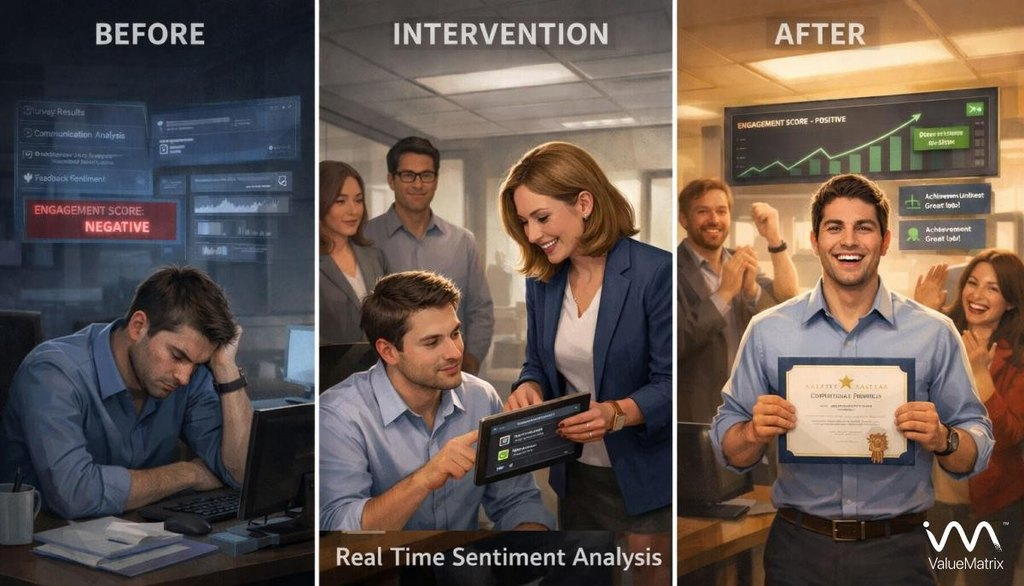
AI in employee engagement now includes real-time sentiment analysis. By monitoring communication patterns, surveys, and informal feedback, agentic AI identifies shifts in morale. HR teams can intervene proactively, preventing disengagement before it escalates and ensuring workforce well-being.
Well-Being and Burnout Prediction
Advanced AI platforms can detect up to 90% of potential burnout cases. Personalized mental health support or automated alerts to managers help maintain a healthy workforce. This demonstrates the benefits of AI for employee engagement, ensuring both individual and organizational resilience.
Enhanced Remote Collaboration
AI tools facilitate seamless collaboration across global and hybrid teams. Features like automated meeting notes, video translation, and collaboration insights reduce friction in distributed work environments. This aligns with best practices for AI in employee engagement and supports continuous productivity.
Real-Life Scenario
In 2023, Microsoft strengthened predictive and personalized employee engagement through its Viva platform, which integrates AI to surface individualized insights around learning, focus time, and collaboration patterns. By analyzing work habits and employee signals, Viva provides tailored recommendations to managers and employees, enabling proactive engagement interventions instead of generic programs. This initiative clearly reflects how predictive personalization is shaping modern engagement strategies.
Meanwhile, Zoom leveraged AI-driven collaboration insights to support engagement in remote and hybrid environments. Features such as automated meeting summaries, sentiment cues, and engagement analytics helped managers understand participation levels and collaboration gaps without manual tracking. This reduced friction in global teams and strengthened inclusion for remote employees, highlighting how AI is enhancing asynchronous collaboration and engagement.
Together, these examples confirm that AI-powered employee engagement trends like predictive personalization, real-time sentiment analysis, burnout prevention, and remote collaboration are actively shaping how leading organizations engage their workforce at scale.
What are the benefits of AI-driven engagement?
Higher Productivity and Motivation
AI-powered employee engagement platforms deliver personalized support and recognition, making employees feel valued. This boosts performance and morale, encouraging proactive contributions and higher overall productivity.
Improved Retention
By leveraging predictive insights, AI in employee engagement tools allow HR teams to identify employees at risk of disengagement. Proactive interventions reduce turnover, protect critical talent, and lower recruitment and training costs, demonstrating the measurable benefits of AI for employee engagement.
Alignment with Organizational Goals
AI-driven insights help align employee engagement strategies with company objectives. Managers can ensure that team efforts not only satisfy employees but also focus on outcomes that directly impact organizational success, highlighting the role of AI in employee engagement.
Data-Driven Decision Making
With AI-powered employee engagement analytics, managers receive actionable recommendations for improving team performance, coaching, and recognition. Decisions grounded in data enhance both employee satisfaction and team effectiveness, while enabling continuous optimization of engagement initiatives.
Real-Life Scenario
In 2023, Adobe strengthened AI-powered employee engagement through its AI-enabled performance and feedback framework. Adobe uses AI to analyze continuous feedback, progress toward goals, and collaboration patterns, helping managers conduct timely check-ins and provide recognition. By replacing traditional annual performance reviews with AI-supported continuous feedback, Adobe improved employee motivation, alignment, and productivity. This approach demonstrates how AI in employee engagement can enhance performance without sacrificing trust or human connection.
In 2024, Walmart leveraged AI-driven employee engagement analytics to reduce frontline attrition and improve workforce stability. By analyzing attendance trends, engagement signals, and performance data, Walmart’s AI models identified early signs of disengagement. Managers received actionable insights, including shift optimization, targeted training, and internal mobility suggestions. This real-world implementation highlights the benefits of AI for employee engagement, especially in large-scale organizations with diverse workforces.
These real-life examples prove that AI-powered employee engagement delivers tangible benefits, higher productivity, stronger motivation, improved retention, and smarter decision-making when implemented thoughtfully and aligned with human leadership.
What are the future roles of AI and HR?
Collaborative HR
AI in employee engagement is empowering HR professionals to rise above tedious administrative work and focus on strategic initiatives that drive organizational performance. Modern AI tools automate repetitive tasks like scheduling, onboarding paperwork, payroll processing, and compliance tracking, freeing HR teams to concentrate on culture building, learning strategies, and workforce planning.
Real-Life Scenario: In 2025, companies using the HR platform Shapes PeopleOS have been automating onboarding, payroll, and retention risk assessments with AI modules that execute workflows without constant human input. This automation has allowed HR teams at firms including Quantum Machines and NextSilicon to reinvest human effort into developing talent frameworks and employee experience strategies rather than paperwork.
Emotionally Intelligent Assistants
Future AI-powered employee engagement platforms will include emotionally intelligent assistants that go beyond simple chatbots. These systems interpret employee sentiment, team dynamics, and conversational context to provide empathy-based insights that help managers address conflicts, tune team motivations, and shape engagement strategies that reflect real needs, not just data points.
Real-Life Scenario: Deel’s AI tools, deployed in partnership with organizations like Arsenal Football Club in late 2025, include personas that assist with tasks from scheduling to employee policy questions while keeping human supervision integral, demonstrating how emotionally aware AI can support HR operations at scale without replacing compassionate leadership.
Ethical Data Usage
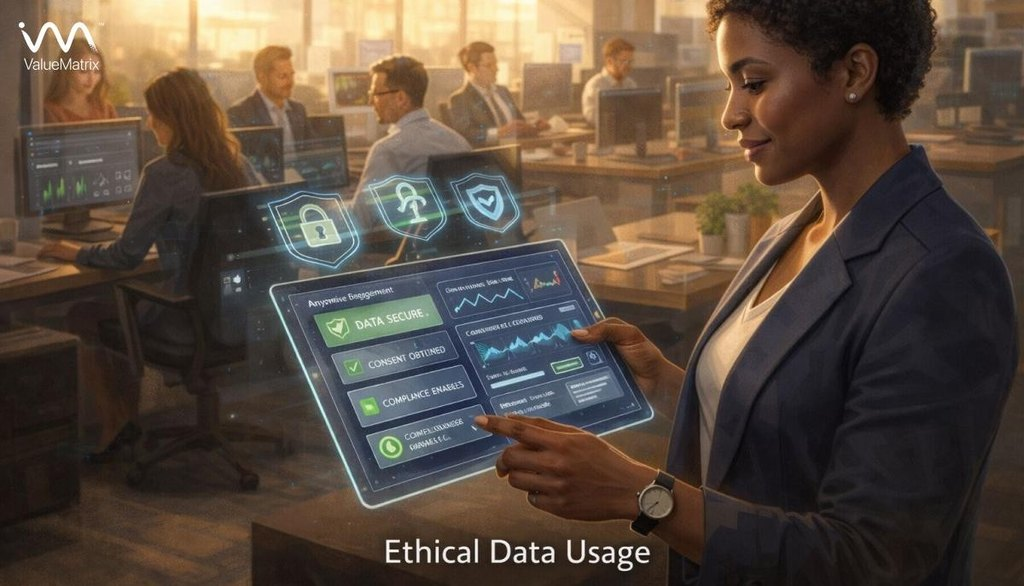
As organizations adopt AI for employee engagement in HR strategies, ethical issues, ethical data governance, and transparent communication become critical. Compliance with frameworks such as India’s DPDP Act and global data protection norms ensures that employee data is securely handled, protects privacy, and builds trust in automated HR decisions. Responsible AI use requires organizations to disclose what data is used, how decisions are derived, and where human oversight remains essential.
Real-Life Scenario
Phenom, a leading AI HR platform, reports that companies using its AI solutions have seen significant gains in engagement and retention while maintaining strong data protection and privacy practices. These outcomes illustrate how thoughtful governance paired with AI can enhance engagement while respecting employee rights and ethical standards.
What are the challenges and considerations in adopting AI in employee engagement?
Adopting AI in employee engagement brings tremendous opportunities, but it also comes with a set of challenges that organizations must navigate carefully. While automation and predictive analytics can streamline processes, enhance productivity, and provide personalized experiences, over-reliance on AI can lead to technostress, inefficiencies, or a loss of human connection. Privacy and ethical handling of employee data are paramount, and organizations need to ensure that AI complements, rather than replaces, human interaction. Balancing quantitative AI insights with qualitative judgment is essential to maintain trust, morale, and empathy in the workplace. This section highlights the challenges of AI in employee engagement, their corresponding considerations, and practical solutions organizations can implement.
To provide a clear overview, the chart below identifies ten common challenges, the key considerations for each, and suggested solutions to minimize or eliminate their impact.
| Challenge | Consideration | Solution |
| Privacy concerns | Ensure compliance with local and global data protection laws | Encrypt data, implement role-based access, conduct regular audits |
| Ethical use of AI | Maintain transparency and fairness in algorithms | Establish AI ethics committees, document decision processes |
| Technostress among employees | Balance automation with human support | Offer training, monitor workload, provide opt-out options |
| Over-reliance on algorithms | Don’t ignore qualitative employee feedback | Combine AI insights with manager-led feedback sessions |
| Immature tools / software bugs | Ensure robust implementation and testing | Pilot AI solutions before full-scale deployment |
| Loss of empathy in interactions | Maintain personal connection in engagement | Encourage manager check-ins, integrate AI with human touchpoints |
| Resistance to change | Address cultural barriers and skepticism | Run awareness campaigns, show AI benefits via demos |
| Bias in AI predictions | Avoid reinforcing inequalities | Regularly audit models, use diverse datasets |
| Data overload | Avoid overwhelming HR teams with too much info | Use dashboards with prioritized, actionable insights |
| Misalignment with organizational goals | Ensure AI supports strategic objectives | Set clear KPIs, align AI outcomes with business and employee goals |
Real-Life Scenario
In 2024, Accenture implemented an AI-driven employee engagement platform across its global workforce. The system faced challenges common in modern workplaces: employees were initially concerned about privacy and potential bias in AI predictions. To address these, Accenture deployed encrypted, role-based access and established clear governance policies, ensuring ethical use of AI. They balanced automation with human interaction by combining AI-driven sentiment analysis with regular manager check-ins, preventing technostress and maintaining empathy.
Over-reliance on AI outputs was mitigated by incorporating qualitative feedback from focus groups. Pilot testing helped iron out immature tool glitches, while dashboards prevented data overload and prioritized actionable insights. Bias audits ensured fair AI recommendations for promotions and development. Finally, all AI initiatives were aligned with organizational goals, linking engagement metrics to productivity, retention, and learning objectives. This comprehensive approach demonstrates that the challenges, considerations, and solutions in the chart are practical, implementable, and measurable, providing real-world validation of best practices in AI-powered employee engagement.
How is the future outlook with the expanding role of AI in employee engagement?
AI as an Enabler, Not a Replacement
The future of AI in employee engagement is not about replacing HR professionals or people managers but about strengthening their ability to lead with impact. AI will increasingly assist with data analysis, engagement tracking, and administrative workflows, while humans focus on empathy, coaching, and decision-making. This clearly reinforces the role of AI in employee engagement as a support system rather than a substitute for human leadership.
AI-Powered Engagement in Hybrid and Remote Work
As hybrid and remote models become the norm, AI-powered employee engagement solutions will be essential for maintaining consistency across distributed teams. AI will help organizations track participation, collaboration quality, and sentiment across locations, ensuring engagement does not decline due to physical distance. This marks a defining shift in AI trends shaping employee engagement in modern workplaces.
Adaptive Engagement Through Machine Learning
Machine learning will allow AI for employee engagement to continuously evolve by learning from employee behavior, feedback, and performance signals. Engagement strategies will no longer be static but adaptive, adjusting in real time to changing employee expectations. This adaptability represents the future of AI in employee engagement, where personalization becomes dynamic rather than periodic.
Smarter Motivation, Recognition, and Satisfaction
AI will enable organizations to understand what truly motivates different employees and teams. By identifying patterns in performance and engagement data, AI can recommend tailored recognition, growth opportunities, and rewards. These capabilities directly highlight the benefits of AI for employee engagement, improving motivation and long-term satisfaction without relying on generic programs.
Balancing Productivity and Well-Being
Future engagement strategies will focus on sustaining productivity without compromising employee well-being. AI will proactively detect disengagement, burnout risks, or workload imbalances and suggest corrective actions. Addressing these challenges of AI in employee engagement and how to overcome them ensures engagement remains sustainable and human-centered.
Human Judgment and Ethical Oversight
Even as AI becomes more advanced, human judgment will remain central. Leaders will interpret AI insights with context, emotional intelligence, and fairness in mind. Addressing AI adoption barriers in employee engagement requires transparency, ethical data usage, and strong governance, especially within AI for employee engagement in HR strategies’ ethical issues.
Building a Resilient, Connected Workforce
Organizations that embrace AI in employee engagement thoughtfully will build a resilient, motivated, and future-ready workforce. When aligned with ethics, strategy, and human values, AI becomes a long-term engagement partner that enhances satisfaction, productivity, and trust across the organization.
Conclusion: The Path Forward for AI in Employee Engagement
The evolution of AI in employee engagement marks a shift in how organizations understand, support, and motivate employees. Engagement is no longer reactive or based solely on annual surveys. It enables proactive, continuous, and personalized strategies that respond to employee needs in real time.
This blog highlighted challenges in employee engagement, such as generic feedback, delayed sentiment tracking, and limited HR capacity. These barriers often prevent timely interventions. Building on this, we explored how AI-powered employee engagement is transforming engagement through personalized feedback, predictive analytics, conversational support, and tailored learning pathways, allowing HR to focus on strategic impact.
Key trends in AI-powered employee engagement, predictive personalization, real-time sentiment analysis, burnout prediction, and enhanced remote collaboration demonstrate tangible benefits. Organizations see higher productivity, improved retention, better goal alignment, and data-driven decision-making.
Adoption requires caution. Ethical data use, privacy, technostress, and over-reliance on algorithms are real risks. As discussed in the Challenges and Considerations section, governance, transparency, and human oversight are essential to maintain trust and effectiveness. Looking ahead, AI in employee engagement is a collaborative tool, not a replacement. It handles complexity and scale, freeing humans to focus on empathy, leadership, and culture. When implemented responsibly, it fosters a motivated, resilient, and connected workforce, blending technological intelligence with human insight to support sustained engagement and organizational success.
Frequently Asked Questions (FAQs)
1. What is AI in employee engagement?
AI in employee engagement refers to using intelligent systems to analyze employee data, sentiment, and behavior to improve motivation, satisfaction, and workplace experience through personalized and proactive actions.
2. How does AI-powered employee engagement differ from traditional engagement methods?
Traditional engagement relies on periodic surveys and manual interventions, while AI-powered employee engagement enables real-time insights, continuous feedback, and predictive actions based on employee behavior and sentiment.
3. What are the key benefits of AI for employee engagement?
The main benefits include improved productivity, higher retention, personalized learning and recognition, faster issue resolution, and data-driven HR decision-making.
4. Can AI accurately measure employee sentiment?
Yes, modern AI tools use natural language processing and behavioral data to analyze communication patterns, surveys, and feedback, making sentiment analysis more timely and accurate than traditional methods.
5. Does AI in employee engagement replace HR professionals?
No. The role of AI in employee engagement is to assist HR, not replace it. AI handles repetitive and data-heavy tasks, allowing HR professionals to focus on strategy, empathy, and human interaction.
6. What challenges of AI in employee engagement should organizations be aware of?
Common challenges include data privacy concerns, ethical use of employee data, technostress, algorithmic bias, and over-reliance on automation without human judgment.
7. How can companies overcome AI adoption barriers in employee engagement?
Organizations can overcome barriers by ensuring transparent AI usage, strong data governance, employee communication, phased implementation, and continuous human oversight.
8. Is AI-powered employee engagement suitable for remote and hybrid teams?
Yes. AI is particularly effective for remote and hybrid workforces by enabling real-time engagement tracking, virtual support, asynchronous collaboration, and consistent employee experiences across locations.
9. What is ‘technostress,’ and why is it important from the POV of employee engagement?
Technostress is the work-related stress caused by excessive or poorly implemented technology, and it matters for employee engagement because it can reduce motivation, trust, and productivity while increasing fatigue and disengagement.
10. How can organizations start implementing AI for employee engagement?
Companies should begin by identifying engagement gaps, selecting ethical and compliant AI tools, aligning AI initiatives with HR goals, training managers, and gradually scaling adoption based on outcomes.