
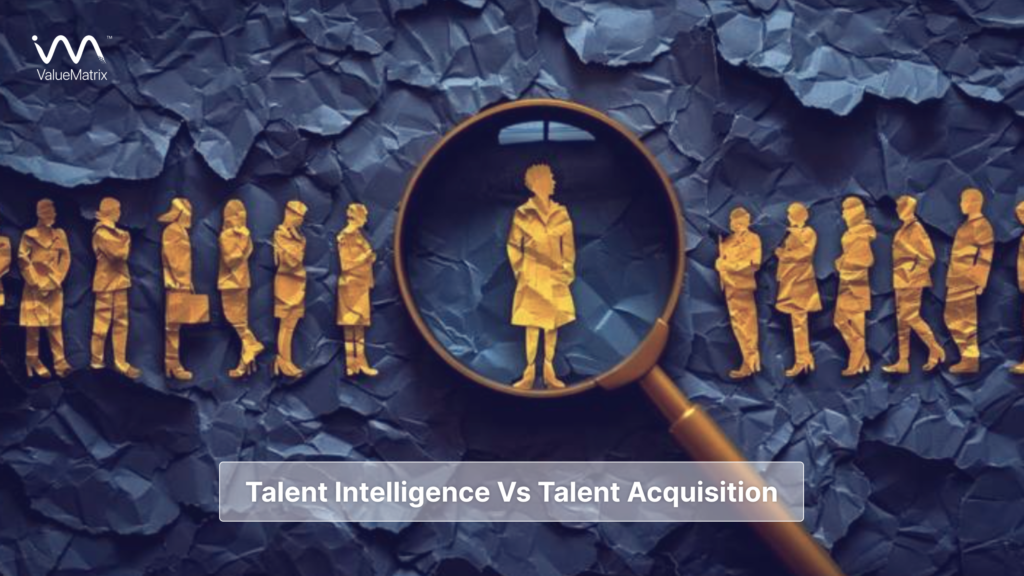
When it comes to finding and retaining top talent in today’s rapidly changing job market, companies are forced to make an often-difficult decision regarding their priorities. Do we hire the smartest people or get them hired the fastest?Both the selection of the best talent through Talent Intelligence (the ability to gather deep data-driven insights and then use those insights to make well-informed business decisions) and the acceleration of the hiring process with Talent Acquisition (speeding up the process of sourcing, interviewing, selecting, and hiring the right candidates) have important parts to play in answering this question. A good analogy is imagining if you had a crystal ball that would allow you to select the perfect candidate for each role and/or a turbo-charged version of your current hiring system that could provide you with rapid results. So, which route would your company take?
What is Talent Intelligence?
Image courtesy: Unsplash
Talent intelligence plays an important role in executing an effective recruitment plan. So, what does talent intelligence entail? Let’s take a closer look at the definition and importance of talent intelligence.
Definition and Importance of Talent Intelligence
At its core,talent intelligence (TI) is essentially the utilization of data, insights, and analytics to enhance decision-making regarding recruitment and talent management. As with the “corrective lenses” analogy, once you put on the “glasses” of talent intelligence, you will be able to see areas of potential and areas of vulnerability that were previously invisible.
Importance of TI
In today’s high-speed job market, companies cannot rely solely on traditional methods of finding qualified employees. The number of companies collecting data has grown exponentially. However, merely possessing data is insufficient. For creating meaningful action from your data, TI is most beneficial.TI provides actionable insights from your raw data, which allows organizations to make proactive hiring decisions. Organizations can not only locate suitable candidates but, utilizing TI, they can anticipate their future talent needs.
Business Impact of TI
With the use oftalent intelligence, organizations are creating a workforce that can adapt to changing environments. Instead of simply filling positions within the organizational structure, organizations are strategically placing individuals who will provide long-term value to the organization. Organizations view TI as a strategic investment rather than simply a transaction.
Tools and Technologies Used in TI
TI tools are designed to assist organizations in identifying top talent and are essential in providing organizations with the ability to automate and enhance their recruitment efforts. A few examples include:
- Artificial Intelligence (AI), Machine Learning (ML):AI and ML technologies form the base of many TI Platforms. These technologies review large amounts of data to look for patterns and make recommendations on strategy; AI is essentially a copilot that continuously reviews the landscape to help create a smooth recruitment experience for the hiring company.
- Predictive Analytics: Predictive analytics allows organizations to not only assess current conditions, but to forecast future events. Predictive analytics can be seen as a crystal ball that can forecast employee turnover, identify skill shortages, and even project future job performance.
- Talent CRM: Talent CRM systems enable organizations to build and maintain relationships with candidates over extended periods of time. Talent CRM systems enable organizations to establish a database of potential candidates who meet the cultural and technical qualifications of the organization.
- Talent Intelligence Platforms: Platforms such as LinkedIn Talent Insights, Eightfold.ai, and other similar platforms serve as integration engines, combining numerous data sources and converting those data sources into valuable insights related to talent pools, industry trends, competitive benchmarks, etc.
These tools help an organization make informed hiring decisions using data rather than intuition.
What is Talent Acquisition?

Image courtesy: Unsplash
Although the concept of talent intelligence appears to be futuristic,talent acquisition (TA) represents the reality-based, tangible application of concepts and principles associated with talent intelligence. TA represents the process of bringing qualified personnel into the organization.
Processes Involved in TA
In general usage, the terms “talent acquisition” and “recruitment” are often interchanged with one another; however, they have some distinct differences. An overview of the major steps involved in the process of TA includes:
- Sourcing and Recruiting: Sourcing and recruiting involve proactively looking for qualified candidates through various channels. Sourcing and recruiting can take many forms, such as advertising the position available to the public, reviewing candidates’ online profiles, or employing headhunters to find the best candidates.
- Screening and Interviewing: Screening and interviewing are two critical components of the hiring process. These two stages enable organizations to evaluate candidates based on their qualifications to see if they meet the established requirements of the job opening. During this stage, organizations can assess the candidate’s ability to perform within the specific culture and technical environment of the organization.
- Onboarding: The onboarding process does not just consist of having the new hire agree to work for the organization; it is meant to have the new hire integrate with the rest of the company so as to help retain employees.
Finding a Middle Ground Between Speed and Quality
Organizations try to acquire the top talent in the quickest possible time. Choosing speed over quality may sometimes lead to wrong hiring decisions and longer periods to find a replacement in case of attrition. The opposite is also true: selecting quality and reducing the pace of the hiring process may generate greater employee productivity and lengthier employment tenures within an organization.
TI and TA are both vital to success. However, utilizing TI will provide you with the ability to enhance the quality and speed of the candidate selection process (TA).
The Speed of Job Position Filling
While speed is one form of efficiency, time is simply one element of that. In addition to time, there are numerous methods to increase the total efficiency of your hiring process:
- Automation: By automating the most mundane, time-consuming, and repetitive recruiting tasks, recruiters are able to focus on high-value-added activities.
- ATS – Applicant Tracking Systems: A recruiting system to track and manage applicants enables a more streamlined recruiting process, enhanced communication, and reduced loss of candidates through the decision-making process.
- Structured Interviews: This format facilitates a systematic comparison of applicants that minimizes the risk of unconscious bias in candidate evaluations.
- Candidate Feedback Loops: Hiring manager feedback enables the identification of inefficiencies in the recruiting process and helps in ongoing improvement of the recruiting process.
In summary, TA has elements of speed, strategy, and efficiency, while talent intelligence provides the analytical data and strategic insights necessary to support informed and strategically based hiring decisions. As a result, TI and TA working together will eliminate the need for organizations to make trade-offs between acquiring talent faster versus smarter.
Talent Intelligence vs. Talent Acquisition
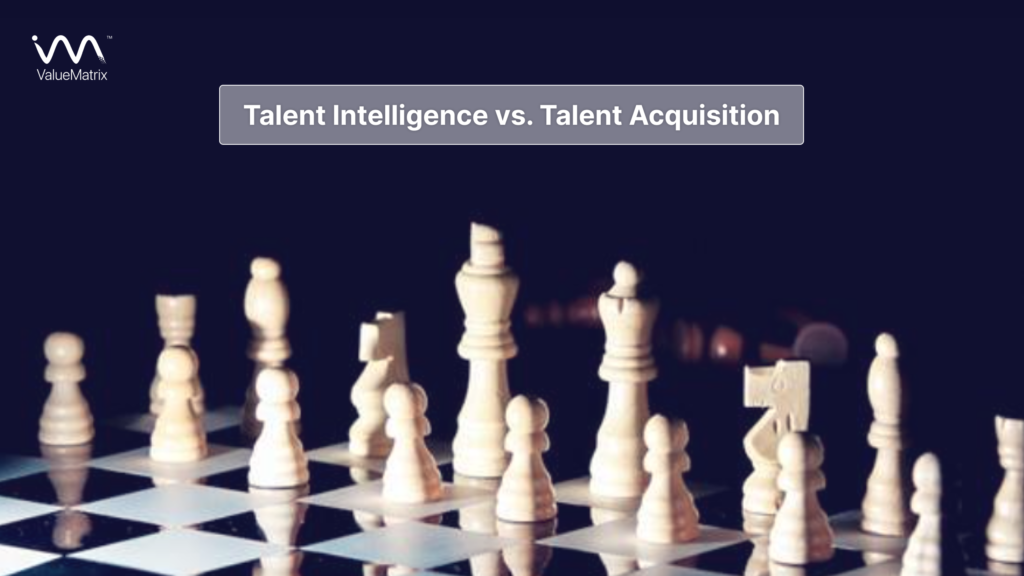
Image Courtesy: Unsplash
In today’s job market, businesses have the choice of whether to hire smarter or faster. In this regard, TI and TA both come with their unique set of advantages. To maximize their hiring, organizations must first understand how the two differ.
Aligning with Your Business Goals
Talent Intelligence
This strategy is centered around collecting and analyzing data. A TI platform allows organizations to collect and analyze data in order to determine workforce trends, to assess the potential of employees, and to establish performance standards. This is an ideal solution for businesses wishing to make educated, forward-thinking decisions concerning growth and sustainability. Utilizing TI, companies can identify the skills that will be the most relevant to achieving their long-term business objectives and create a match to support the sustained success of the business.
Benefits:
- Identify potential skill gaps.
- Forecast future talent requirements.
- Support innovation by linking talent with ongoing projects.
Talent Acquisition
TA involves acquiring the best candidates to fill open positions as soon as possible. It is generally used for positions where hiring has to be done immediately, and there is a lack of suitable talent.
Benefits:
- Reduce Time-To-Hire.
- Fill Urgent Hiring Needs.
- Ensure the continued operation of the business by immediately resolving staff shortages.
The selection of TI or TA most likely will depend upon the existing priorities of your company. If your company is presently expanding and building an employment base for future growth, then TI may be a better option. On the other hand, if your company needs additional personnel on priority to meet customer demand, TA may be a better option.
Costs and Return on Investment
The costs associated with implementing either strategy can have a significant effect on the bottom line of your company, and having a good understanding of these costs will enable you to maximize your dollars spent.
Talent Intelligence: While the initial investment in a TI Platform may appear to be costly, the ROI is generally substantial over the long term. Through the extensive data collected and analyzed via a TI Platform, companies can make more educated hiring decisions, resulting in lower turnover rates and subsequently lower recruitment costs, as well as increased productivity due to improved matches and increased employee engagement.
Considerations:
- Initial cost to acquire the technology and train users.
- Recurring costs for managing data and analyzing data.
Potential ROI:
- Higher quality of hires.
- Better workforce planning.
- Ability to support strategic business shifts with relevant talent.
- Cost savings due to reduced turnover and increased productivity.
Talent Acquisition: This strategy normally incurs direct costs, such as media on the Job Boards and Agency fees. Though fairly less tech-dependent than Talent Intelligent Companies, it may still work adversely on the budget if not managed carefully.
General Cost Considerations
- Direct costs for Job ads and Recruiter fees.
- High turnover may lead to more frequent hiring cycles.
- The potential hidden cost of a no-fit hire
Potential ROI
- Partial solution to the Immediate needs of staffing
- An immediate effect on the activities of the business
- Potential financial advantages accruing short term through fast-track training
Risks and Long-term Effects
Obviously, every method of recruiting has its own attendant risks, which can seriously affect the success of the business.
Talent Intelligence: This method reduces the risks which are inherent in the process of hiring, by showing the job analysis techniques from the data and making decisions based on evidence. Predictive intelligence demonstrates patterns that may help to eliminate the problems of personnel failures, such as a lack of necessary skills and high turnover.
Potential Risks:
- Over-reliance on data that does not take qualitative influences into account
- Initial study and analysis of data are inefficient.
Long-Term Impact:
- A more flexible and adaptive workforce.
- Less turnover due to better initial fit.
- Greater satisfaction of employees due to better job fitment
Talent Acquisition: A focus on short and fast cycles leads to a higher risk if staffing effort is completed in haste. Long-term availability of quality employees may also become an issue as positions are quickly filled with people who are not a good fit for the business culture.
Potential Risks:
- Increase in the possibility of turnover.
- Potentially mismatched candidates can affect the dynamics within the teams
- Increased possibility of good talent being overlooked, as they may need time to be discovered
Long Term Effects:
- Potential for continuous cycles of hiring and training
- Difficulty in managing the coherence of the organization and the culture
- Stagnation of innovation potential as the ability to staff is not strategic
Recommendations for HR Leaders
- HR professionals need to adopt a balanced data-driven method that goes beyond traditional acquisition metrics to perform strategic workforce planning and identify essential skills and predict upcoming talent requirements.
- Organizations need to make analytics and AI-driven insights their highest priority because these systems reveal hidden talent pools and predict candidate success, whichleads to improved employee retention and better job matches with organizational goals.
- Organizations need to run continuous talent development programs because talent intelligence shows skill deficiencies, which allows them to create individualized learning plans for staff members to achieve their peak performance.
- Organizations need to ensure Human Oversight and Transparency. While integrating AI into hiring and talent management, HR leaders need to maintain ethical guidelines, establish privacy protocols, and ensure informed human oversight of final decisions.
ValueMatrix’s Contribution to Smarter Hiring
- AI-Enabled 360° Talent Intelligence: ValueMatrix leads through its platform, which uses machine learning and natural language processing, and predictive analytics to deliver complete talent insights to HR teams about internal and external candidates.
The system goes beyond standard HR technology because it produces useful predictive information from unprocessed data, which helps organizations make strategic decisions through market intelligence and workflow optimization.
- Personalized Learning and Skill Development: The ValueMatrix platform generates customized development paths that identify performance gaps and suggest training recommendations to help employees advance with business objectives and upcoming needs.
- Continuous Performance Enhancement: ValueMatrix enables ongoing feedback and engagement tools that transform traditional yearly performance assessments into real-time performance tracking systems to boost employee satisfaction and maintain better retention rates.
The AI engine in ValueMatrix operates through artificial intelligence to reduce hiring biases while improving recruitment processes by enhancing candidate matching and performance prediction.
Conclusion
The recruitment process depends on Talent Intelligence and Talent Acquisition to build an effective team. Organizations choose between TI and TA systems based on their operational requirements and their human resources management approaches.
The ultimate objective should be to have an optimal balance of both models, which will lead to the creation of a team that is not only talented but also sustainable over the long term.
FAQs
Talent Intelligence develops strategic plans for future hiring requirements and workforce development, and employee retention through its combination of data analytics and AI technology, and market trend analysis. The main responsibility of Talent Acquisition involves candidate sourcing and interview processes, and hiring activities to fill current job openings that require urgent business attention.
TI enables organizations to choose better candidates through data-based assessment and candidate performance forecasting, and skill deficiency detection, which results in enhanced talent recruitment and longer employee retention periods.
No, TA is not only about speed. Organizations need to establish recruitment methods that help them find qualified candidates through active participation and complete integration processes to achieve fast hiring of top performers who meet all legal requirements.
The main advantages of this approach are higher employee retention rates, shorter hiring processes, better workforce planning, and superior talent market positioning.
No, although speed is important for urgent needs, for the long-term growth of a company, employee retention, and cultural fit are more essential.
About Us
ValueMatrix is an AI-powered talent intelligence platform that helps companies hire better, faster, and without bias. We go beyond resumes to assess skills, behavioral traits, and cultural fit using advanced AI and proven psychological frameworks. Our platform delivers data-driven insights that improve hiring accuracy, reduce time-to-hire, and elevate candidate quality.
ValueMatrix AI enables hiring teams to make confident hiring decisions and build high-performing teams at scale.