
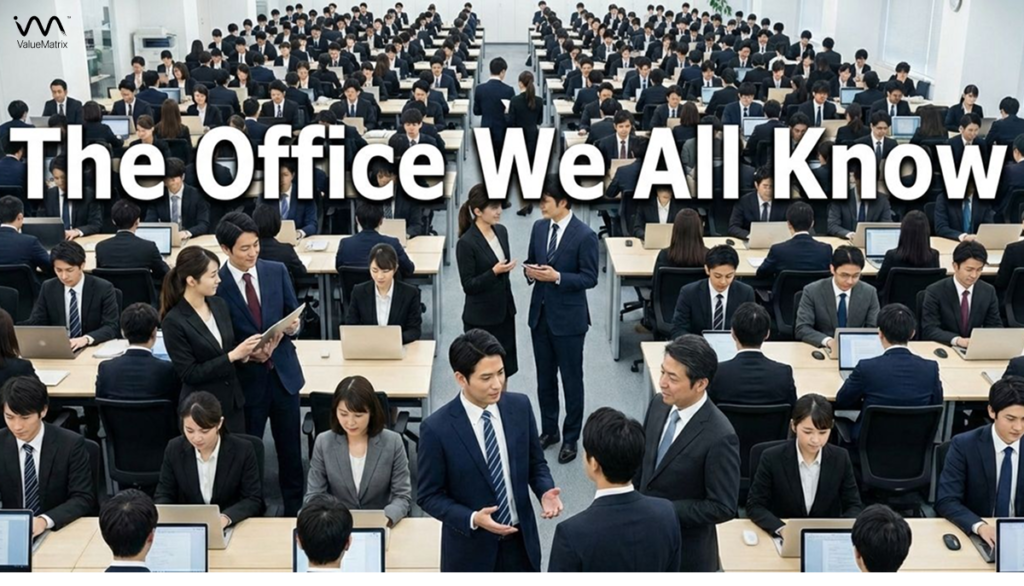
For a long time, workplace identity was tied to very visible, physical markers, the corner office, the formal suit, and the daily commute. An employee’s professional worth was often measured by presence. If you were seen at your desk, you were productive. If you were absent, your commitment was questioned, regardless of your actual output. Success and visibility were inseparable.
Today, rapid technological advances and major shifts in global work norms are rewriting this equation. Physical presence is no longer the main proof of dedication or performance. Employees can collaborate, innovate, and lead from anywhere in the world. Organizations that fail to recognize this risk lose top talent and stifling creativity.
We are in the middle of a profound organizational transformation. To succeed in this new landscape, leaders must go beyond tracking attendance and instead focus on building a meaningful, flexible, and resilient identity for each employee. This identity should empower people whether they are presenting in a boardroom, collaborating from a home office, or connecting virtually across continents. This is not just an HR initiative; it is a core business strategy. Redefining identity today is not optional but mandatory; it is a necessity for long-term growth, engagement, and survival in an unpredictable global market.
1. The New Geography: Flexibility and Work-Life Harmony
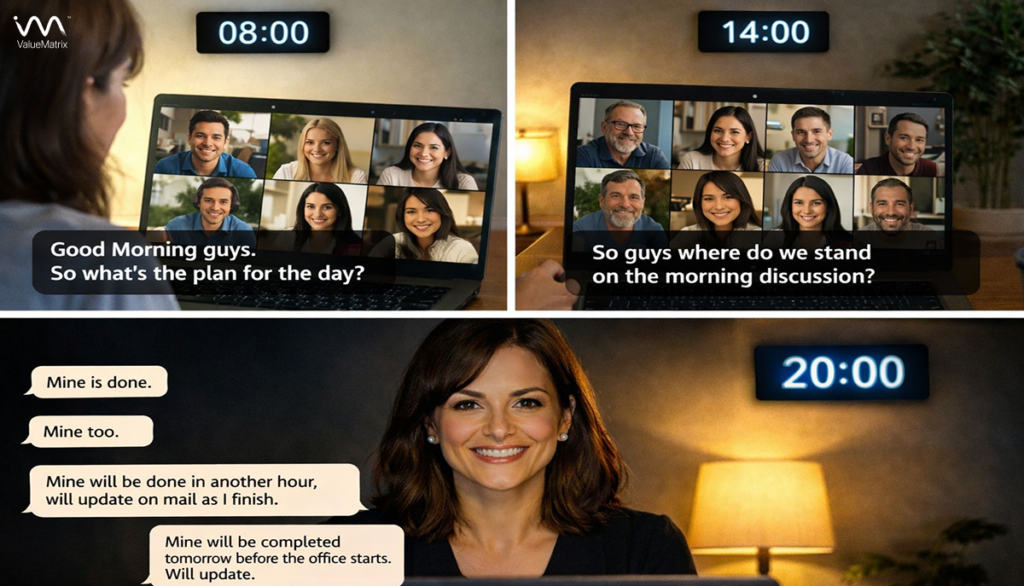
One of the most noticeable changes in workplace identity is how much our professional geography has shifted. The office is no longer a mandatory daily destination. It has become just one of several important connection points. Remote work has shown a clear truth supported by data, that productivity does not depend on a specific zip code, especially when combined with responsible AI in HR that measures output fairly. What truly drives performance are trust, strong technology, and deliberate, structured communication, reinforced by AI efficiency HR systems that balance flexibility with accountability.
In hybrid or fully remote models, collaboration does not happen by chance; it must be carefully designed. Teams can meet several times a day through video calls. For example, quick stand-ups to stay aligned while using asynchronous tools for focused, deep work. This setup often produces higher-quality outcomes than spontaneous hallway conversations because each email, chat, or shared document provides a clear, thoughtful record of decisions. Over time, employees can see their contributions in a transparent, verified way, strengthening accountability and clarity, and enabling human-centered AI HR practices to support rather than replace human judgment. The flexibility also allows individuals to balance creative thinking with structured collaboration, ultimately giving teams more control over how they produce their best work, fostering people-first AI design and AI and human connection.
The Balance Sheet of Flexibility: 16 Core Factors
| Pros of Flexibility (The Positive Edge) | Cons of Flexibility (The Strategic Risk) |
|---|---|
| Trust-Based Culture: Autonomy fosters mutual respect and individual ownership. | Risk of Isolation: A lack of physical social cues can lead to employee loneliness. |
| Enhanced Work-Life Balance: Integration of personal life reduces overall stress levels. | Blurred Boundaries: Without a commute, employees struggle to “switch off” after hours. |
| Global Talent Access: Recruiting based on skill rather than proximity to a physical hub. | Communication Lag: Asynchronous work can lead to delays in urgent decision-making. |
| Lower Burnout Risk: Eliminating the “commute tax” saves mental and physical energy. | “Always-On” Pressure: The unintentional expectation to be available 24/7 on digital tools. |
| High-Touch Collaboration: 3x daily video syncs ensure constant team alignment. | Digital Fatigue: “Zoom exhaustion” from excessive, back-to-back screen interactions. |
| Documented Precision: Distant collaboration via mail/chat ensures clear project trails. | Infrastructure Gaps: Uneven quality of home-office setups across the workforce. |
| Cost Efficiency: Significant overhead savings for employers and fuel savings for staff. | Mentorship Hurdles: Fewer “organic” learning moments for junior staff members. |
| Family Presence: Higher life satisfaction from being present for domestic milestones. | Managerial Learning Curve: Tracking sentiment is harder without face-to-face contact. |
Section Summary & Real-Life Scenario
The Scenario: Elena, a Senior Project Manager at a FinTech company, used to spend nearly 15 hours a week just commuting. Today, her professional identity is measured by her “Flow State” rather than her presence at a desk. She starts her day with a 15-minute video huddle at 9:00 AM, checks in during a midday deep-dive sync at 1:00 PM, and wraps up with a quick 10-minute meeting at 5:00 PM.
Between these meetings, Elena uses Slack and Jira to refine project details with a level of precision that would have been nearly impossible in the noisy, open-plan office. Her work is now more thoughtful and better documented, which reduces errors and makes collaboration seamless. Beyond productivity, she has time for life outside work, like having lunch with her elderly mother each day, something she could never do when tied to a long commute.
Every quarter, her entire team gathers at a central hub for three days of “Identity Workshops” and strategic planning. These face-to-face sessions ensure that the human connection remains the foundation of their digital efficiency. By blending focused, remote work with intentional in-person collaboration, Elena and her team experience both high performance and meaningful engagement, showing that professional identity can thrive anywhere with the right structure and trust.
2. Identity Beyond the Role: Prioritizing Purpose and Values
Purpose-Driven Identity in the Modern Workplace
In traditional workplaces, professional identity was often tied to a job title and a fixed set of tasks. “I am an accountant” or “I am a project manager” defined who employees were at work. Today, workplace identity is much more fluid and deeply connected to organizational purpose, personal values, and responsible AI in HR that ensures alignment between employee contribution and measurable impact. Research by McKinsey (2023) found that 70% of employees say their sense of purpose is shaped by the work they do and the impact it creates. Employees no longer just want to complete tasks—they want their work to matter, supported by AI efficiency HR tools that optimize productivity while respecting human contribution.
Positive Aspects
When organizations clearly articulate values like sustainability, social equity, or customer obsession and consistently act on them, employees feel a profound sense of belonging. This shift allows people to see themselves not only as fulfilling a role but as contributing to a meaningful mission, reinforced by human-centered AI HR practices that track alignment ethically. For example, someone might move from thinking, “I am a financial analyst” to “I am a financial strategist helping drive a carbon-neutral future.” This alignment boosts engagement, motivation, and long-term retention, demonstrating ethical automation HR in action.
Negative Aspects
The main danger is “values-washing.” When a company talks about ethics publicly but the internal reality contradicts that messaging, like promoting diversity while maintaining a homogeneous board, it creates cognitive dissonance. Employees quickly notice the mismatch, trust erodes, and cynicism sets in, often leading to disengagement or turnover, highlighting the importance of HR empathy tech balance and compassionate AI practices to maintain integrity.
Section Summary & Real-Life Scenario
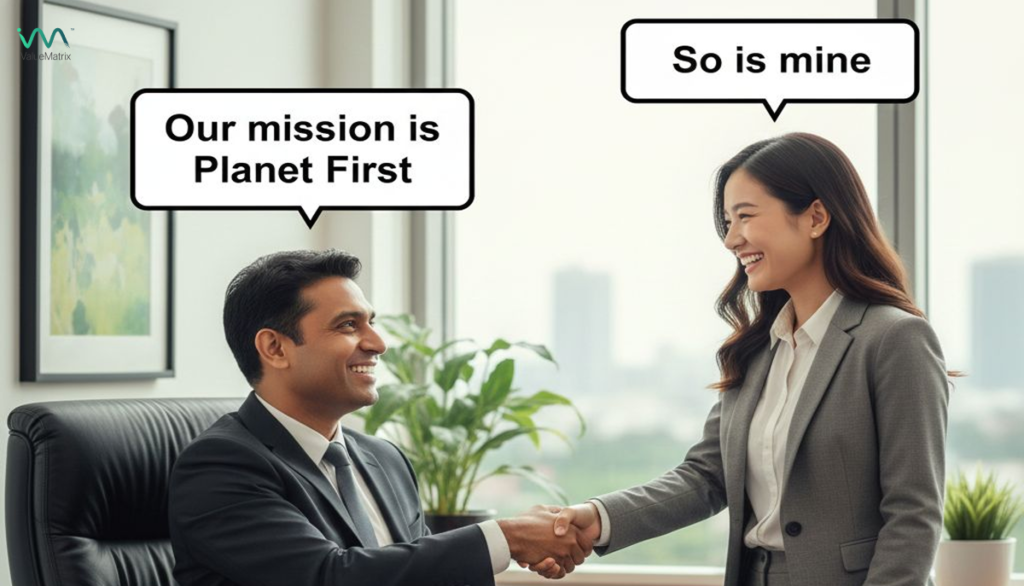
The Scenario: James joined a renewable energy startup because of its “Planet-First” mission. Six months in, he discovered the company was using non-recyclable materials in its logistics chain to cut costs. Because his identity was strongly tied to the mission, this mismatch created a personal crisis of integrity. Conversely, Sarah joined a competitor firm that chose to reject a lucrative contract with a high-pollution client. This decision cost revenue but reinforced her identity as a mission-driven leader. She remained deeply loyal and turned down headhunters for years. James’s story shows how value misalignment can harm engagement, while Sarah’s demonstrates the retention and motivation power of authentic purpose.
By connecting identity to real organizational purpose, companies can turn employees into passionate contributors rather than just role-fillers. When values are genuine and lived, employees feel seen, motivated, and proud of their work every day, while people-first AI design and AI and human connection reinforce the human aspect of productivity.
3. The Shift from ‘Command and Control’ to Psychological Safety
In traditional workplaces, identity was tied to hierarchy. Everyone knew their place in the chain of command, and speaking up was often risky. Today, work demands flatter and more collaborative structures where curiosity and open dialogue are valued, supported by responsible AI in HR systems that help leaders monitor engagement and ensure transparency. Amy Edmondson’s research on psychological safety highlights how crucial it is for employees to feel secure enough to share ideas without fear, aligning with human-centered AI HR approaches that reinforce trust and accountability.
Positive Aspects
In psychologically safe teams, employees see themselves not as replaceable cogs but as contributors whose ideas matter. When people can take risks without worrying about blame, they experiment more freely. These experiments often lead to innovations that can give a company a competitive edge, especially when AI efficiency HR tools are used to track results while maintaining HR empathy tech balance and supporting employee growth.
Negative Aspects
A potential problem is “false harmony.” Some teams mistake safety for the need to always agree. This suppresses honest debate and constructive tension needed to spot mistakes before they escalate, limiting the team’s learning potential. Integrating compassionate AI practices ensures employees feel supported while feedback remains transparent and actionable, reinforcing AI and human connection.
Section Summary & Real-Life Scenario
The Scenario: In a high-pressure software team, a junior developer discovered a security vulnerability just hours before a global launch. In a traditional hierarchical culture, he might have stayed silent to avoid upsetting schedules. Because his manager encouraged psychological safety, he spoke up and paused the launch. The next day, the team held a blameless post-mortem. Instead of being reprimanded, the developer was praised for protecting the company’s reputation. His role shifted from “entry-level coder” to a “security guardian,” showing how safe environments empower employees, strengthen organizational culture, and reinforce people-first AI design in modern workplaces.
4. Competence Defined by Continuous Learning
In the past, professional identity was tied to static qualifications or certifications. If you had a degree or a credential, that defined your role. Today, the shelf life of skills is shrinking rapidly, with many estimates putting the half-life of a learned skill at just five years. Modern identity is increasingly about “learnability”, the ability to grow, adapt, and master new knowledge continuously, supported by responsible AI in HR that identifies skill gaps and recommends personalized growth paths.
Positive Aspects
Companies that embed learning into their culture send a strong signal of value. For example, giving employees four hours of protected learning time each week shows they value potential over current output. This approach future-proofs talent and helps employees develop an identity of “Agile Mastery,” confident in their ability to tackle new challenges, especially when enhanced by AI efficiency HR systems that track progress and personalize learning journeys.
Negative Aspects
The downside is the “burden of self-development.” When organizations expect employees to acquire new skills but don’t provide adequate time, resources, or guidance, it can feel like being on a never-ending hamster wheel. This leads to exhaustion, frustration, and a sense of inadequacy, highlighting the importance of human-centered AI HR and compassionate AI practices to support employees in their growth journey.
Section Summary & Real-Life Scenario
The Scenario: Maria, a traditional marketing manager, faced a major shift in her industry toward AI and Big Data. Rather than leaving her to figure it out alone, her company offered a subsidized Data Analytics certification and reserved Friday afternoons for study. By year-end, Maria didn’t feel threatened by AI; she felt “AI-augmented.” Her identity evolved from “Traditional Marketer” to “Tech-Forward Strategist,” increasing her value internally, boosting confidence in job security, and demonstrating people-first AI design and AI and human connection in practice.

5. The Role of HR: The Strategic Architect
In today’s redefined workplace, HR can no longer just manage policies and paperwork. The function must evolve into the “Architect of Experience,” designing systems that make a distributed workforce feel connected and aligned, while leveraging responsible AI in HR to ensure decisions are fair, transparent, and scalable.
Key Responsibilities
Infrastructure Design: Choosing tools that make multiple daily video calls feel seamless and intuitive, supported by AI efficiency HR systems for smooth collaboration.
Well-being Frameworks: Introducing policies like “Digital Detox” to prevent remote work burnout, integrating compassionate AI practices to monitor well-being ethically.
Strategic Gathering: Planning quarterly retreats where key business decisions are made and team relationships are strengthened, reinforced by human-centered AI HR to track engagement and participation fairly.
Section Summary & Real-Life Scenario
The Scenario: A global retail brand noticed that its culture was drifting. Instead of forcing everyone back to the office, HR redesigned policies to support “Work from Anywhere” while requiring quarterly in-person summits. They offered home-office stipends and launched a “Digital Culture Hub” for employees to share personal achievements. This shift transformed HR’s role from “policy enforcers” to “culture champions,” boosting the Employee Net Promoter Score by 25% and demonstrating people-first AI design and AI and human connection in practice.
6. The Role of the Manager: From Supervisor to Coach
Managers shape the daily experience of workplace identity. Shifting from being a “Supervisor” who tracks tasks to a “Coach” who supports outcomes is essential for modern middle management, especially when supported by responsible AI in HR tools that provide insight without micromanaging.
Key Strategies
Checking In, Not Checking Up: Use daily syncs to ask “How can I support you?” instead of “What have you done?” leveraging AI efficiency HR to track progress fairly.
Empathy as a Metric: Recognize personal circumstances, like household responsibilities, and adjust expectations accordingly, supported by human-centered AI HR that respects privacy.
Collaboration Facilitation: Keep remote work effective through frequent, focused one-on-one video sessions, ensuring HR empathy tech balance is maintained across distributed teams.
Section Summary & Real-Life Scenario
The Scenario: Kevin, a manager, noticed Sanjay, a top performer, missing deadlines. In a traditional setup, Kevin might have started a disciplinary process. Instead, he held a one-on-one call and learned Sanjay was caring for a sick relative. Kevin adjusted the schedule to allow midday breaks and shifted collaboration to asynchronous chat. Feeling genuinely understood, Sanjay’s loyalty to Kevin and the company doubled, and he returned to peak productivity within weeks, now firmly seeing himself as a “Respected Partner,” demonstrating people-first AI design and AI and human connection in action.
7. Organizational Supervision: Synchronizing the Machine
In today’s workplace, supervision goes beyond monitoring tasks. It’s about ensuring that Finance, Marketing, Operations, and other teams aren’t working in isolation but moving together toward a shared “North Star,” supported by responsible AI in HR that ensures alignment and tracks cross-team progress ethically.
Focus Areas
Unified Vision: Making sure employees in London and a home office in rural Ohio clearly understand the business trajectory, while leveraging AI efficiency HR to maintain transparency.
Systemic Consistency: Applying values like psychological safety across all teams, not just in Tech but also in Legal and Finance, reinforced by human-centered AI HR.
Inter-departmental Collisions: Using quarterly in-person meetings to spark interactions between departments, reinforcing a “One-Company” identity, with compassionate AI practices ensuring inclusion and engagement.
Section Summary & Real-Life Scenario
The Scenario: During a quarterly summit, the Customer Support and Product Engineering teams were paired for a hackathon. Meeting in person for the first time in months, they realized they were tackling the same problem from different angles. A year-long silo dissolved in just three days. Back in their remote setups, video call collaboration improved by 50% because team members now understood the people behind the avatars, resulting in a significant boost in product user satisfaction, strengthened further by people-first AI design and AI and human connection.
Conclusion: Synthesizing the Modern Identity
Redefining workplace identity requires a thoughtful strategy that balances flexibility with meaningful collaboration, enhanced by responsible AI in HR that supports fair tracking and alignment. It moves beyond the old “presence-based” model and focuses on results, where daily video check-ins and clear remote communication, combined with AI efficiency HR, ensure both high-quality work and personal balance. Employees are guided toward purpose-driven tasks, with their personal values reflected in the company’s actions, avoiding the pitfalls of superficial “values-washing” and fostering genuine engagement over the long term, supported by human-centered AI HR practices.
By embedding psychological safety and supporting continuous learning, organizations turn their workforce from passive task-doers into agile innovators who feel empowered rather than overwhelmed by change. In this model, HR evolves into a strategic designer of the employee experience, while managers shift from monitoring tasks to coaching with empathy, reinforced by compassionate AI practices. Together, they create the digital and emotional frameworks that keep distributed teams connected and motivated, demonstrating people-first AI design and AI and human connection in action.
Organizational oversight ensures that trust and collaboration are consistent across departments, with quarterly in-person gatherings anchoring social bonds and aligning everyone on the business goals for the coming months. Beyond structure and meetings, this approach encourages personal growth journeys, mentorship opportunities, and recognition systems that celebrate contributions rather than hours logged. In the modern workplace, professional identity is no longer defined by a desk, a title, or hours visible. It is built on trust, continuous growth, meaningful impact, and a shared purpose that inspires employees to bring their best selves every day, creating a culture that is both resilient and forward-looking, fully integrating HR empathy tech balance, and AI and human connection throughout the employee experience.
FAQs
Workplace identity now reflects purpose, contribution, and impact rather than physical presence or job titles.
Hybrid work shifts identity from visibility to outcomes, trust, and clear communication.
Employees increasingly define themselves by the meaning and impact of their work, not just their role.
Psychological safety allows employees to speak up, experiment, and feel valued for their ideas.
It builds an identity centered on adaptability and growth rather than static qualifications.
HR acts as a strategic architect, designing experiences that support flexibility, well-being, and connection.
By shifting from supervision to coaching, managers reinforce trust and personal ownership.
Consistent values and practices prevent confusion and strengthen a shared organizational identity.