
Red Flags You Should Watch Out For to Spot Employee Burnout
Employee Burnout Signs: Prevention and HR Strategies
For CEOs and CHROs, employee burnout is no longer an individual issue; it is a systemic risk. It ends up with huge attrition, declining productivity, and a toxic culture if left unattended. Learning to spot the first signs of employee burnout becomes the first line of defense. HR has proactive measures of burnout prevention by HR strategies that run beyond wellness apps to address the serious causes of mental fatigue at the workplace, including disproportionate work demands and ineffective leadership. If they can change the view of burnout from being an individual issue, they would create a space where leaders might best protect their most important assets- their people- in the context of organizational health.
1. What Exactly is Employee Burnout and Why is it an HR Problem?
Burnout at work is a state of physical, emotional, and mental fatigue caused by long-term stress or excess stress. It is now defined more than ever by the World Health Organization (WHO) as an occupational phenomenon. It is a failure in work environments and not simply due to do with sick days for HR. When burnout is broad, it directly damages the organization’s bottom line through quality loss in work, loss of institutional memory, and the high cost of replacements.
It becomes a matter of core strategic responsibility for the HR leader to recognize employee burnout signs. The job of an HR leader should therefore extend beyond the employees to include the environment and workload management. High burnout incidence indicates that the processes or culture of hiring are quite frail within an organization.
The Three Dimensions of Burnout
By the three major dimensions of burnout, WHO defines burnout as: (1) aspects of depletion or exhaustion of energy; (2) increased mental distance from one’s job, or feelings of negation or cynicism; and (3) decrease in professional efficacy.
The Business Cost of Unrecognized Stress
These unlisted burns cost something in billions of dollars during the financial years to businesses for absenteeism, health insurance claims, and lower output. Not recognizing the employee burnout signs is financially irresponsible and strategically careless.
The HR Leader’s Responsibility
HR must be the owner of the solution. In other words, advocating for systemic improvements such as workload adjustments, better tools to support work, and prioritizing burnout prevention by HR, not by just having a short-term stress relief measure such as Friday pizza.
Burnouts must be seen as an organizational malfunction, requiring executive intervention and strategic solutions with organized delivery by HR.
2. What are the Key Behavioral Employee Burnout Signs?
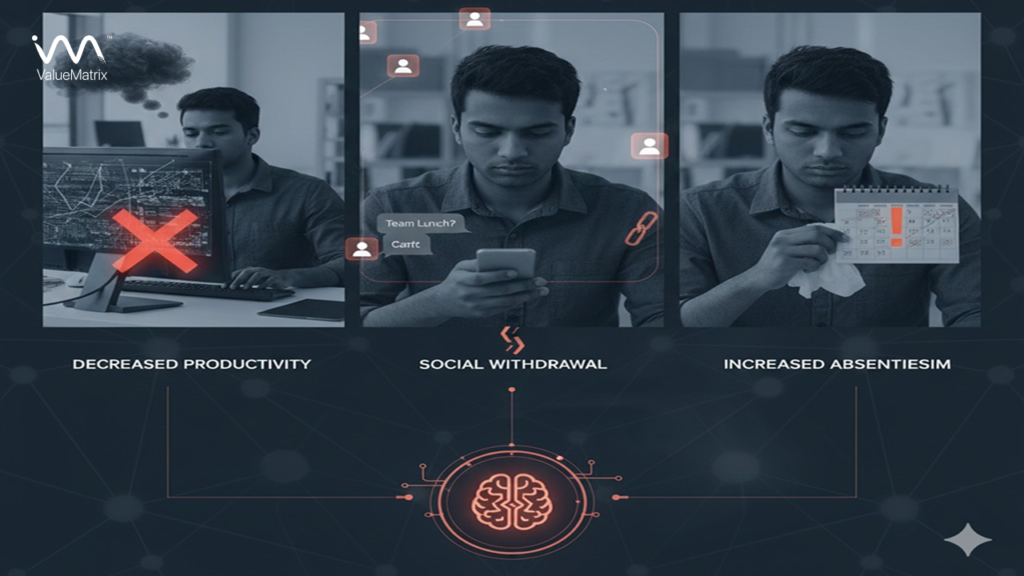
Signs of employee burnout typically involve changes in the individual’s work behavior. Initially, such changes may be minor, but later on, come rapid signs of heavy mental fatigue at work. The manager and HR should train themselves to look for patterns rather than outlying examples, such as a temporary drop in performance or acquiescing to a new habit of tardiness; neither has ever scored a direct hit against an employee. These are glaring signs of employee burnout that require management’s attention. They will be identified for successful burnout prevention by HR.
Changes in Productivity and Quality of Work
Burned-out employees often take longer to produce deliverables or meet deadlines, or do carelessly poor work that has always been of good quality. The drop in effort is indeed a plea for aid.
Increased Absenteeism and Tardiness
Tardiness would certainly be a characteristic of signs of greater lateness, longer lunch hours, or excessive sick days. This symptom resonates with employee burnout signs, as it proves that the person lacks extensive energy to muster towards the demands of the job.
Withdrawal from Team Interactions
They stop participating in meetings, dodge social events, and cease engaging in small talk. This combination of cynicism and withdrawal manifests in increased mental distance and psychological disconnection from their job and coworkers.
The easiest early warning signs are behavioral changes. Ignoring these red flags becomes one of the mechanisms by which burnout travels from a personal issue to an organizational concern.
3. How Can We Identify Emotional and Attitudinal Red Flags?
The above-attitudinal red flags are critical and signs of employee burnout that can be tracked by signaling detachment from the mission of an organization and the purpose of an individual. Such emotional separation is to be attributed squarely to tussling with chronic workplace stress and mental fatigue. Alas, these elements feature among the hardest to assess in practice but are utterly vital from the perspective of HR and burnout prevention.
Passive-aggressive behavior, cynicism, and denying the existence of the problem or negative comments about the company or job at stake have always manifested those emotional shifts.
Persistent Cynicism and Negativity
The employee has begun a relentless criticism of the decision-making processes, as well as of coworkers. This negative disposition is, of course, a defense mechanism by which one protects himself or herself from a job he or she finds no longer rewarding.
Loss of Enthusiasm and Motivation
Fun tasks have become counterproductive ones. The person is producing very little initiative or input; he or she is only doing the minimum required to scrape by, which all points toward emotional exhaustion.
Increased Irritability and Conflict
As the person runs out of emotional resources, impatience, temper, and finally conflict with colleagues or clients will come. The clearer and stronger irritation will signal growing distress.
In general terms, emotional signals should be treated by the management with extreme sensitivity and empathy. HR ensures that the managers are ready to open up supportive discussions, away from the disciplinary forums.
4. What Physical Indicators Signal Mental Fatigue at Work?
Very often, extreme occupational stress manifests in the mind-body connection in physical manifestations. When mental fatigue is overstressed by work circumstances, it begins to create tangible physical symptoms. Such real signs of employee burnout should be alarming. Though temporary, the manifestations usually lead to healthcare costs and extended genuine sickness absence. HR must know by now that the majority of these complaints are originating from their workplace environment.
一HR and management should encourage employees to make use of wellness benefits for the treatment of consistent physical ailments, but always treat the source of stress first.
Chronic Fatigue and Low Energy Levels
Despite the amount of sleep they claim to have gotten, the employee looks and sounds tired; there is a pervading sense of deep exhaustion that is one of the cardinal physical manifestations of burnout.
Frequent Illness and Physical Complaints
Stress lowers immunity. Burnout employees are prone to regular colds, headaches, or stomach upset, along with complaints of chronic pain, such as backaches brought on or aggravated by stress.
Noticeable Changes in Habits
External changes, signifying an internal lack of control and structure, could be major weight gain or loss; increased caffeine, alcohol, or other unhealthy coping behaviour; or other highly visible lifestyle changes.
Such physical symptoms serve as the body’s desperate plea for the HR to intervene and relieve them of sustained pressure.
5. How Can Burnout Prevention by HR Start with Workload Management?

The most effective burnout prevention by HR method is the one that attacks the root cause of unreasonable and unmanageable workload. Certainly, wellness apps and yoga classes are the most superficial distractions, because if the demand of work itself were sustainable, they wouldn’t be necessary. HR leaders must win executive support to carry out workload assessments, redistribute resource allocation, and create boundaries for employees to protect their time. Without addressing workload management, signing off on additional employee burnout signs becomes an ongoing, losing battle.
There’s a need to change from an endless working hours culture to a sustainable, high-quality output.
Assessing and Rebalancing High-Risk Roles
HR must recognise roles that have a trend of high turnover rate or excessive overtime reports. Auditing workloads will tell HR whether one person is doing the job of two, thus strengthening the argument for hiring either support or redistributing tasks.
The Importance of Protected Time Off
One of the company policies should be that line managers must ensure their team members take full vacations and disconnect from work. The organisation must enforce real breaks–ones where individuals truly disconnect from any demands, mental fatigue at work.
Setting Boundaries Against “Always-On” Culture
The HR realm does need clear policies protecting personal time. If leadership is expecting employees to answer emails late at night or on weekends, that means it is actively promoting burnout. This organisation must set a boundary from the top.
Strategic workload management is the single most powerful tool for burnout prevention by HR and ensuring sustainable productivity.
6. What Role Does Manager Training Play in Spotting Burnout
The managerial set-up is actually at the front line of the war, which is an insomnia pandemic followed by employee burnout signs. They are the ones who never get training. Most of the time, they’re not familiar with recognizing early signs of burnout and understanding that it affects employees. The inability of training makes the manager mistake one sign of burnout for bad performance, thus punishing the worker, which in turn accelerates the exit of that employee. HR needs to concentrate on the training of all kinds of fine skills to enable managers to handle human complexity in the workplace, although these will incur the worst effects of mental fatigue at work.
Investing in coaching and emotional intelligence would enable actual backing without heavy pushing against the wall for absolutely little or no result in meeting organizational objectives.
Training Managers in Empathy and Active Listening
Help managers conduct supportive check-ins that actually work with open questions: What is the energy level this week? No, they have not finished the report? Managers must be trained to look for small cues.
Shifting the Focus from Hours to Output
Train managers to judge by outcomes, impact, and quality of work, not hours worked. Presenteeism comes to work to appear busy with little motivation.
Creating a Safe Space for Vulnerability
This applies as well to creating an environment and a culture in which team members can voice that they feel swamped without fear of consequence, thus putting employees into the practice of requesting help early on, thus supporting the third pillar of HR in burnout prevention based on safety in the workplace.
Moves from Transactional Manager to Strategic Leaders By Manager Training
Involved in initial talent retention as partners for the managers, helping them accomplish their business objectives and success.
7. How Can HR Use Data to Predict and Prevent Burnout?
HR leaders have access to powerful data that can pick up potential burnout pockets long before the signs of employee burnout become visible to the naked eye of a single manager. Through predictive analytics intervention, HR can move beyond merely reacting to individual crises and begin proactively resolving systemic problems. Monitoring these metrics today is an indispensable part of burnout prevention by HR.
Data gives CHRO the rational proof to argue for organisational change, facilitate resource redistribution, staffing, and other adjustments.
Analyzing Employee Survey Feedback and Trends
Timely and anonymous pulse surveys are calibrated to monitor trends related to workload perception, stress levels, and feelings of being valued. Abrupt drops in these scores in particular departments are warning signs for early employee burnout on the team level.
Tracking Metrics Like Time Off and Overtime
High levels of vacation days being unused or excessive overtime sustained over a long time are alarming primary indicators of approaching burnout in a team. A flag in the HR system should automatically recognise these metrics for managerial attention.
Implementing Predictive Analytics
The more advanced HR platforms can collate the performance data, time-off data, and engagement scores into a single “bombshell”-the Burnout Risk Score, which may allow HR to intervene strategically before a burnout crisis can erupt.
8. What Organizational Strategies Support Long-Term Wellness?
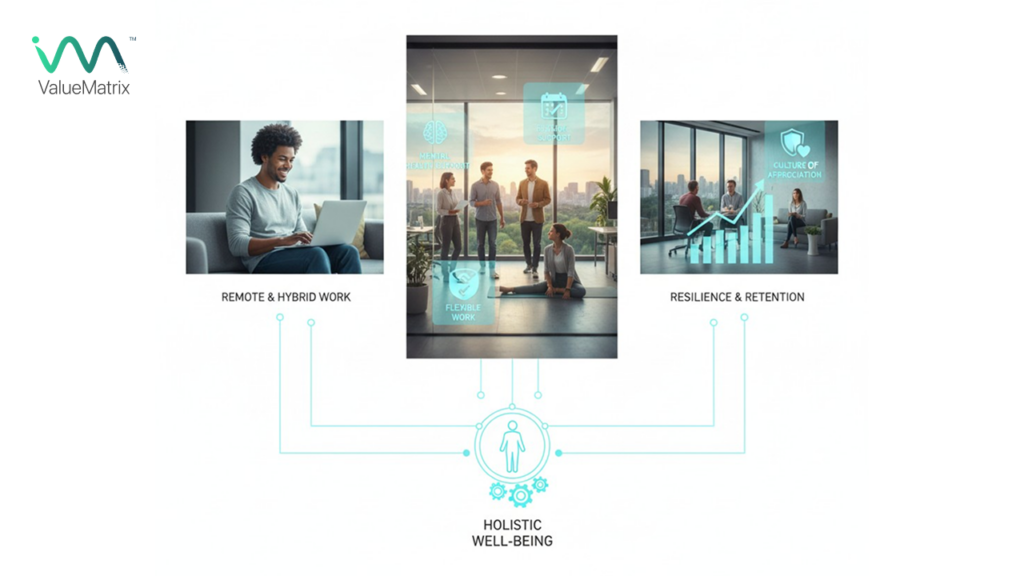
How far is HR willing to take burnout prevention in a company’s commitment? Everything must cascade from there and embed itself into the culture and be enforced by executive policy. Flexibility, support for mental health, and a culture of appreciation – and even more – need not be associated with benefits but viewed as major barriers to preventing mental fatigue in the workplace.
Such organizational efforts prove that the company’s commitment to its employees’ well-being is, if not more than, as much as to the employee’s output in retaining the foundation of loyalty and resilience.
Promoting Flexible Work Arrangements
Flexibility is either in time or place, directing employees to meet some personal responsibilities to bridge the division between work and life that may trigger burnout.
Investing in Mental Health Resources
HR should go above and beyond EAP to promote Access to Cost-Effective and Stigma-Free therapy to Care for the employees.
Fostering a Culture of Appreciation and Recognition
Under-recognizing is seriously heavy with burnout. Giving continuous, authentic recognition to efforts and impacts instead of recognition merely for outcomes further engages employees in a shared sense of purpose and enhances their self-esteem.
This is a structurally internalized basis for immunity against generalized burnout within the organization.
Conclusion: Building a Resilient Workforce
Combating burnout requires leadership commitment. Train managers to catch subtle employee signs of burnout, incorporate data into predicting risk, and place priority on structural burnout prevention by HR over superficial band-aid fixes, and it will go a long way in protecting teams. Such measures proactively combat mental fatigue at work; they do not cost. It is a master investment in retaining talent, sustaining productivity, and making organizations resilient.
Statistics: The Hard Facts of Burnout
- Global Prevalence: About 75% of employees worldwide say they are burned out at least sometimes, with 40% of that number saying they often or always feel burned out.
- Turnover Risk: Employees with intense instances of burnout are 2.6 times more inclined to be engaged in seeking out other job opportunities.
- Manager Impact: Only 20 out of every 100 employees entirely agree that their manager is helping them organize their workload so that burnout can be prevented.
🔑 Key Takeaways & Solutions (Employee Burnout)
| Problem/Category | Key Red Flag (Employee Burnout Signs) | Strategic Solution for HR (Burnout Prevention by HR) |
| Behavioral Changes | Declines in productivity/quality, increased absenteeism, and withdrawal. | Conduct frequent audits on the workloads and rebalance them from one team to the other. Responsibilities across teams are to be checked. |
| Emotional/Attitudinal Shifts | Pervasive cynicism, demotivation at work, and irritability increase. | To build a safe environment where individuals feel comfortable being vulnerable, create an atmosphere whole with appreciation and recognition. |
| Physical Manifestations | Chronic fatigue, frequent sickness, and changes in habits are noticeable. | Invest in easily accessible mental health resources and promote flexible working options for employees. |
| Systemic Workload Issues | High-risk roles, excessive overtime, “always-on” culture. | Conduct frequent audits on the workloads and rebalance them from one team to the other. Responsibilities across teams to be checked. |
| Proactive Data Use | Reactive approach to individual crises instead of prevention. | Use employee surveys and HR analytics to predict burnout hotspots and intervene early. |
Case Studies: Companies that Mastered Wellness
1: LinkedIn’s Required “Rest” Week
- The Fix: LinkedIn acknowledged universal tiredness and required most of its employees across the planet to take an entire week off with pay, during which time no email would be checked or work performed by anybody.
- The Result: The program was unanimously understood as refreshing the workforce and reinforcing a culture that actually grounds time for recovery, reflecting a clear boundary against the “always-on” expectation.
2: Buffer’s 4-Day Work Week Experiment
- The Fix: Currently, Buffer has made permanent the 4-day work week, one consistent salary for four 8-hour days-to combat mental fatigue at work.
- The Result: It should be noted that productivity levels had not lowered for the organization, and employees reported a reduction of up to 42% in anxiety and stress, which shows that output, not hours, is the performance metric that guarantees the prosperity of sustained success.
FAQs
An internal audit of high-stress roles to rebalance the workload would have to have executive approval, so it would be incumbent on HR to ensure that the pressure put on employees was reasonable and sustainable.
Burnout is defined by the three symptoms of emotional exhaustion, cynicism, and reduced efficacy at work. General dissatisfaction may not warrant the constant state of physical and mental fatigue concerning work that characterizes clinical burnout.
Considering that the WHO has classified burnout as an occupational condition, there is a rising legal trend in scrutinizing the firms regarding such conditions. Employee burnout signs are manifestations and ways of considering employee welfare neglect.
The manager should have a supportive, private conversation focusing on workload and well-being, and not performance. They should be good listeners, validate feelings, and immediately connect their employees with HR or EAP resources for professional help
About Us
ValueMatrix is an AI-powered talent intelligence platform that helps companies hire better, faster, and without bias. We go beyond resumes to assess skills, behavioral traits, and cultural fit using advanced AI and proven psychological frameworks. Our platform delivers data-driven insights that improve hiring accuracy, reduce time-to-hire, and elevate candidate quality.
ValueMatrix AI enables hiring teams to make confident hiring decisions and build high-performing teams at scale.