
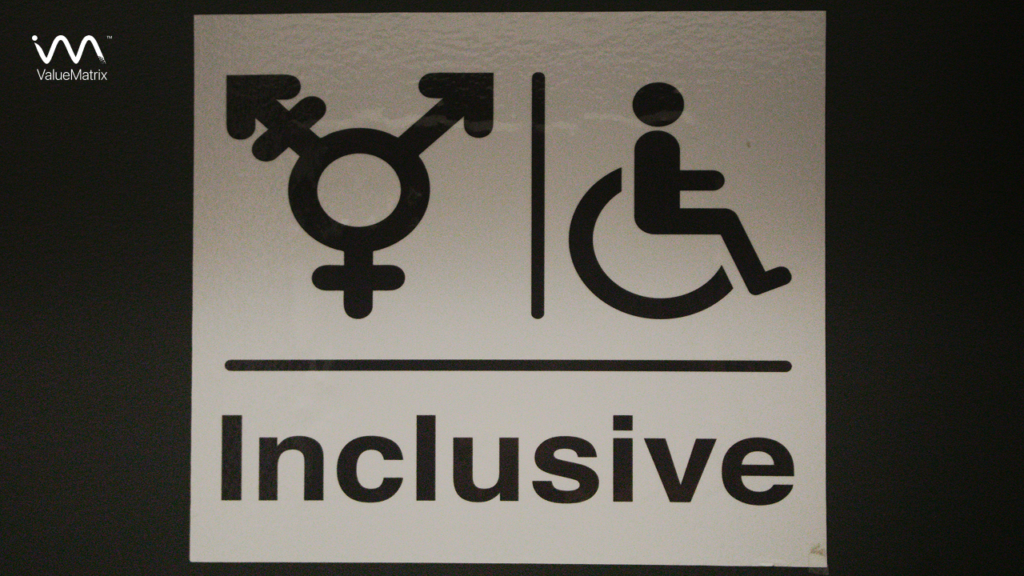
As technology continues to evolve rapidly, Artificial Intelligence (AI) is changing nearly every aspect of our lives and business. The rush to innovate can sometimes leave Inclusivity by the wayside, even more so in areas such as Human Resources (HR). AI Implementation plans generally focus on goals such as reducing costs and increasing efficiency. However, a comprehensive AI Implementation Plan must also include an inclusive working environment. Focusing on inclusivity will ensure that the AI systems benefit all stakeholders.
The Importance of Inclusivity in AI
Why Do AI Systems Show a Bias?
Let’s figure out why bias occurs in the AI systems. Bias in AI is typically caused by training an AI with a large amount of data from the past. If there is bias in that data, it will most likely cause the AI to develop the same biases and produce the same outcomes as well.
AI is often used to assist humans by analyzing vast amounts of data, including video recordings or images, and then provide insight to humans. Thousands of images would be analyzed by the AI in order for it to determine what a typical image should look like. The images viewed by the AI would be the same images that were analyzed by physicians many years ago. Therefore, the AI would be subjected to the same prejudice that existed among physicians during those years. For instance, there have been numerous studies that show that doctors misdiagnosed women much more frequently than men for many years. Therefore, the AI would also most likely have the same type of misdiagnosis.
AI systems usually reinforce and create negative stereotypes when they are biased. This will produce discriminatory choices that affect particular groups of people. All organizations need to detect and eliminate bias production within their AI systems.
Why Should Organizations Consider Inclusiveness When Developing AI Solutions?
The development of AI solutions requires inclusiveness because it serves both moral and business purposes. Inclusive AI solutions are able to adapt and respond to different types of users and user experiences, and are therefore more accurate and personalized to each individual user’s needs.
When AI systems take the diversity of users into consideration, the AI solution will be less likely to alienate a specific group of users, resulting in higher levels of user satisfaction and increased trust from the users. Organizations that develop AI solutions based on inclusivity will achieve superior innovation success because their AI systems will replicate real-world environments and multiple user perspectives. Businesses can enter new markets through their implementation of inclusive AI solution development methods which operate under ethical standards.
What Is the Relationship Between Ethics and AI?
AI solutions have started to appear in our everyday routines and professional activities. They generate decisions that affect our daily routines and have a growing impact on society. Therefore, it is imperative that AI technology is created and used ethically and responsibly.
While there are several ways that AI technology can be created and used unethically, incorporating ethics in the implementation of AI technology will allow developers to create clearly defined parameters around how AI technology behaves.
Building Diverse Datasets
The need for Inclusive AI
The development of fair and transparent Artificial Intelligence (AI) requires us to understand how AI systems will affect our everyday activities including recruitment processes and educational systems. The development of an AI system which works for all users requires data that represents every population segment. The current AI systems operate based on historical data which contained widespread racial and gender discrimination making them erroneous to an extent.
Bias in Data
Bias in data exists when information presents incomplete data about all population segments and their subgroups. For instance, online surveys collect customer data but the process shows bias as people from lower-income areas tend to stay away from surveys because they do not have computers.
Identifying Bias in Your Data
The first requirement for developing an inclusive AI model requires you to detect biases that exist in your data collection process. The process of detecting biased data requires you to ask particular questions.
- Is the data I am collecting based on past trends, rather than on what is happening now?
- Does the data I am collecting represent all demographics and subgroups in my population?
- Does my data capture all possible outcomes?
- Am I relying too heavily on just one source of data?
One way to assess these questions is to perform a basic evaluation. Begin by asking about the data you used to develop your model:
- Who created the data?
- When was the data created?
- How did the data get developed?
Also, analyze the demographics included in your data:
- What groups are absent?
- Is there evidence of an imbalance of representation of any particular group?
Manually Examining the Data
The evaluation of data for bias requires manual inspection of each individual piece of information. The evaluation process requires individual assessment of all data points to verify their accuracy and complete information content. The most successful method to identify concealed biases in data involves manual evaluation but this process needs to extend over long periods of time.
Automatically Examining the Data
Automated data evaluation is often quicker and more scalable than manual review, making it ideal for large datasets. The available software tools and services for bias detection in large datasets enable users to detect bias within their data. The results from automated examinations require complete data entry to produce dependable results.
Using Algorithm to Locate Bias
The algorithms detect bias through their capability to assess data against predefined standards which define fairness and accuracy.
Fostering an Inclusive AI Team Culture
AI solution development requires professionals to have skills that go beyond their programming abilities and current technological capabilities. The development of AI solutions needs teams with multiple skills that convert technical expertise into operational achievements. A team culture which enables staff members to interact with the diverse user base of an AI solution leads to successful AI implementation.
Team Member Diversification
Your team requires members who represent various backgrounds to establish an environment which includes everyone. The practice of diversity extends beyond the basic requirement for HR to verify it. Teams develop innovative solutions through their combined cultural diversity, social experience and professional expertise which helps serve different customer needs and minimizes AI system biases.
Think of a Symphony. A symphony achieves its harmony through multiple musical instruments which perform together. A team consisting of members with different professional backgrounds will achieve the same results as a symphony does. it enables open communication through brainstorming activities will produce a complete solution that makes all team members feel their contributions were valuable. A team forum or communication channel which enables staff members to share their thoughts and concerns without fear of judgment creates an inclusive work environment.
Bias Training
A well-designed AI system maintains the same prejudices as its developer team but this does not indicate system-wide defects. The developers who construct these systems need to grasp both the training data and all their development decisions. The development of an inclusive workplace environment depends on providing team members with training about bias recognition and awareness.
Conduct Workshops
Your team members should attend workshops which teach them to detect and understand how their unconscious biases affect their developed technology. The workshops enable participants to develop self-awareness which enables them to identify their personal biases. The workshops need to run on a scheduled basis (every quarter) to offer continuous assistance to team members. The combination of enhanced critical thinking skills with bias awareness in AI development will benefit your team members.
Additional Tools and Resources
Your team members will detect and reduce algorithmic bias through the tools and resources that you provide them. They will develop better skills to detect hidden flaws through this training which will help them identify bias in their AI solutions.
Collaborative Teams
The development of AI solutions requires teamwork to achieve success because it stands as the primary factor for success. AI solution development becomes possible outside a vacuum when teams work together because this approach prevents tunnel vision and results in creative product development. The following elements will help your team become more collaborative.
- Project management software enables teams to exchange information while maintaining complete system access to all data. The system allows team members to share knowledge and exchange ideas through an efficient process.
- The project evaluation process needs to take place during scheduled meetings which also function as opportunities to honor team accomplishments for enhancing team unity.
- Programmers who work together through programmer pairing and co-working sessions develop relationships through their joint efforts to solve problems.
- The project requires multiple teams to work together between data scientists and UX designers and other experts who will use their combined knowledge to develop user-centered solutions through multiple perspectives.
Inclusive AI Implementation Checklist
Here is a checklist of inclusive AI practices for HR and AI teams:
| Area | Inclusive Practice | Why It Matters |
| Data & Datasets | Use diverse, representative datasets that include all relevant demographic groups (gender, age, region, disability, etc.). | Prevents the AI from reinforcing historical biases and supports fair outcomes across different employee and candidate groups. |
| Data & Datasets | Regularly audit training data for underrepresentation or skewed patterns (for example, over‑representation of certain roles or locations). | Helps catch hidden biases early and keeps the model aligned with your current workforce and talent pool. |
| Data & Datasets | Combine historical data with recent, real‑time data instead of relying only on past patterns. | Makes the AI more responsive to currentworkforce diversity and changing business needs. |
| AI Development & Testing | Involve diverse team members (HR, legal, data scientists, UX) in designing and testing AI tools. | Brings multiple perspectives that can spot blind spots and unintended biases in logic, language and user experience. |
| AI Development & Testing | Test AI outputs on diverse candidate profiles and edge cases, such as non‑traditional career paths or non‑standard qualifications. | Ensures the system works fairly for everyone, not just for a “typical” candidate or employee. |
| AI Development & Testing | Use bias‑detection techniques or fairness metrics during model development and evaluation. | Provides evidence of fairness and helps justify decisions to senior leaders, regulators and employees. |
| HR Processes & Governance | Define clear human‑in‑the‑loop rules (for example, AI creates shortlists and humans decide; AI flags cases and humans review). | Maintains human accountability for high‑impact decisions like hiring, promotion and termination. |
| HR Processes & Governance | Set up an AI ethics or governance committee (HR, legal, data) to review AI tools, policies and incidents. | Creates a formal mechanism to enforce ethical standards and respond quickly when issues arise. |
| HR Processes & Governance | Document and communicate where and how AI is used in HR (for example, in sourcing, screening, assessments, internal talent tools). | Builds trust with candidates and employees by making AI use transparent and understandable. |
| Ongoing Monitoring & Culture | Run regular audits of AI‑supported decisions (for example, hiring or promotion outcomes by demographic group) and refine models and policies based on findings. | Turns inclusivity from a one‑time exercise into continuous improvement. |
| Ongoing Monitoring & Culture | Provide safe feedback channels for candidates and employees to raise concerns about AI‑driven decisions. | Signals that the organization is listening and genuinely committed to fairness, not just efficiency. |
| Ongoing Monitoring & Culture | Offer recurring training on AI ethics, bias and inclusive design for HR, hiring managers and AI teams. | Builds a shared culture where everyone understands their role in keeping AI fair, transparent and inclusive. |
How ValueMatrix Drives Ethical and Inclusive AI Implementation
As organizations adopt AI across hiring, performance, and engagement, the real challenge is not just “Can we automate this?” but “Can we do it fairly?” ValueMatrix answers the question, helping HR teams embed ethics and inclusivity into every stage of the AI lifecycle, from data collection to decision-making.
ValueMatrix starts by improving the quality and diversity of the data that powers HR decisions. It brings together information from multiple sources (such as HR systems, feedback tools, and performance data) so teams are not relying on a single, narrow dataset that might reflect past bias. Built‑in analytics make it easier to spot patterns like underrepresentation, skewed promotion trends, or systematically lower scores for specific groups, prompting HR to review and correct these issues instead of unknowingly reinforcing them.
The platform also supports “human‑in‑the‑loop” decision-making rather than fully handing control to algorithms. ValueMatrix can surface shortlists, risk flags, or development recommendations, while keeping the final decision with managers and HR professionals who can apply context and judgment. Transparent scoring, explainable insights, and clear documentation help people understand why a particular recommendation appears, which in turn builds trust with both leaders and employees.
Conclusion
Organizations must make both ‘technology’ and ‘people’ decisions when they choose to implement Artificial Intelligence (AI) systems. The implementation of inclusive AI systems produces multiple benefits because it minimizes AI bias and creates systems that achieve maximum performance for users from different backgrounds.
The first step to creating inclusive AI requires using multiple data sets and establishing teams that consist of members from different cultural backgrounds. The organization needs to create particular guidelines that explain how AI systems impact organizational decision-making processes. The organization needs to keep listening to employees at all times while using their work experience to guide organizational changes.
Organizations that focus their success on inclusive AI will create customer trust and maintain their top talent while developing new business opportunities. Hence, it is imperative that organizations make inclusivity a definitive part of their AI implementation plan.
FAQs
AI systems under inclusivity maintain equal fairness for all users regardless of their background because they stop data-based discrimination from occurring during system operations. Organizations that use inclusive AI systems gain user trust, deliver improved experiences and obtain dependable unbiased data which supports their HR and business operations.
The learning process of models from historical data leads to AI bias because this data contains the existing discrimination which humans have already established in society. The AI system will produce the same discriminatory results which exist in the training data because the data contains insufficient representation of specific groups and discriminatory patterns.
The implementation of non-inclusive AI systems results in data interpretation errors which produce discriminatory results during candidate and employee assessments, thus creating unfair treatment for particular demographic groups in hiring, promotion and performance evaluation processes. The organization faces three major consequences from this situation which include damage to its employer brand, higher legal and compliance risks, and decreased trust from job applicants and current staff members.
An inclusive dataset contains all necessary population segments which include people from various gender groups, age ranges, geographic areas and social classes. The dataset includes various actual situations which prevent it from depending too heavily on one particular source, time frame or main population group.
The team needs to start by asking detailed questions about where the data comes from, when it was collected, which groups are missing and if there are any population segment imbalances. The system depends on human reviewers who employ automated bias-detection tools to detect biased patterns, missing data and unfair treatment which appears in results.
About Us
ValueMatrix is an AI-powered talent intelligence platform that helps companies hire better, faster, and without bias. We go beyond resumes to assess skills, behavioral traits, and cultural fit using advanced AI and proven psychological frameworks. Our platform delivers data-driven insights that improve hiring accuracy, reduce time-to-hire, and elevate candidate quality.
ValueMatrix AI enables hiring teams to make confident hiring decisions and build high-performing teams at scale.