
Table of contents
- Why Does Employer Branding Matter More Than Ever?
- How Can a Broken Hiring Process Damage Your Employer Brand?
- How Does Poor Candidate Communication Signal a Weak Culture?
- Are Outdated or Biased Selection Processes Hurting Diversity?
- Could Bad Interview Experiences Be Damaging Your Reputation?
- Does Lack of Transparency in Pay and Growth Erode Trust?
- Why Should You Care About the Experience of Rejected Candidates?
- What Is the Ripple Effect of Bad Candidate Experience on Brand Reputation?
- What Can We Learn from Real-World Hiring Successes and Failures?
- How To Set Up a Candidate-Centric Hiring Process?
- How Can Hiring Become a Brand-Building Opportunity?
- How Can AI and Technology Transform the Hiring Experience?
- Conclusion
- FAQs
Imagine losing your best candidate to a competitor not because they offered more money, but because your application process took three weeks and five interviews to say “maybe.” Each interaction: every ghosted email, every redundant interview, every black-hole application is a tiny crack in your employer brand.
It happens every day. And worse? That candidate isn’t staying quiet about it.
Right now, someone is sharing their experience with your hiring process on Glassdoor. Another is telling their network on LinkedIn why they withdrew their application.
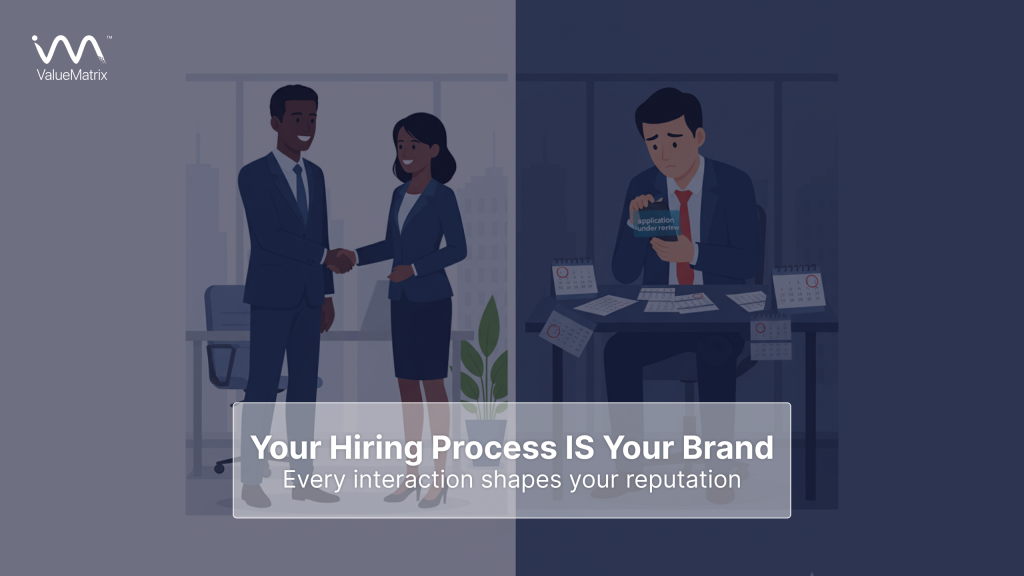
Here’s what most leaders miss: your hiring process isn’t separate from your brand. It is your brand to the thousands of professionals who’ll never become employees but will forever remember how you treated them as candidates.
The damage is real and measurable.Companies with weak employer brands face cost-per-hire rates nearly double those with strong reputations. Even more alarming?69% of candidates will reject job offers from companies with negative employer brands, even when unemployed.
Your competitors aren’t just outbidding you for talent. They’re out-experiencing you. And in today’s candidate-driven market, the company with the best hiring experience wins – not the one with the biggest budget.
The question isn’t whether your hiring process affects your employer brand. It’s whether you’ll fix it before your best candidates choose someone else.
Why Does Employer Branding Matter More Than Ever?
What is Employer Brand in the first place? It is the name and image your organization portrays as a workplace. From your organizational culture and values to the actual candidate experience in the hiring process, it includes everything in its fold. Today’s job market has drastically changed power dynamics.83% of candidates now look up company ratings and reviews prior to job application decisions. Your Glassdoor scores, LinkedIn profile, and word-of-mouth from your own workers weigh just as heavily as your benefits program does.
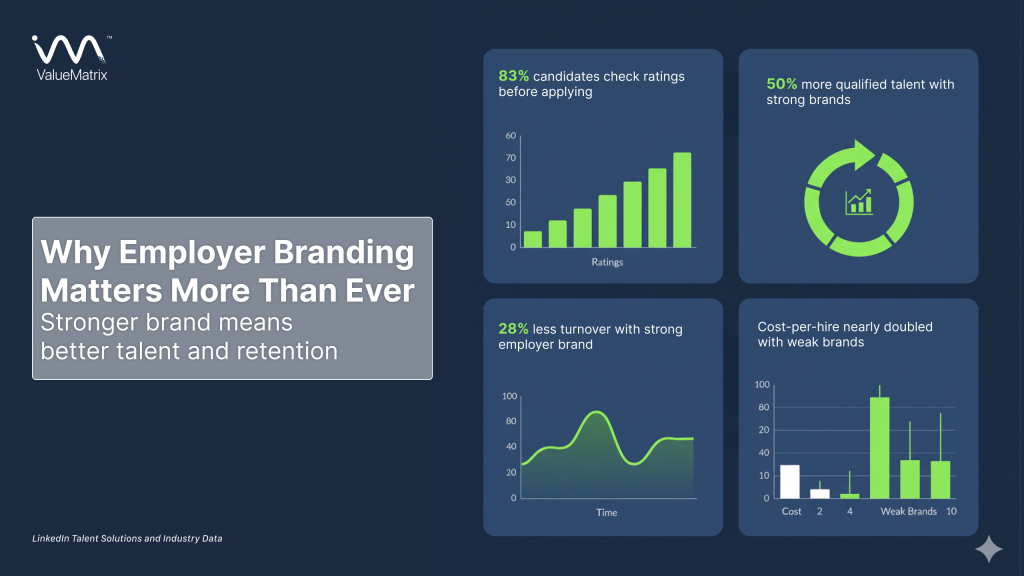
This research habit has actual business implications. Businesses that are doing employer branding investments are3 times more likely to make quality hiring decisions. Powerful employer brands bring in50% more qualified talent and save up to 50% on time-to-hire. There is an irrefutable correlation between employer brand strength and recruiting effectiveness.
Financial impact goes beyond recruiting efficiency. Strong employer brands see 28% less turnover. When your organization could spend 50% to 200% of an employee’s yearly salary replacing them, employer branding is literally adding to your bottom line.
How Can a Broken Hiring Process Damage Your Employer Brand?
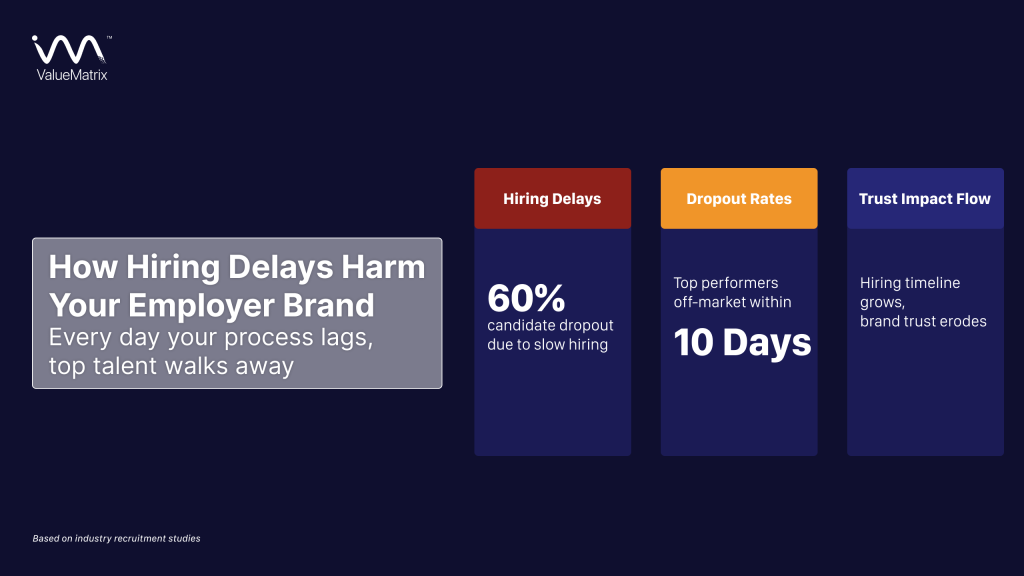
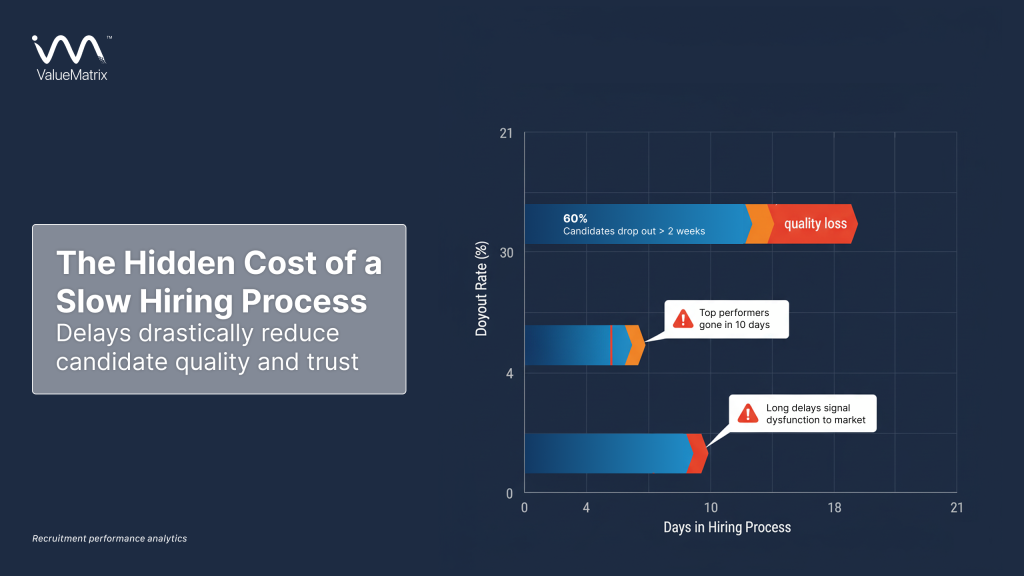
Your lengthy recruitment process is actually bleeding you off high-quality candidates. The harsh reality is that top performers are typically off the market within 10 days of starting their job search. While your hiring managers mull over interview schedules and manager time, the ideal candidate is feeling left out. They will simply move on, accepting offers from your competition.
Data shows that 60% of candidates simply opt out of the hiring processes that are taking too long to respond. Their frustration isn’t just about time. Slow hiring signals organizational dysfunction to candidates. They question whether your company can make decisions efficiently or respond to market changes quickly.
The longer your process takes, the lower the quality of your eventual hires becomes. Your candidate pool shrinks to those with fewer options, lower demand, or less confidence in their abilities.
How Does Poor Candidate Communication Signal a Weak Culture?
Communication breakdowns in hiring also unveil deeper issues in the organization to potential customers.When 78% of candidates anticipate regular communication throughout the hiring process and just 37% actually get follow-ups, you’re building a huge expectation gap that harms trust.
Poor communication takes many forms.35% of job candidates say that recruiters do not even recognize their resumes. 40% say that they were ghosted after the second or third round of interviews. These not only make one candidate angry, but they also inform the entire market that your company does not respect the time of others.
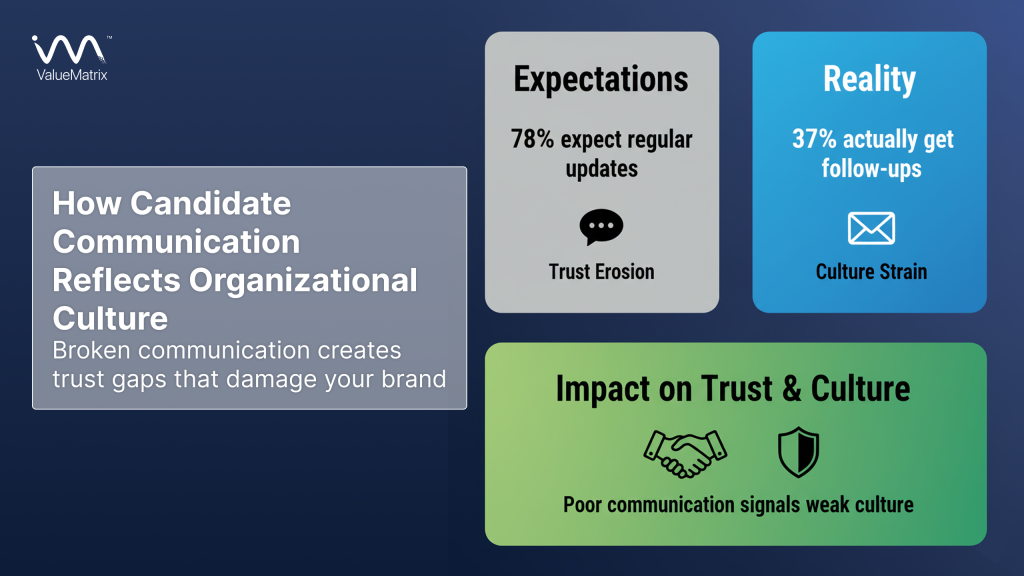
Savvy candidates base their judgment of company culture on the quality of communication. They think that if you’re not able to handle rudimentary communication in recruiting, your internal communication is probably just as bad. This prejudices away the teamwork, communication-oriented professionals that most businesses so badly desire.
Are Outdated or Biased Selection Processes Hurting Diversity?
Bias in your recruitment process doesn’t only restrict diversity: it negatively impacts your employer brand among underrepresented individuals. Just38% of businesses actively try to extract bias from recruitment practices, leaving the majority of businesses open to discrimination accusations and reputation harm.
Unconscious bias has an impact at each hiring stage. Managers generally rely on hiring tests. But here’s the catch. They do so selectively. They make strangers (most of them minorities) undergo assessment, whereas they willingly hire known candidates without any test. This inconsistent process can create a legal liability. Moreover, it clouds your company’s true values.
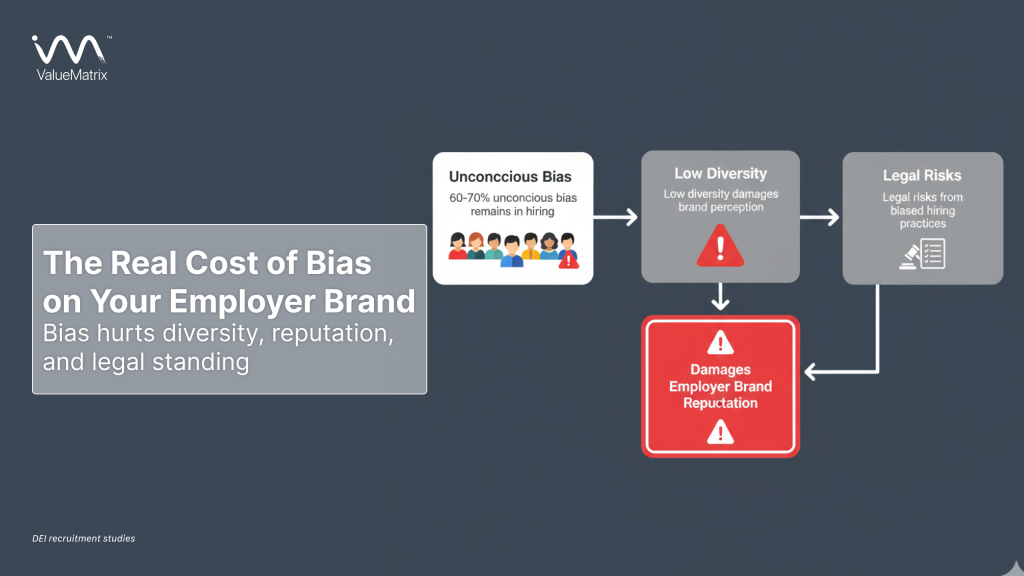
Today’s applicants, particularly freshers, want a diverse and inclusive workplace. If your company’s brand value in the market shows even a hint of discrimination, however unintended, you will face rejection by the entire demographic group.
Could Bad Interview Experiences Be Damaging Your Reputation?
Your interviewing process is a high-pressure brand presentation. Candidates assess not only if they would like the work, but also if they would like to be connected with your business period.
Frequent failures in interviews are the slow process that takes four or five rounds, too many case studies, and impersonal rejection letters. Candidates who spend time and energy in your process deserve respectful handling and constructive criticism back.
Interview quality also signals broader organizational competence. If the candidates feel that the interview was not run professionally, the same environment will transpire in the working culture. They will assume that your processes for client meetings, project management, or strategy execution are weak. These are all perceptions. And these perceptions will percolate in the market. It will influence not just hiring outcomes but business opportunities.
Does Lack of Transparency in Pay and Growth Erode Trust?
Salary and career advancement transparency hurts candidate trust and employer reputation. By being non-transparent about pay bands and growth opportunities, you make candidates think that you’re keeping things under the hat. It hurts your reputation, particularly among the best talent who have alternative choices.
Contemporary candidates demand salary information outright and clear directions for their careers. Those companies that offer transparency show faith in their propositions and regard for the time of candidates.
Compensation secrecy is also implicated in larger cultural issues. Candidates ask themselves: if you’re not open about compensation, what are you concealing next? This suspicion complicates establishing the level of trust needed to have successful recruiting and retaining employees.
Why Should You Care About the Experience of Rejected Candidates?
Every candidate you reject becomes a messenger for your brand — in a good or bad way. Most applicants won’t get an offer, which means the majority of people who experience your hiring process will walk away as rejected candidates.
When those candidates feel respected, they often turn into unexpected brand advocates. They might refer talented friends, reapply later, or speak well of your company in their professional circles. Organizations that handle rejections with empathy usually see better referral rates and stronger employer brand scores.
But when rejections are handled poorly, the damage can stick for years. The person you reject today could be tomorrow’s client decision-maker or an influential voice in your industry. The way you treat people during hiring doesn’t just affect your reputation — it shapes future business relationships too.
What Is the Ripple Effect of Bad Candidate Experience on Brand Reputation?
In a conversation with ValueMatrix, Sumeet Shevkani, an HR 30 Under 30 awardee and People & Culture leader:
Stresses that pulse and satisfaction surveys signal deeper issues in hiring touchpoints—like untimely recruiter updates or absent rejection feedback—which organizations must dissect to protect brand reputation. Rejected candidates increasingly vent frustrations on Glassdoor and social media, turning poor processes into public damage control nightmares. Proactive monitoring and refinement of these moments build trust and prevent reputational fires.
Bad candidate experiences don’t just disappear. They leak out into professional networks, splash across social media, and get archived on review sites. The damage spreads in circles that keep getting wider.
We are in the age of social media, where a slight negative experience can become sensational. You don’t want your industry professionals to read a not-so-true but frustrated hiring process review by a candidate on LinkedIn. Comments start pouring in, and others share their (bad) experiences with your company. These threads take on a life of their own, and your reputation takes a hit across entire talent markets.
Review platforms like Glassdoor create permanent records of what candidates go through. Here’s something worth knowing:67% of candidates actually look at how companies respond to reviews when they’re evaluating potential employers. You’d rather forget these negative hiring experiences, right? These things influence your future candidates and, worse, potential customers who are trying to learn more about your company.
What Can We Learn from Real-World Hiring Successes and Failures?
Success Story: Slack’s Hiring Revolution Goes Inclusive
Slack completelyrevamped its hiring process. They focused on cutting down hiring bias and made candidate experiences more open; wrote JDs to be more inclusive and trained their recruiters to identify bias and avoid it. They also built structured interviews that focus on skills instead of cultural fit.
The key lessons from Slack’s approach are the value of systematic bias training and formal interview processes. They also invested in clear communication. They didn’t just talk about inclusive hiring; they rebuilt the whole process to live by those values every step of the way.
Success Story: DigitalOcean’s Focus on Transparency
DigitalOcean strengthened its employer brand through extreme transparency in hiring. They keep you informed at every stage, share detailed and constructive feedback whether or not you’re selected, and offer helpful resources to prepare for interviews.
This way, each candidate interaction builds trust and improves the company’s reputation. Even if a candidate doesn’t get a job, they still end up advocating the way DigitalOcean treated them with respect and kept an open communication throughout.
Key Takeaways
- Big companies see hiring as an opportunity to market their brand and company values. It’s not a task to be scratched off the list.
- They invest in honest communication, structured systems, and respectful treatment as they understand that every interaction shapes brand perception.
How To Set Up a Candidate-Centric Hiring Process?
Clear Job Descriptions and Expectations
- Create job descriptions that reflect your company’s first impression.
- Clearly list pay ranges, benefits, and potential career growth from the start.
- This openness is a sign of respect towards the candidate’s time.
- Use inclusive language.
- Avoid unnecessary requirements that might turn away qualified applicants.
Faster Timelines and Easy Processes
- Build your hiring process with speed as a goal.
- Map every step from application to offer, and look for ways to run tasks in parallel instead of one by one.
- Handle background checks, reference calls, and internal discussions simultaneously where possible.
- Set and share clear timelines with candidates early on.
- Send updates regularly to keep candidates engaged and to show professionalism.
Consistent Candidate Communication
- Establish communication standards to ensure every candidate gets regular updates.
- Use automation tools for basic acknowledgments. These messages should be personalized and attached to personal IDs.
- Respond within 24 to 48 hours.
- Give a neat layout of the next steps after an interaction.
Invest in Interviewer Training and Structured Processes
- Train interviewers to recognize and reduce bias.
- Many managers have never received interview training. The result: there will be inconsistencies in their interviewing processes.
- Apply structured interview frameworks.
- Conduct a panel interview to balance out different opinions and cut out individual bias.
Give Feedback to All Candidates
- Share detailed feedback with all the candidates.
- This helps them understand what went well and how they can improve.
- Also, it reflects your respect for their effort.
- If you are planning to reject a candidate who has spent some time in the pipeline, opt for a personal communication. An automated message leaves a bad taste.
Candidate Experience
- Get the applicants to fill out surveys and feedback forms to measure candidate experience.
- With this data, you can track different metrics like total completion rate, interview-to-offer numbers, and overall satisfaction.
- Having structured data will allow you to review results at each stage. You can then help the interviewer overcome their inconsistencies.
- Share this data with leadership to maintain a focus on continuous growth.
How Can Hiring Become a Brand-Building Opportunity?
Your hiring process can be one of the best ways to build a lasting brand. It’s unfortunate that most businesses don’t look at hiring with that eye. Every single candidate interaction either builds up your reputation or tears it down. That makes recruitment a critical piece of your brand strategy, whether you realize it or not.
The numbers back this up. Strong employer branding can cut your cost-per-hire in half. It reduces turnover by 28%. That’s real money staying in your budget. But here’s what matters even more: a well-designed candidate experience goes far beyond just filling positions.
You need to rethink and reimagine how you hire. Don’t look at it as an operational checkbox. Treat it like a strategic marketing investment. Give candidates an exceptional recruitment experience, and they become your advocates. They talk about you in their professional networks; recommend you to talented friends. They remember how you treated them.
Here’s where it gets interesting. The competitive advantage of a strong employer brand doesn’t just help you today. It compounds over time. Companies known for respectful, efficient hiring processes attract bigger pools of qualified candidates. Your offer acceptance rates go up. Your employee referral programs get stronger.
The question isn’t whether you can afford to invest in better candidate experiences. It’s whether you can afford not to.
How Can AI and Technology Transform the Hiring Experience?
AI-driven recruitment platforms are revolutionizing how organizations approach bias reduction and candidate experience. Modern AI tools can eliminate subjective human bias during initial resume screening and assess candidates based on job-relevant criteria rather than demographic information.
The efficiency gains are substantial. IBM reduced time-to-hire by 30% and improved hire quality through AI-powered candidate matching. These tools don’t just speed up processes; they create more objective evaluation criteria.
AI can also enhance communication throughout the hiring process. Chatbots provide instant responses to candidate questions, automated systems send regular status updates, and intelligent scheduling tools reduce coordination friction.
However, AI implementation requires careful design. AI systems trained on biased historical data can perpetuate discrimination. Organizations must audit their AI tools regularly to maximize bias reduction benefits.
Valuematrix.ai represents the next evolution of AI-powered hiring, focusing on cultural alignment and team dynamics rather than just skills matching. Our platform uses personality analysis, psycholinguistics, and cognitive assessments to evaluate candidates holistically, going beyond resume screening to assess true cultural fit.
Our approach addresses AI bias through comprehensive candidate evaluation that considers personality traits, organizational culture alignment, and team dynamics. By focusing on multiple dimensions of candidate fit, we help organizations build more cohesive teams while creating engaging candidate experiences.
Conclusion
Ready to transform your hiring process from a brand liability into a competitive advantage? Discover how AI-powered recruitment platforms like Valuematrix.ai can help you build efficient, fair, and candidate-centric hiring experiences that strengthen your employer brand while attracting top talent.
FAQs
A long hiring process can frustrate your candidates. This can lead to more dropouts as well as a negative reputation online when these candidates share their experiences publicly. These things will have a negative impact on your brand.
When you build a consistent, transparent, and clear communication line with your candidates, they feel valued. And even without explicit request, these candidates become your advocates. On the other hand, if there is little to no communication, applicants feel left out, and they create a negative impression of your company’s culture among their professional peers.
Yes. Any kind of bias will directly affect diversity. It can harm brand value in the public eye and may also invite legal risks. Moreover, such instances may end up marginalizing an entire demographic from your hiring pipeline, robbing you of diverse talent.
Clear communication to candidates about their pay and career opportunities lays down the foundation for lasting trust. They feel that the company respects their time and effort. An overall positive hiring experience builds a strong brand perception.
Respectful and constructive rejection experiences turn candidates into brand advocates who may refer others, apply again in the future, and contribute to a positive market reputation.
About Us
ValueMatrixI is an AI-powered talent intelligence platform that helps companies hire better, faster, and without bias. We go beyond resumes to assess skills, behavioral traits, and cultural fit using advanced AI and proven psychological frameworks. Our platform delivers data-driven insights that improve hiring accuracy, reduce time-to-hire, and elevate candidate quality.
ValueMatrix AI enables hiring teams to make confident hiring decisions and build high-performing teams at scale.