
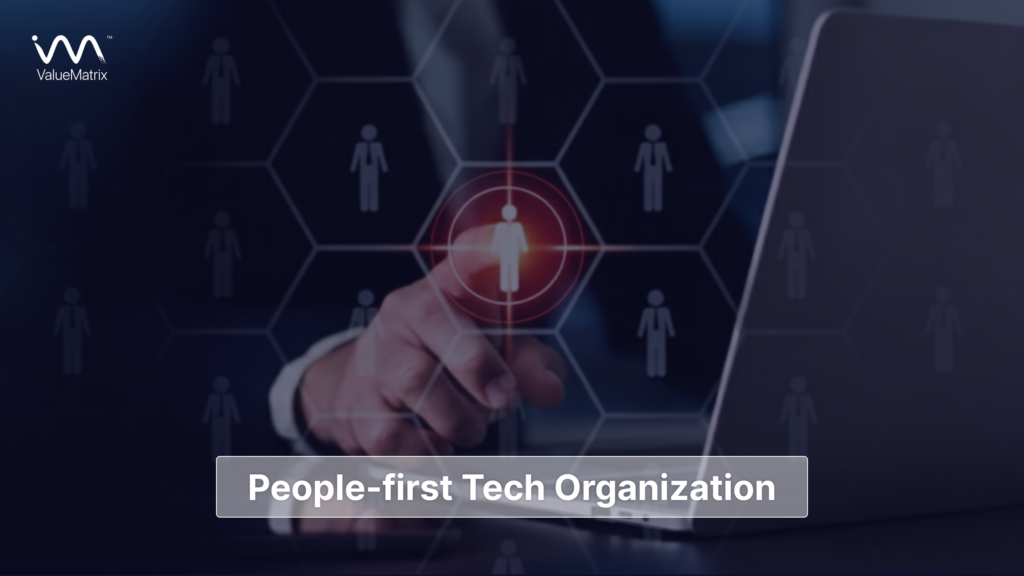
In addition to improving their technological capabilities, organizations are also working on developing workplaces in which employees are valued. It is not necessary to give up on technological advancements to create a people-first organizational culture. The goal of this blog is to outline practical steps to create an organizational culture focused on people and yet remain committed to being technically excellent. When organizations align both people and technology, the result will be engaged teams and increased productivity, which leads to long-term success.
Understanding the People-first Philosophy
Image courtesy:Unsplash
The people-first philosophy, simply put, means placing your team on center stage. It is all about prioritizing the needs, welfare, and ultimate success of your employees over every other consideration. People become more engaged and productive when they feel valued. It is this simple principle that supports the passion for creating a people-driven organizational culture.
Imagine an organization where employees feel valued and empowered. They are no longer seen as a cog in the wheel. They are now the driving force behind the organization’s success. A people-first philosophy is also a business strategy that has significant financial implications for an organization. Contented employees lead to lower turnover rates and increased levels of efficiency.
Integrating Technology Without Eliminating the Human Element
Image courtesy:Unsplash
Technology is the “star” of the show in today’s modern workplace. The wide selection of technological choices provides users with unlimited possibilities.
Balancing Technology with Personal Interaction
Technology greatly improves an organization’s efficiency and speed. However, it is also important to have personal interaction at times.
- Design Automation to Enable Humans: The automation process can be used to complete repetitive tasks, while employees can be enabled to think creatively and solve problems. Once you divide the two clearly,both will be able to exist together with no competition.
- Reimagine Customer Experience: While automation can quickly respond to routine questions, many customers appreciate and remember their experiences with people. Develop customer service processes that utilize automation for rapid responses and human interaction for providing personalized service, especially during times of feedback or complaint.
- Find the Balance: When you separate the tasks that best fit automation and those that best fit human connection, you are ensuring that technology is used to enable the organization’s intended objectives and that the human aspect is not diminished.
Ensuring Inclusive Technology Adoption
Technology adoption is inclusive when all employees, whether their job function has anything to do with technology or not, can easily integrate and leverage technology. It is about making the technology, used in HR and other aspects of business, human-centered.
- Employee Training and Ongoing Support: The organization needs to train all staff members fully before new technology deployment, while offering continuous support through diverse training methods for complete inclusivity.
- Employee Feedback Mechanisms: The organization needs to create ongoing employee feedback systems that let staff members provide continuous feedback about new technology deployments. The information gathered via this method will allow organizations to continually improve technology and adjust as necessary, based on employee feedback.
- Accessibility: When designing technology adoption initiatives, create accessibility considerations for all employees’ needs. All technology should be accessible for all employees, including employees with disabilities or those who may require assistance with technology due to limited technical knowledge.
- Employee Champions for Digital Transformation: Find and empower champions throughout the company who can promote and facilitate the digital transformation efforts. These advocates will help fellow employees adopt the new technology and create a collaborative work culture.
The fact that your company is people-first does not mean that you will be impeded by new technologies; rather, you will utilize them as an outlet to amplify and celebrate the role of the human element. The way to do this is through the strategic selection of tools that help support your team, using automation effectively, while also promoting and providing opportunities for human connections.
Strategies for Maintaining Employee Engagement in a Tech-driven Environment
The following are a few strategies that can assist an organization in maintaining employee engagement in a technology-driven work environment.
Enhancing Communication Channels
Communication is essential to all people-first organizations. An organization must develop the means and methods to communicate effectively with its employees.
- Using Communications Tools: Promote communication tools such as Slack, Microsoft Teams, Trello, etc. These tools enable employees to communicate using instant messaging, video conferencing, etc.
- Create Open Lines of Communication: Hold regular team meetings, “open office” hours, etc. Create a culture of open dialogue where employees feel free to express their ideas and opinions.
- Transparency: Communicate with employees openly regarding organizational goals. This creates trust and loyalty among the employees.
Promoting a Collaborative Culture
Collaboration is the foundation of innovation. It is the driving force behind a people-focused workplace. Organizations that enable a culture of collaboration inspire employees to share their ideas and talent. This results in a more dynamic and innovative workplace.
- Collaboration Tools: Usetools that facilitate collaboration (i.e., Google Workspace, Asana, etc.). These allow employees to share documents and collaborate on projects across departments. Collaboration tools eliminate departmental silos.
- Interdepartmental Projects: Create projects that involve employees from multiple teams. The result is increased awareness and respect for the work accomplished by each department. The combination of diverse perspectives also results in greater innovation.
- Social Connections: Engage your employees in team-building events or virtual social gatherings to build social connections between employees. Teams that have formed a sense of camaraderie will generally outperform teams without a connection.
When employees collaborate, innovation occurs, and organizations can harness the collective power of their employees.
Real-world Examples of People-first Tech Organizations
Severalmajor international tech companies are creating and sustaining workplace cultures that make employee welfare and engagement a top priority, and they are doing so in an innovative manner. A few of them include:
1. HubSpot
It’s a global leader in providing a variety of sales and marketing tools. It is known for its radical approach to building a “people first” culture through total transparency. HubSpot is credited with pioneering several important aspects of an employee-centered culture. These include unlimited paid time off, flexibility in scheduling (i.e., allowing employees to work from home), and a mandatory one-week global “rest” period each year. HubSpot provides virtual wellness opportunities such as free online access to yoga, meditation classes, and fitness boot camps for employees. It also offers generous parental leave policies and diversity training. The company has consistently ranked high in terms of employee satisfaction in independent employee surveys.
2. Nextdoor
Nextdoor is a popular social networking platform. It has created a learning-driven environment that empowers individuals to own their roles and advance their careers internally. Over 50% of open positions are targeted for internal fills by 2025. Employees are directly involved in shaping emerging teams and developing their leadership capacity. The company invests in health insurance, paid leave, and especially professional development, which includes opportunities to work alongside executives and contribute to shaping new functions. Employee reviews highlight the positive work culture and satisfaction, with Nextdoor outperforming other tech giants in professional growth metrics.
3. Apadmi
Apadmi is a UK-based software company recognized for its collaborative and learning-focused environments. Through its Apadmi Academy and “Learning Week,” the organization supports continuous peer-to-peer learning, which spans topics from accessibility to neuroplasticity. The company also offers flexible working arrangements, modern office spaces designed for teamwork, and robust internships. Employee satisfaction scores at Apadmi are high, with a vast majority reporting happiness and empowerment at work.
Empowering People-first Excellence with ValueMatrix
Creating a people-first culture is about prioritizing the overall well-being, growth, and engagement of employees. As an extension of this philosophy, ValueMatrix combines the people-first approach with AI insights so that HR leaders and managers can develop a people-first cultural innovation both efficiently and at scale.
ValueMatrix’s platform does more than automate HR tasks. The platform also uses actionable analytics to help measure team sentiments, performance, and culture fit. This makes it easier for managers to identify the areas where their employees require additional support, recognition, or training as part of a personalized talent journey. Managers are able to provide timely feedback using the platform’s dashboards and measure the effects of different people-first initiatives as they create open dialogue and informative decisions.
Organizations have several options when using ValueMatrix, including:
- Designing fair and inclusive hiring practices using real-time data
- Measuring and developing the culture fit for each new hire and team
- Creating streamlined candidate and employee experiences, which will result in a more personal and empowering experience
- Identifying and creating opportunities for employee recognition, growth, and wellness, helping HR departments transform people-first goals into measurable results
Through the integration of people-first principles with advanced technology, ValueMatrix enables organizations to unlock employee potential, generate innovative ideas, and maintain a focus on people throughout the process of organizational progress.
Conclusion
Apeople-first organization is not an impediment to technological innovation. In fact, as you focus on people in your technological strategy, you create a symbiotic relationship between people and technology. Technology exists to improve human existence. However, it must never replace genuine human interactions. HR leaders must be enablers in organizations, finding a perfect balance between their tech advantage and people-first values.
FAQs
A people-first tech organization dedicates itself to employee well-being through leadership development and open communication and continuous learning, and recognition programs.
Organizations can automate routine tasks. However, complex and creative problem-solving must be reserved for people. This way, they can balance automation and human interaction.
The system consists of three essential components, which include collaboration tools (Slack and Teams) and HR platforms that offer feedback capabilities and mentorship programs, and ongoing training resources. The system requires support for communication and learning activities while making sure all users have access to the system.
Organizations need to establish complete training programs while collecting continuous employee feedback, and provide simple access to digital tools and select champions who lead others during transformation initiatives.
Research indicates that organizations that prioritize their employees achieve lower employee departure rates and higher employee involvement, and superior sustained business expansion.
About Us
ValueMatrix is an AI-powered talent intelligence platform that helps companies hire better, faster, and without bias. We go beyond resumes to assess skills, behavioral traits, and cultural fit using advanced AI and proven psychological frameworks. Our platform delivers data-driven insights that improve hiring accuracy, reduce time-to-hire, and elevate candidate quality.
ValueMatrix AI enables hiring teams to make confident hiring decisions and build high-performing teams at scale.