

AI helps teams communicate, collaborate, and perform better through data analysis, automation, and prediction. But organizations often overlook small emotional and behavioral changes that can occur when AI is in place. This blog looks at the significance of team dynamics AI, the characteristics driving this change, and what both organizations and team members must consider.
Understanding Team Dynamics
Team dynamics are behavioral and psychological forces within a team. Team dynamics customarily involve trust, communication, and conflict resolution, and are usually studied using surveys or observation.
AI in team dynamics can process large amounts of data from emails, meetings and employee performance to surface information such as communication silos or steep drops in engagement, and can flag these issues in real-time.
Organizations that have introduced AI in team settings to increase productivity report great increases when automating manual tasks and providing data-driven feedback.
AI’s Entry into Teams
The AI in Teamwork originally allowed simple automation, but now features complex agents as teammates. For example, AI features in project management tools such as Asana or Trello may manage task assignments with predictive modeling based on historical workloads.
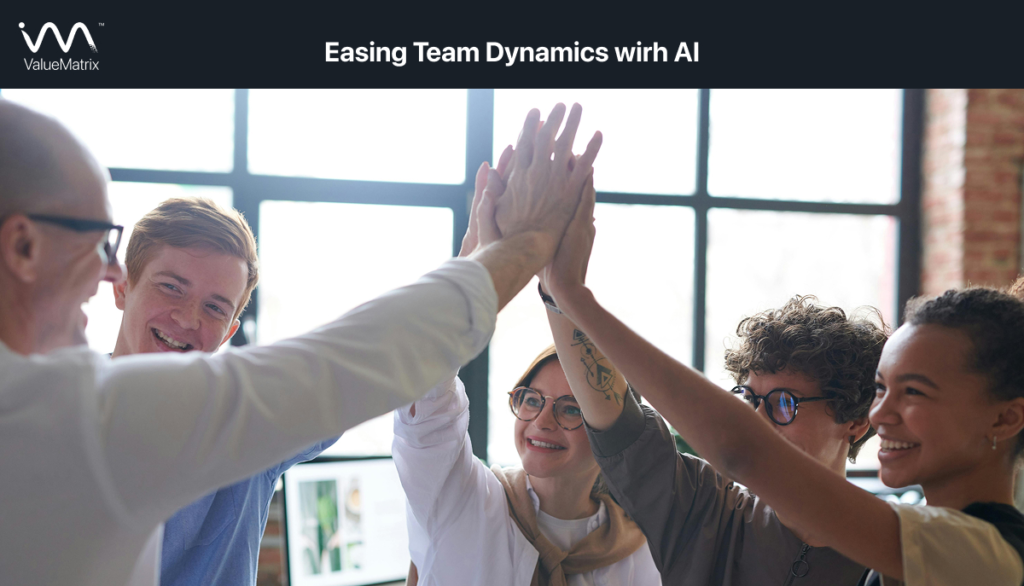
In teams, AI eases people during meetings through note-taking, summarization, and co-facilitation, which involves recommending agenda items and reminding humans of biases. With AI augmentation, humans are freed from administration and able to focus on strategy. Teams with AI can match or exceed human dyads.
Within organizations, AI stresses multi-dimensional performance analytics from business results to employee development, focusing on outputs rather than inputs.
Key AI Features Changing Dynamics
Predictive Analytics and Insights
AI tools like predictive analytics reveal blockers early based on previous sprints, allowing teams to act before they become issues. Personalized recommendations based on an individual’s strengths can increase morale while easing collaboration.
Real-time analytics give objective information and encourage data-driven discussions over finger-pointing behavior.
Automation and Task Optimization
AI can free teams to focus on creative work by scheduling, tracking milestones, and managing other repetitive work. It can also increase team communication, for example, by integrating with Slack or using virtual assistants to translate.
This has led to agile workflows, with cloud-based tools enabling work across time zones and disciplines.
Augmented Communication
AI helps with communication by recognizing patterns and suggesting ways to participate. It also creates objective reports to ease open discussion and improvement.
Tools can simulate user personas or solicit different perspectives.
Positive Transformations
AI productivity tools help teams make better decisions, improve work execution with a greater output quality and reduced risk, and support team collaboration, experimentation, and learning by enabling teams to reflect upon their actions.
Studies show that using data-driven improvements to reorganize teams builds trust and can increase innovation. Research suggests that morale improves in AI-assisted teams.
In projects, AI breaks down silos, with the best work being produced by human-AI hybrids, and sprint retrospectives being effective and focused.
Real-World Examples
IBM began using AI for content productivity, increasing the productivity of creating content by 60% and the quality of data. At agile workplaces, such as Ones.com, AI is used for retrospective functions, semantic prediction, and feedback customization.
According to Columbia Business School, AI is used in cross-functional teams as an articulator of roles and ideas. Experiments with 122 teams showed generative AI improves performance without replacing humans.
| Company/Study | AI Application | Impact on Dynamics |
| IBM | Process automation & content AI | 60% productivity gain; better workloads |
| Iron Mountain | AI chat support (Einstein) | 8% fewer repeats; 70% less abandonment |
| 122-Team Experiment | Generative AI augmentation | Higher morale; matched 2-person teams |
| Sprint Retros | Predictive analytics | Objective insights; proactive fixes |
Hidden Challenges
Despite these benefits, AI can also decrease psychological safety, reduce trust, and increase job security concerns or perceived lack of autonomy, and transparency of the basis on which AI is trained is needed.
Communication changes as AI creates more polished tones, preventing emotional connection. The speed of AI’s responses can be exhausting for human emotional processing due to a lack of context.
Nevertheless, difficulties remain. It is essential to find a balance between the use of AI information and human judgment, including over-reliance on technology, culture, fatigue, and security.
What Organizations Miss
Organizations have historically viewed AI as a productivity tool, rather than recognizing its potential for altering human connection. Leaders can overlook that AI changes intent perception and favors assumptions over curiosity.
They overlook the human side, forgetting emotions, as polished computer-generated copy distances teams and obstructs psychological safety. Change management is absent, failing to address resistance and upskilling needs.
The hybrid tension of fast AI versus slow human social processing is rarely addressed. Without trust-building and role reassessment, AI’s promise is unrealized.
Strategies for Success
Foster Human-AI Synergy
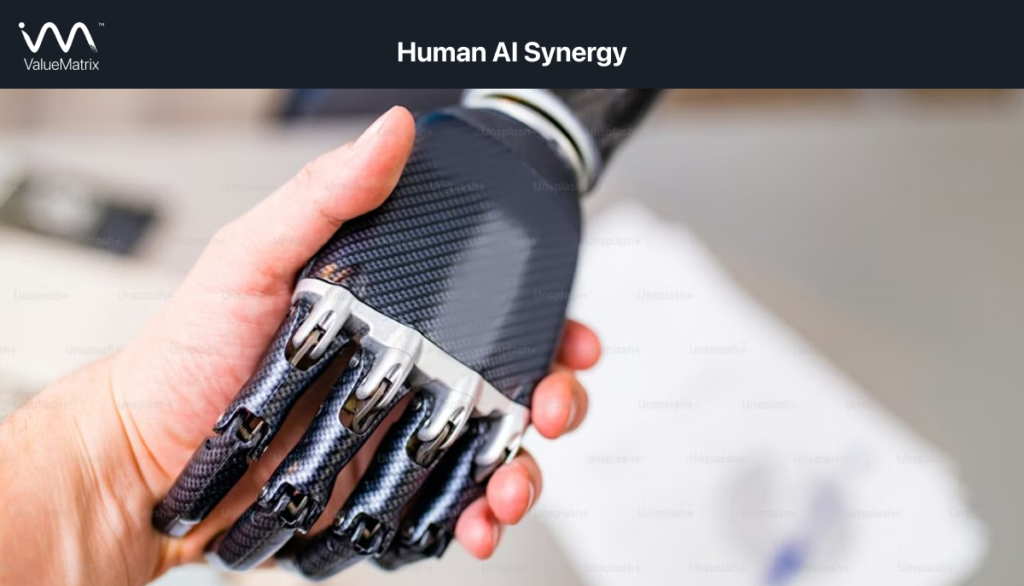
Use AI as a teammate, and be conscious of its limitations. Use it iteratively to augment human intelligence: as a researcher in idea generation and as a clarifier in conversation.
Prioritize Upskilling and Culture
Training should target improving AI literacy and data empathy. Redefining roles to proactively empower teams will foster their acceptance.
Monitor Behavioral Metrics
Track not just output, but trust, engagement, and conflict via AI itself, with humans managing results and regularly auditing the AI for biases and overload.
Embrace Iterative Adoption
Test with small pilots (like AI retrospectives), be iterative, and encourage curiosity in AI-driven communications instead of jumping to conclusions.
| Strategy | Tools/Approach | Expected Outcome |
| Synergy Training | Workshops on AI limits | Higher trust; better collaboration |
| Role Redefinition | Upskilling programs | Reduced anxiety; innovation focus |
| Behavioral Tracking | AI + surveys | Proactive dynamic fixes |
| Pilot Programs | Retrospectives | Time savings; data-driven growth |
Future Outlook

By 2027, AR-supported virtual collaboration, blockchain-enabled sharing, and decentralization will allow optimally assembled global teams of humans and AI with strong predictive capabilities to come into being.
Organizations that combine technology with humanity will lead through creativity, helped by idea generators and scenario simulators. Such tools exist today.
Conclusion
AI fundamentally transforms team dynamics by delivering smarter analytics, automation, and predictive insights that boost efficiency and collaboration. Equally critical is addressing its blind spots, such as emotional disconnects and eroding trust, that many organizations overlook.
Make AI integration intentional. Start with a candid assessment of your team’s AI readiness today to capture its full potential while safeguarding human connection.
FAQs
Team dynamics refer to behavioral and psychological forces within a team, including trust, communication, and conflict resolution, often studied via surveys or observation.
AI can improve productivity by up to 60% by providing smart automation, predictions, and data-driven feedback from emails, meetings, and performance data.
AI can diminish psychological safety, trust, and autonomy; present a polished but potentially dispassionate tone; and lead to over-reliance and job insecurity.
Promote human-AI collaboration by employing training and upskilling, tracking human-AI behavior, and conducting pilot programs (for example, AI retrospectives) to build trust and encourage responsible use.