
Table of contents
AI promised to revolutionize hiring for faster screening, smarter matching, and data-driven decision-making. Yet, in practice, many organizations have discovered a paradox: the very systems built to remove bias often end up reinforcing it. From résumé screeners that unintentionally penalize women’s colleges to chatbots that subtly filter accents, the issue isn’t the technology itself; it’s the data, design, and oversight guiding it.
This is where Industrial–Organizational (I/O) Psychologists step in. With deep expertise in human behavior, psychometrics, and ethical assessment, they don’t just interpret workplace data; they shape how algorithms make hiring decisions about people. Their work bridges the gap between human psychology and machine logic, ensuring that AI recruitment systems remain fair, valid, and legally compliant.
Across industries, enterprises are discovering that AI-driven hiring requires more than data scientists; it demands behavioural science. Without psychometric validation and ethical audits, algorithms may unknowingly replicate the biases of their creators or datasets. The stakes are high; flawed AI decisions can lead to reputational damage, non-compliance with global data laws, and loss of diverse talent.
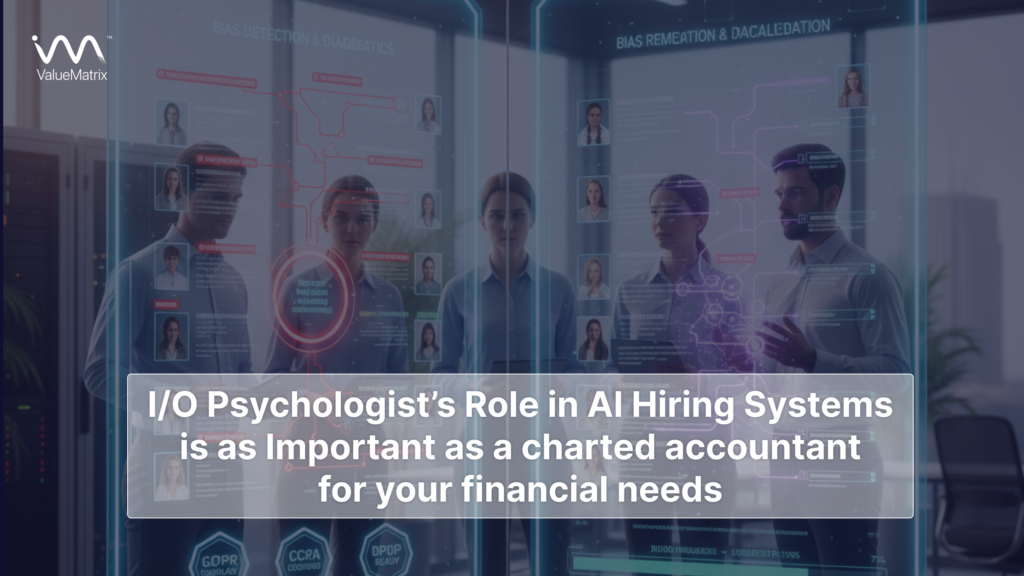
In today’s regulatory landscape under GDPR (Europe), CCPA (California), India’s DPDP Act, organizations are held accountable not just for what their AI systems achieve, but how they make those decisions. An I/O Psychologist’s role, therefore, extends beyond consulting; they function as ethical gatekeepers, auditors, and strategists, ensuring that hiring algorithms meet both scientific and legal standards.
AI recruitment can only be truly intelligent when it’s also ”human-centred,” and that’s where the collaboration between AI engineers and I/O psychologists defines the future of ethical talent acquisition.
Understanding AI Bias in Recruitment
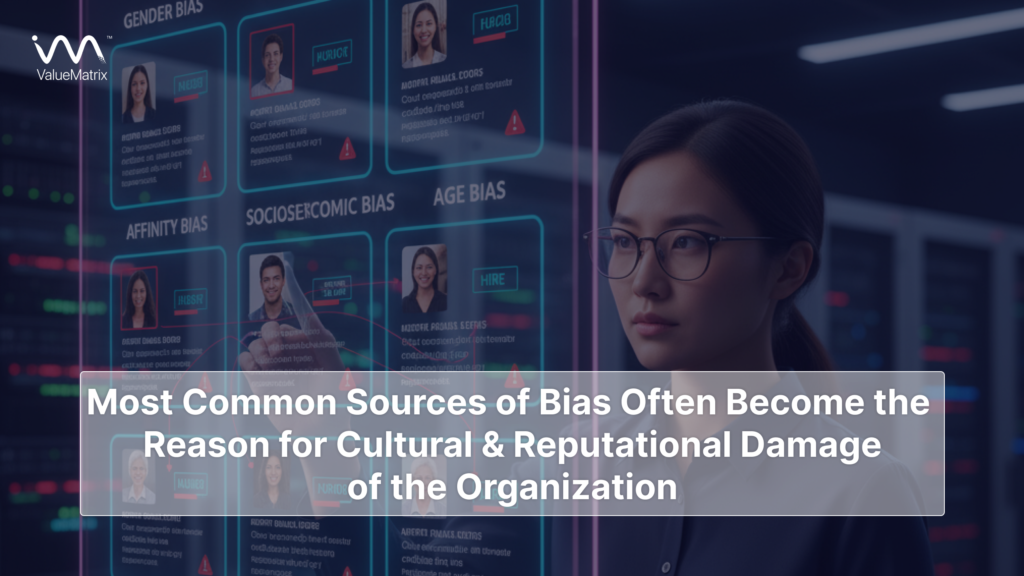
AI bias in recruitment isn’t born from malicious design; it emerges from how algorithms absorb human history and institutional habits. When an AI learns from years of hiring data that reflect limited diversity, it internalizes those imbalances as “success patterns.” The result? Automation that seems objective silently repeats the same inequities we hoped technology would eliminate.
The danger intensifies through feature selection, the specific data points the system uses to predict who will perform well. Seemingly neutral factors like ZIP codes, word choice, or college names often act as proxies for socio-economic status, ethnicity, or gender. When algorithms confuse correlation with causation, bias sneaks in through the back door, filtering out qualified candidates who don’t “fit” historical moulds.
Take the well-known example from a major tech giant: its résumé-screening tool downgraded applications containing the word “women’s” simply because past hiring trends were male-dominated. The model didn’t intend discrimination; it merely mirrored reality, exposing how data without context can weaponize inequality.
Many HR teams, eager to modernize, buy off-the-shelf tools marketed as “bias-free.” Yet these black-box systems rarely reveal how decisions are made or which variables carry weight. Under global regulations like GDPR, CCPA, and India’s DPDP Act, such opacity is a compliance risk; organizations must be able to explain every automated judgment that affects a candidate’s future.
From an I/O psychology perspective, this is not just a coding flaw but a behavioural echo, magnified by automation. To detect and correct it, companies need two complementary skills, which are data science to locate the bias and psychological expertise to understand its impact on real human potential. Only together can we turn ethical hiring from a promise into a practice.
The I/O Psychologist’s Role in AI Hiring System
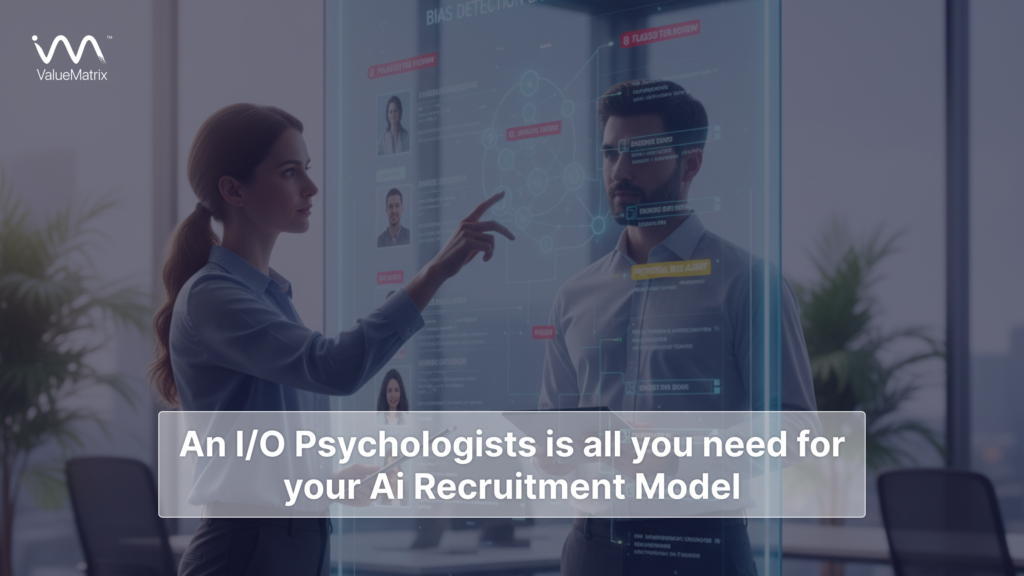
When AI systems screen résumés, rank candidates, or even analyze video interviews, they appear objective, but that’s often an illusion. These systems depend on patterns in historical hiring data, which are already filled with human bias. That’s where an Industrial–Organizational (I/O) Psychologist steps in. Their role is to ensure the technology not only predicts performance accurately but does so ethically, transparently, and without discrimination.
I/O Psychologists bring psychometric science to the conversation, something most data science teams lack. They understand how human behaviour, workplace performance, and test design interact. Rather than focusing solely on statistical accuracy, they validate whether the AI is measuring job-related traits such as cognitive ability, motivation, or leadership potential, rather than irrelevant proxies like gender, age, or background.
Their expertise also extends to adverse impact testing, a legally recognized process that checks whether hiring tools unfairly disadvantage any protected group. Using metrics like the four-fifths rule or statistical parity difference, an I/O Psychologist can identify where bias hides and quantify how serious it is. This data then drives fair algorithmic adjustments, ensuring every candidate has an equal shot at success.
Beyond technical validation, I/O Psychologists bridge HR, data science, and legal teams. They translate complex compliance frameworks like EEOC, GDPR, CCPA, or India’s DPDP Act into actionable audit checklists. In practice, that means the AI tool doesn’t just “work,” it’s defensible in court of law, transparent to regulators, and aligned with ethical hiring values.
In short, while data scientists optimize for accuracy, I/O Psychologists optimize for fairness and validity. Together, they build AI systems that don’t just predict who will perform well, they protect your brand, your compliance, and your integrity. This collaboration marks the true evolution from automation to responsible intelligence in recruitment.
Diagnosing and Auditing Algorithmic Bias
Before any organization can fix AI bias, it must first detect it, and that’s where diagnostic audits come in. Algorithmic bias isn’t always visible rather, it hides deep in training data, coding logic, or output interpretations. A structured audit, guided by I/O psychology principles, reveals those hidden distortions that shape unfair outcomes.
The first step is data audit and a representativeness check. I/O Psychologists examine whether training datasets mirror real-world diversity across gender, ethnicity, geography, and job level. If one demographic dominates, the model risks learning and amplifying that imbalance. For instance, an AI trained mostly on male applicants for tech roles may rank women lower simply because it hasn’t “seen” enough examples of female success.
Next comes model behaviour analysis. This includes comparing AI decisions across subgroups to test for statistical disparities. Techniques like counterfactual fairness where one variable (like gender) is flipped while others remain constant help identify if the algorithm treats individuals differently based on protected traits. These findings are critical for legal defensibility and ethical credibility.
The third layer is interpretability testing. Here, psychologists and data scientists collaborate to ensure transparency ’clarifying why an algorithm reached a certain conclusion. This involves tools such as SHAP values, feature importance mapping, and explainable AI dashboards that make outputs understandable to HR professionals and candidates alike.
Finally, bias remediation closes the loop. This includes re-weighting datasets, retraining models with fairer data, and introducing human oversight at decision checkpoints. Continuous monitoring ‘quarterly or biannual ensures fairness isn’t a one-time exercise but a sustained ethical practice.
By combining statistical audits with behavioural science, organizations can transform opaque algorithms into accountable systems. Bias, once measured and understood, becomes manageable’ not mysterious.
Building Psychologically Aligned AI Frameworks
Creating truly fair AI systems requires embedding psychological science into the technology from the ground up and not patching bias after deployment.Industrial-Organizational (I/O) psychologists bring a framework grounded in validity, fairness, and human behaviour that engineers alone often overlook.
The process starts with job analysis and construct validation. Instead of feeding algorithms generic resume data, psychologists define measurable competencies like problem-solving, adaptability, and teamwork that align with real job success. These validated predictors reduce reliance on superficial cues such as school names or job titles, which often correlate with privilege more than performance.
Next, psychologists help design structured assessment pathways. Every candidate interacts with consistent, standardized questions or simulations. This uniformity minimizes subjective variability, ensuring the AI evaluates genuine ability, not demographic noise. When combined with behavioural scoring models, it turns recruitment into a more scientific exercise.
Equally crucial is psychometric validation. Each AI-based assessment or scoring metric undergoes reliability checks ’but does it measure the same trait each time, and fairness analysis across groups? These principles, long used in employee selection, translate seamlessly to digital hiring models.
Finally, a psychologically aligned governance model anchors the framework. It defines ethical guardrails, review cycles, and escalation routes when algorithmic discrepancies appear. Here, psychologists act as both custodians of fairness and interpreters of human impact, bridging HR ethics with technical design.
When AI systems are built around psychological validity rather than post-hoc fairness fixes, recruitment evolves into what it was always meant to be, an evidence-based, inclusive, and humane.”
Compliance and Legal Defensibility
One of the most overlooked aspects of AI-driven hiring is legal compliance. When organizations rely on algorithms to screen, rank, or assess candidates, they inherit the responsibility to ensure these systems meet both ethical and regulatory standards. Around the world, laws such as GDPR (Europe), CCPA (California), and India’s DPDP Act demand that automated decision-making “remain” transparent, explainable, and bias-free.
“For I/O psychologists, this isn’t just a legal exercise, it’s a validation mission.” They ensure recruitment algorithms are psychometrically sound, meaning the AI measures what it claims to measure, and does so fairly across gender, ethnicity, and other demographic groups. Their expertise bridges the gap between data science and employment law, ensuring that HR analytics comply with equal opportunity principles while staying legally defensible in audits.
Companies that skip this oversight risk more than bad publicity; they risk lawsuits, reputational damage, and loss of candidate trust. Embedding psychological auditing within AI workflows not only safeguards compliance but also builds organizational integrity. In essence, compliance becomes a strategic advantage for a visible commitment to fairness, transparency, and accountability in the age of automated hiring.
Continuous Monitoring & Ethical Auditing
Ethical hiring with AI isn’t a one-time achievement; it’s a continuous responsibility. Once an algorithm is deployed, it evolves as new data enters the system, meaning its fairness can fluctuate over time. Without consistent oversight, even the most well-trained model can drift toward bias or make unintended discriminatory decisions.
This is where I/O psychologists again become crucial. They partner with data scientists to run periodic audits for the human capital database, tracking algorithmic behaviour and validating that the outputs remain consistent across different demographic and psychometric variables. Regular “bias audits” uncover patterns early, for instance, whether a model’s success rate skews toward certain regions, genders, or universities, and help correct them before harm occurs.
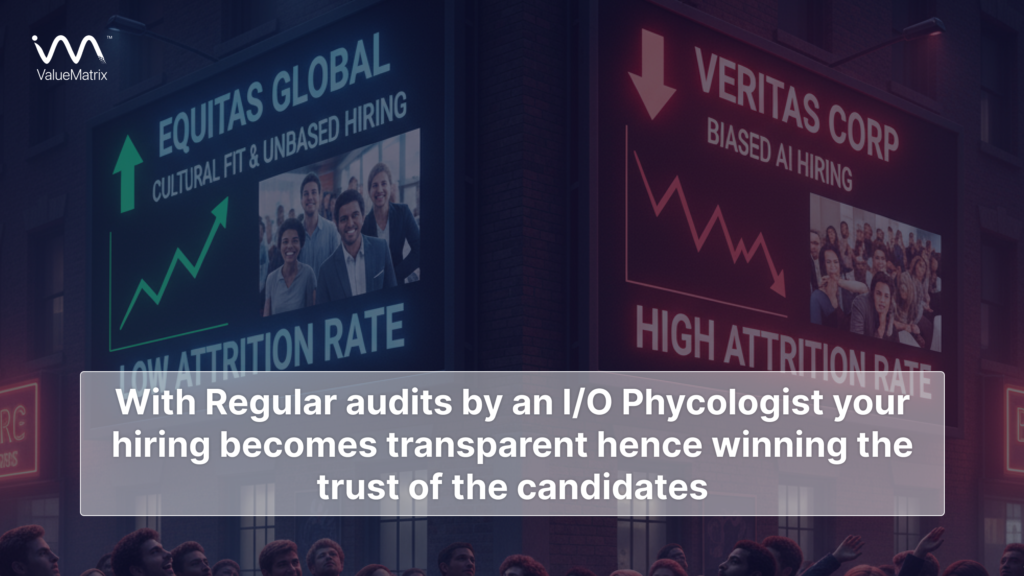
Ethical monitoring isn’t just about compliance; it’s about trust. When candidates and employees know the system is regularly reviewed by qualified human experts, they perceive it as credible and fair. Organizations that invest in this continuous feedback loop not only safeguard against reputational and legal risk but also cultivate a culture that values transparency, accountability, and psychological safety.
The Human Oversight Imperative
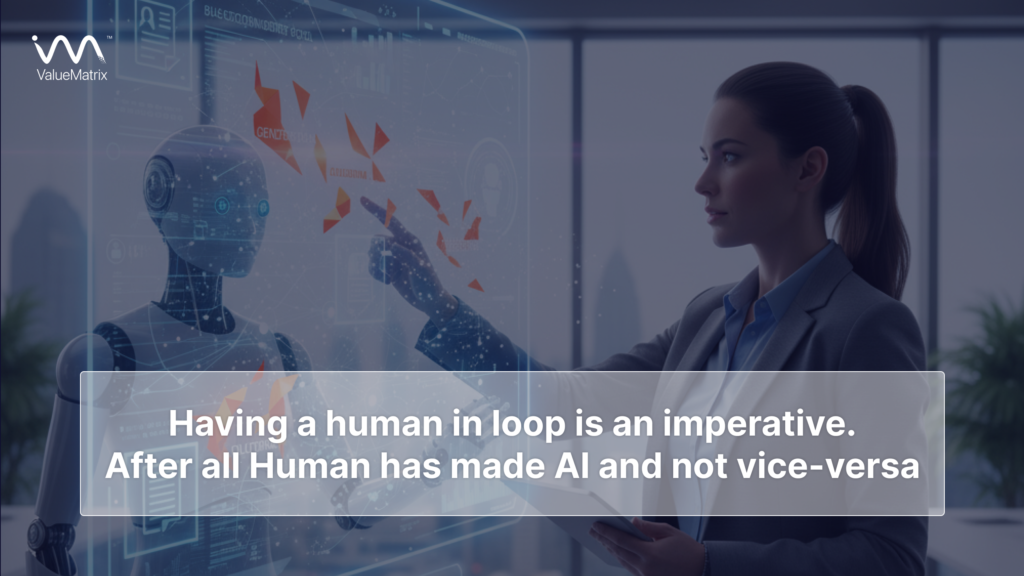
Even in the most sophisticated AI-driven hiring systems, human oversight is non-negotiable. Algorithms can screen, rank, and predict candidate success, but they still lack the subtle understanding of personality, motivation, and contextual judgment that only people can bring. Technology can spot a pattern, but only humans can interpret its meaning.
I/O psychologists consistently emphasize a “human-in-the-loop” approach. Here, recruiters, psychologists, and data scientists jointly review algorithmic outputs, question irregularities, and fine-tune decision rules. For instance, if an AI model disproportionately favours certain universities or resumes with specific wording, human experts intervene to retrain or recalibrate it. This blend of analytical precision and emotional intelligence ensures hiring remains both efficient and humane.
Oversight also supports traceability and accountability. Every automated recommendation is cross-checked by someone capable of understanding its psychological implications. This not only prevents bias drift but also helps organizations explain hiring decisions in legal or audit contexts.
When humans remain actively engaged, AI becomes an assistant rather than an authority. It amplifies judgment instead of replacing it. The result is a recruitment process that balances speed, fairness, and empathy, reinforcing trust among candidates and preserving the integrity of the organization’s employer brand.
Beyond fairness, human oversight also fuels continuous learning. Recruiters observing AI trends can identify emerging skill patterns, refine competency frameworks, and adapt workforce strategies faster. Each audit cycle becomes an opportunity to evolve both technology and talent philosophy, ensuring that AI hiring grows smarter, more adaptive, and genuinely people-centric.
Conclusion
The conversation around AI in recruitment often revolves around speed and efficiency, but the deeper question is about, speed at what cost? When algorithms make hiring decisions based on historic data, they don’t just mirror the past; they magnify it. Every unchecked dataset can quietly preserve recruitment bias, embedding old stereotypes into modern systems. This is where the I/O Psychologist steps forward not as a critic of technology, but as its ethical compass.
By applying their understanding of human behaviour, psychometrics, and workplace diversity, I/O Psychologists ensure that AI hiring tools remain fair, explainable, and defensible. Through structured historic data audits, they identify sources of bias before those patterns contaminate future recruitment cycles. Their expertise bridges psychology and data science, transforming AI systems from opaque decision-makers into transparent partners.
Forward-thinking organizations now recognize that true innovation doesn’t lie in eliminating humans from hiring, it lies in empowering them to guide AI responsibly. With expert oversight, companies can maintain legal compliance, improve candidate experience, and build teams that genuinely reflect inclusion and merit. Each ethical audit, each recalibration of an algorithm, becomes a step toward restoring trust in digital hiring systems.
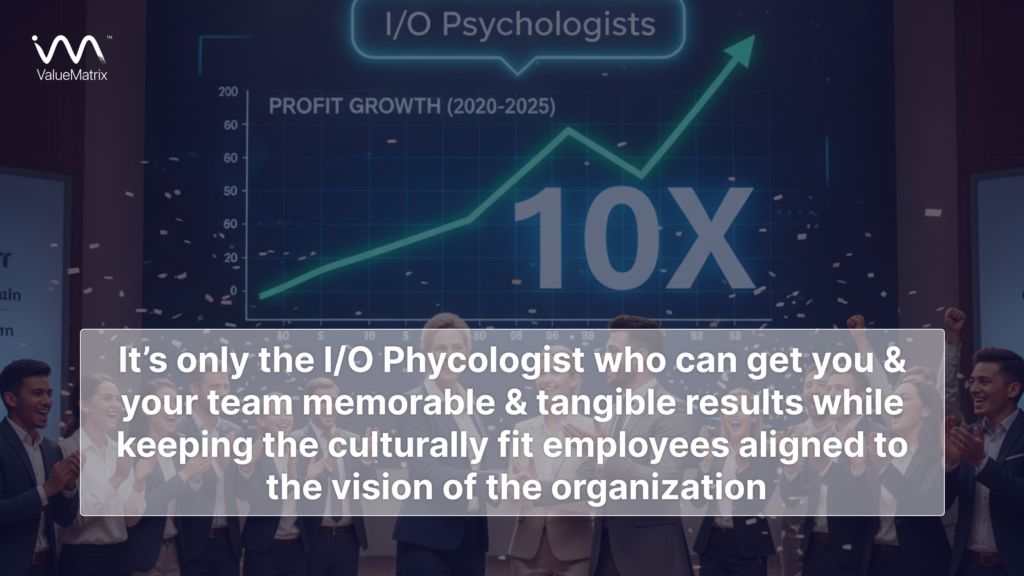
For leaders, this is no longer optional; it’s strategic. Embedding I/O Psychologists within recruitment analytics teams creates an ecosystem where fairness is measurable and accountability is routine. The result is not only better hiring outcomes but also a resilient employer brand built on transparency and equity.
If your organization uses AI for hiring, now is the time to act. Begin with a psychometric and ethical audit. Review your historic data for signs of algorithmic bias. Invite your I/O Psychologist to collaborate with data scientists and HR leaders. The message is simple yet powerful: technology can only be ethical when it listens to people who understand ethics. When organizations acknowledge this truth, they stop treating fairness as a compliance checkbox and start viewing it as a strategic differentiator. Ethical AI, guided by an I/O Psychologist, helps attract diverse, high-performing talent while minimizing recruitment bias. Over time, these consistent historical data audits build not just better algorithms—but more inclusive cultures where technology truly reflects human values.
AI can be your greatest hiring advantage but only when human insight leads the way.
FAQs
AI recruitment bias emerges when algorithms are trained on historical hiring data that reflects limited diversity, causing the system to internalize those imbalances as “success patterns”. It is not born from malicious design but from how algorithms absorb human habits and institutional imbalances.
Many off-the-shelf tools are “black-box systems” that rarely reveal how decisions are made or which variables carry weight. This lack of transparency poses a compliance risk under global regulations like GDPR, CCPA, and the DPDP Act, as organizations must be able to explain every automated decision.
Data scientists primarily optimize for statistical accuracy, while I/O Psychologists optimize for fairness and validity. I/O Psychologists ensure the AI measures job-related traits ethically and without discrimination using psychometric science, bridging human psychology and machine logic.
Proxy discrimination occurs when seemingly neutral factors in the data (like ZIP codes, word choice, or college names) act as indirect stand-ins (proxies) for protected traits like ethnicity or gender. When algorithms confuse correlation with causation, bias sneaks in, filtering out qualified candidates who don’t fit historical patterns.
Global laws that demand transparency, understandability, and bias-free automated decision-making include the General Data Protection Regulation (GDPR) in Europe, the California Consumer Privacy Act (CCPA) in California, and India’s DPDP Act.
They use statistical methods like Adverse Impact Testing (such as the four-fifths rule or statistical parity difference) to quantify bias. They also employ techniques like counterfactual fairness and interpretability testing tools (e.g., SHAP values) to clarify why an algorithm reached a particular conclusion.
The “human-in-the-loop” approach is non-negotiable human oversight where recruiters, psychologists, and data scientists jointly review algorithmic outputs and question irregularities. This ensures AI acts as an assistant that amplifies human judgment, rather than replacing it.
They use psychometric validation and job analysis to ensure the AI tool measures definable competencies (like problem-solving or adaptability) that align with real job success. This rigorous process ensures the tool is valid (measures what it claims to measure) and fair across groups.
Ethical hiring is a continuous responsibility, not a one-time achievement. Algorithms evolve as new data enters the system, meaning their fairness can fluctuate or “drift” toward bias over time. Periodic audits are run to track algorithmic behavior and ensure outputs remain fair.
Flawed AI decisions lead to reputational damage, non-compliance with global data laws, and the loss of diverse talent. Companies risk lawsuits and the erosion of candidate trust. Embedding I/O Psychologists is strategic to ensure defensibility, transparency, and integrity.
About Us
ValueMatrix is an AI-powered talent intelligence platform that helps companies hire better, faster, and without bias. We go beyond resumes to assess skills, behavioral traits, and cultural fit using advanced AI and proven psychological frameworks. Our platform delivers data-driven insights that improve hiring accuracy, reduce time-to-hire, and elevate candidate quality.
ValueMatrix AI enables hiring teams to make confident hiring decisions and build high-performing teams at scale.