

Table of contents
Recognition is an inevitable part of employee engagement and retention. Traditionally coexisting with rewards, recognition has been gaining prominence with Gen Z (born between 1997 and 2012) joining the global workforce. Although monetary benefits remain a priority, regular and timely recognition is a critical motivator for this generation.
A study published by Acta Commercii notes that Gen Z values both extrinsic rewards and intrinsic motivators. Extrinsic rewards, such as compensation, benefits, and recognition, help attract and retain Gen Z employees, while intrinsic motivators, including personal growth, a sense of purpose, and the desire to make an impact, influence their job satisfaction.
HR leadership that understands Gen Z workplace values and works to meet them will be successful in retaining their workforce. Moreover, an effective recognition model encourages employees to be proactive and participative.
Why The Shift From Rewards To Recognition
Traditionally, employers have used rewards, such as bonuses and stock options, to motivate employees. These worked well for baby boomers, Gen X, and to some extent Millennials, but for Gen Z, recognition means something more than one-size-fits-all rewards. While salary and other financial perks remain important, Gen Z seeks additional forms of personalized motivation. According toDeloitte’s 2025 Gen Z and Millennial Survey, ‘money, meaning, and well-being’ form the foundation for happiness at the workplace for Gen Z. These evolving priorities help explain why there is a shift from traditional rewards to the broader, more personalized concept of recognition. Let’s see why.
Meaning and purpose of their work
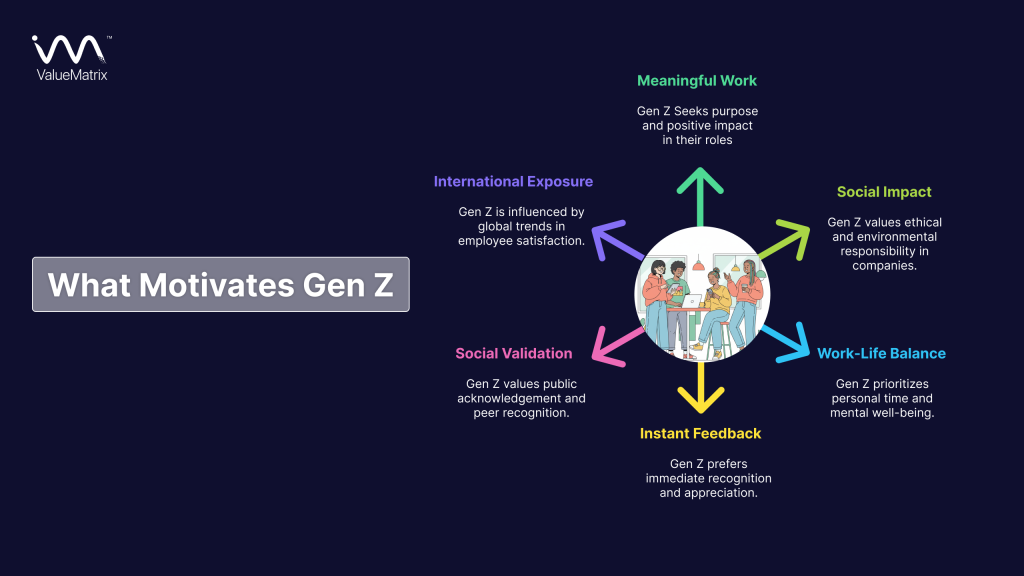
Here are some key findings from the Deloitte study: Doing meaningful work matters to 54% of Gen Zers; 44% of Gen Zers have left roles that lacked purpose. They need to see how their contribution is bringing a positive change within the company and/or in society. ‘Purpose’ for them covers a wide range, such as gaining a sense of accomplishment, enjoying work, and loving to go to the workplace, being valuable to the team, company, or society, or simply to be comfortable and draw a salary that they want.
Social and environmental impact
Gen Zers are interested in knowing their company’s ethics policy, diversity practices, and environmental impact. In the Deloitte survey, two out of ten Gen Zers said they researched a company’s environmental policies before accepting a job offer. Recognition programs embracing personal beliefs of Gen Zers have an impact that traditional rewards cannot fully achieve.
Work-life balance and mental well-being
Gen Zers are particular about keeping their work and personal lives separate. They like utilizing their personal time to pursue interests outside of work. Moreover, employee well-being is proportionate to the workplace environment, with poor work-life balance contributing to stress and anxiety. HR has a better chance of engaging and retaining Gen Z talent by fostering a positive work environment.
Urge for instant feedback
For a generation that grew up on instant answers to their search queries, instant replies to their messages, and instant reactions to their social media posts, feedback needs to be instant. Studies have shown that Gen Z prefers regular feedback to periodical, formal reviews. Was their contribution critical for the timely completion of a client project? Did their marketing idea help the team meet the monthly sales target? Appreciate them in the project meeting itself.
Visibility and social validation
Social media is an integral part of the lives of digital natives, a generation known for its familiarity with technology. The world needs to know about their achievements in life and the recognition they get at work. A social shoutout or a badge that they can display on their social media accounts is far more valuable than a pat on the back at a one-on-one meeting. They value company and peer validation that aligns with their social media needs. Being publicly acknowledged by colleagues and leadership builds their sense of belonging.
International exposure
Gen Z is the first truly global generation with real-time exposure to happenings across the globe. An innovative recognition initiative by a company in one small corner of the world can go viral within hours, making Gen Zers vocal about such demands in their own organizations. Companies that are up to date with global developments in employee satisfaction will catch the attention of this young workforce.
As Gen Z is expected to make up 30% of the global workforce by 2030, it becomes inevitable for HR leadership to envisage dynamic and personalized recognition programs.
What Recognition Looks Like For Gen Z Workers
It’s not recognition vs rewards for Gen Z. According to Deloitte’s 2025 survey, monetary recognition is still the biggest motivator for Gen Z, as 48% of them don’t feel financially secure and live from paycheck to paycheck.
However, there is more to the meaning of recognition for them. It includes flexibility at work, public shoutouts on achievements, and opportunities for career growth and personal development.
Flexibility and work privileges
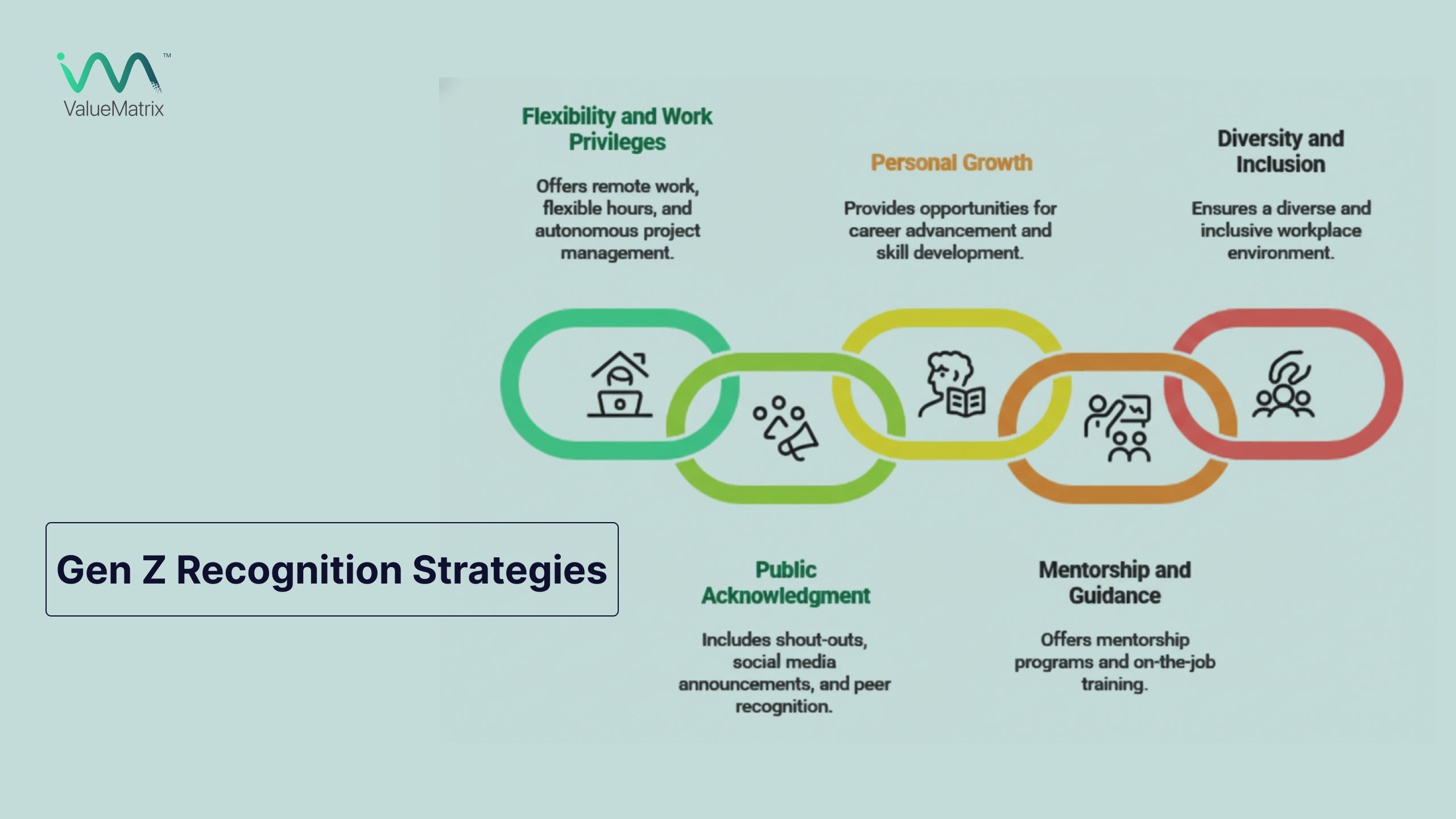
Flexibility includes, but is not limited to, work from home and relaxed work hours. Gen Z expects freedom because most of them dislike being micro-managed. For high performers, recognition can be in the form of
- remote work privileges and flexible schedules
- autonomous project management
- choice in work assignments and team participation
Public acknowledgment and social proof
“Give us what we want and let the world know about it” is what Gen Z expects recognition to be. Public and social acknowledgement can be accomplished through
- team meeting shout-outs and company-wide announcements
- social media announcements and digital badges
- peer-to-peer recognition programs
Personal growth and development opportunities
Personal and career development have become important factors for Gen Z when considering a job offer, and for continuing in an existing job. Recognition programs that offer career advancement opportunities can come in various forms, including,
- additional responsibilities as forms of recognition
- mentorship programs and support for further education
- investment in skill expansion and professional growth
Mentorship and guidance
More than 85% of Gen Z respondents in the 2025 Deloitte study expected mentorship and guidance from employers to update their skills and capabilities. They have acknowledged the importance of soft skills, including leadership, communication, time management, and industry-specific knowledge, for career growth.
Diversity and inclusion
According to a Manpower Group report cited by the World Economic Forum, “56% of Gen Zers say they would not accept a job without diverse leadership, and 68% say their employer is not doing enough to build a more diverse workplace.” Diversity, equity, and inclusion (DEI) is not a fancy term but a way of life for Gen Zers. They expect this to be an integral part of their workplace, where people from diverse races, ethnicities, gender identities, and sexual orientations work together and participate in an unbiased recognition program.
Common HR Mistakes When Dealing With Gen Z Recognition Needs
HR leadership should understand that employee recognition is an evolving process. Your recognition program is outdated if you are making these mistakes.
Treating all employees the same way
A blanket recognition program for everybody in the organization goes against the expectations of Gen Z. For them, a personal touch is a must. Do not assume that older employee preferences suit everybody because Gen Z engagement strategies should consider generational differences.
Over-relying on traditional reward systems
Annual bonuses, gifts, and award ceremonies have become an integral part of a company’s employee policies, but a rigid policy will not yield the expected returns from human capital. The idea is not to discontinue them or replace them completely with non-monetary recognition. The best way forward is to design a hybrid format.
Missing the timing and frequency expectations
How often do you organize your recognition meetings? Is there a schedule, or are they ad hoc, making employees wait in anticipation? Waiting too long for recognition, end-of-year reviews instead of real-time feedback, and inconsistency in recognition are red flags in employee engagement.
Risks Of Ignoring Recognition For Gen Z
Recognition is not just a nice-to-have for Gen Z employees; it’s crucial for their engagement, motivation, and loyalty. Companies that fail to adapt to the changing needs will risk damaging their brand value in the job market and losing top talent.
- Quiet quitting is the tendency among employees to meet the bare minimum expectations and an unwillingness to go above and beyond that. A Gallup study estimated that quiet quitters made up at least 50% of the US workforce in 2022.
- A fallout of quiet quitting is missed opportunities for innovation, collaboration, and retention of the talented workforce. Left unrecognized, the young workforce will either continue to work without enthusiasm or quit to take up new opportunities that promise them recognition and space to grow.
- A group of unhappy employees can be vocal enough to negatively impact the team morale and productivity. These ‘loud quitters’ are most likely to spread their dissatisfaction at formal and informal gatherings, and through social media posts.
- The talk about the company’s outdated or total lack of R&R policy can spread on public forums, where current and former employees express their unhinged opinions. A negative employer brand makes it difficult to attract Gen Z talent.
What HR Needs To Do: Actionable Strategies
HR’s response to Gen Z should be broader, encompassing long-term rewards and short-term recognition.
1. Integrate recognition into culture
Recognition integrated into the company’s processes is more effective than sporadic gestures. Make it a part of your core values, talent review, and succession plans. Make regular rituals of awards, ‘hero stories’, and shout-outs. Most importantly, maintain equity and keep recognition unbiased.
2. Build a recognition program that resonates with Gen Z
Real-time feedback is fundamental to impressing Gen Zers with your recognition system. Keep the recognition instant, personalize the communication, and ensure that this is regular.
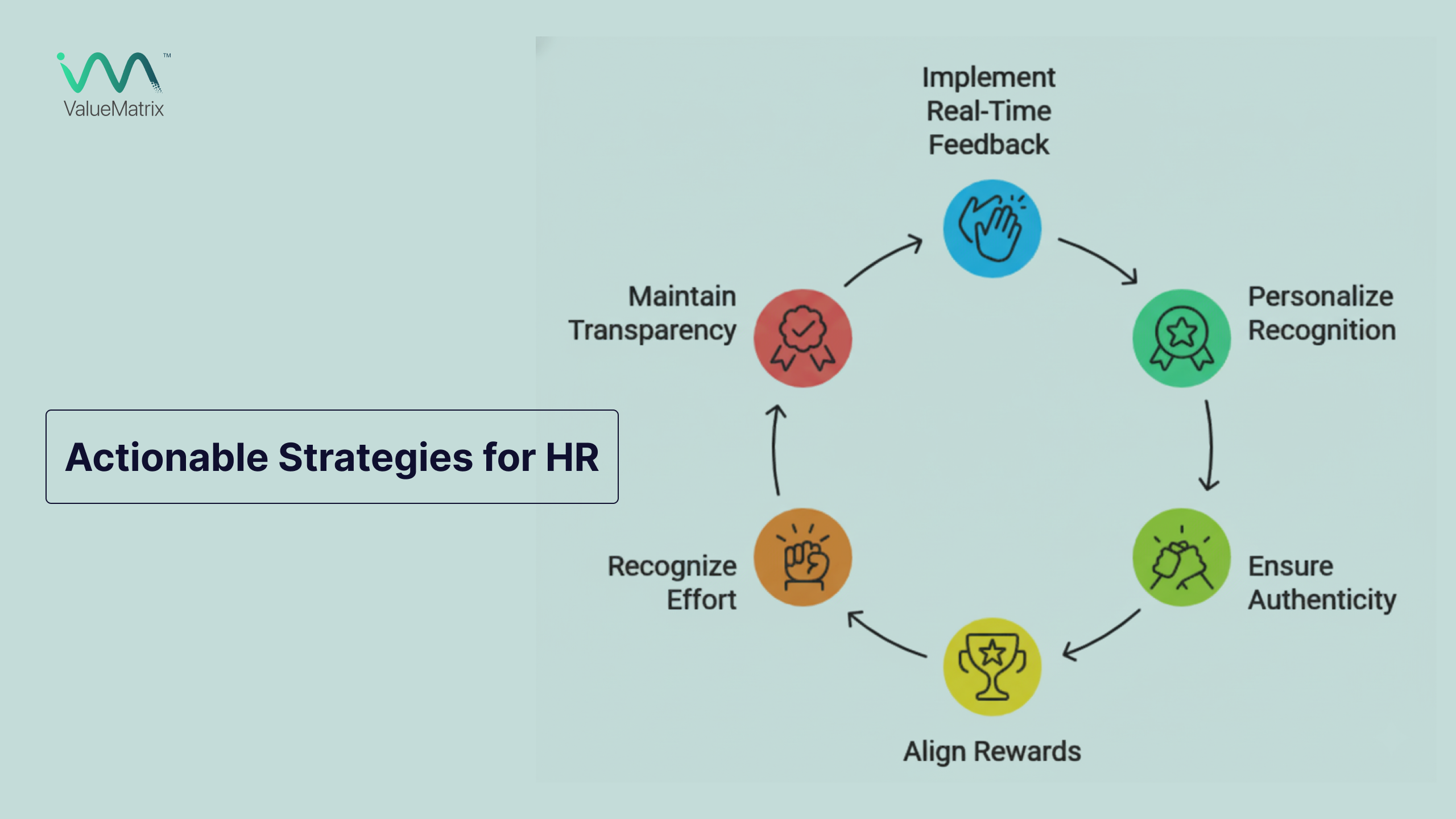
i. Create real-time feedback systems: Regular micro-recognition by the immediate team lead or the respective manager fosters ownership. Use digital platforms, such as intranet communication apps, for instant recognition. Integrate with existing HR systems and use dashboards to track recognition frequency and equity.
ii. Personalize recognition to individual preferences: Regular surveys and feedback sessions on the effectiveness of recognition provide HR with data on how employees want to be recognized. Use the data to offer multiple recognition options for the employees to choose from.
iii. Make recognition meaningful and authentic: Show the employees that the company’s recognition policy is genuine and authentic, to build trust. Gathering feedback and working on it can make the process impactful.
iv. Align rewards with recognition: Draw a recognition model that blends rewards into it. A model of recognition + fair compensation + benefits ensures Gen Zers are happy.
v. Recognize the effort, not just results: Gen Zers like to see their efforts recognized than the results. Do not always link recognition to success because efforts need not necessarily lead to a desired result.
vi. Keep it transparent: Clear communication regarding performance requirements, career path, and growth opportunities will set the expectations for Gen Zers. Being transparent about the recognition policy and criteria will help avoid resentment.
3. Devise budget-friendly recognition ideas
For the recognition model to sustain in the long run, HR needs to ensure that its budget is reasonable enough to convince leadership. A blend of monetary and non-monetary perks is the right way forward.
- Include non-monetary perks such as flexibility, learning, and autonomy.
- Ensure career development and growth of the employees.
- Use symbolic rewards, such as badges, titles, and internal status.
- Utilize existing company resources creatively.
4. Enable managers & leadership to recognize effectively
Employees in managerial positions also crave and deserve recognition. Ensure that it is flowing to them from the leadership. This creates a healthy spread of recognition across the organization. Equip managers with recognition tools and ideas.
- Provide them with scripts and templates that they can use for meaningful feedback.
- Measure managers’ recognition behaviors.
- Train managers in giving meaningful and timely recognition.
- Embed recognition into performance conversations.
HR needs a roadmap for the effective implementation of recognition programs. It requires a phased approach of sustainable engagement and measurable results.
How HR Can Implement The Recognition Program
Start with a pilot phase and test the effectiveness of the initiatives by gathering employee insights. Pilot rollout and testing will ensure that recognition practices are aligned with Gen Z preferences.
Tracking recognition frequency and reach provides insights into how often and how widely recognition is being delivered. Sentiment analysis reveals how employees feel about the recognition they receive, while data on retention and engagement highlights its impact on organizational health. Regularly review these metrics to identify areas for improvement and adjust their recognition strategies accordingly. Having Gen Z HR members can be a value addition.
Balancing recognition with monetary incentives is essential to meet Gen Zers’ diverse motivators. While frequent recognition fuels motivation and engagement, it should be supported with fair and transparent compensation.
How To Measure The Impact Of Your Recognition Model
A recognition program should be flexible enough to incorporate feedback received from employees and the leadership. You need to measure its effectiveness to ensure the RoI is as estimated. Here are a few KPIs to know if your program is working.
1. Participation of Gen Zers
If there is high participation of employees and their managers, it means the model has struck a chord with them. Look at the percentage of employees actively giving recognition and the percentage receiving it across the organization. Compare them across departments as well. Low participation may indicate the need for better communication, orientation for managers, or changes to the program itself.
2. Improvement in employee engagement
Use regular pulse surveys, one-on-ones, and performance reviews to measure improvement in job satisfaction, commitment, and motivation. However, these changes happen gradually as the Gen Zers gain confidence in your recognition program; therefore, you need to be persistent with it.
3. Employee retention
Have the retention rates improved after the introduction of your recognition program? Compare the employee turnover data from the period before the program; if the attrition is low post the program, it could mean that the employees are satisfied with it.
The arrival of Gen Z in the workforce is reshaping the need for workplace recognition. They prioritize meaningful work, continuous learning, and authentic recognition alongside fair compensation. They seek transparency, inclusivity, and well-being with clear career growth paths and flexible work options. Organizations that embrace these values by embedding ongoing, personalized recognition into their culture will attract and retain top Gen Z talent. By implementing a holistic recognition program, companies not only stay competitive but also foster innovative, resilient workplaces.
FAQs
Social recognition is a crucial motivator for Gen Z. This may be done at company meetings, informal gatherings, and through group emails and chats.
Create monthly awards such as ‘Teamplayer of the month’ and ‘Crucial contributor’ for employees to nominate their peers.
Allow managers and peers to acknowledge and appreciate employees via special shout-outs at meetings.
Create digital awards and share them on the organization’s intranet.
Dedicate a wall in the office for employees to write kudos for each other.
Share success stories in internal newsletters.
According to a study conducted by Gallup and Workhuman, Gen Z employees expect recognition at least a few times a month. Pilot testing will help you settle on a frequency acceptable to your employees. Do a regular correlation analysis between recognition frequency and employee satisfaction to know the effectiveness of the frequency.
Blending traditional and modern recognition approaches will help you avoid alienation. Offer multiple ways of recognition for employees to choose from. Conduct opinion polls and internal surveys among various generations of employees to understand the differences in their preferences.
Overdoing or being insincere in recognition can dilute its impact. Recognition must be authentic and tied to genuine achievements rather than generic praise. Rewarding undeserving employees will defeat the very purpose of the program. Therefore, HR needs to set specific standards for recognition.
In a Gallup survey, 24% of respondents said their most memorable recognition came from a high-level leader or CEO. Employees cherish top-down commendation, even if it is a short, informal conversation or a mention in a meeting. Leadership should also play a role in drawing up career growth plans, be available and open to ideas, and be transparent about the company’s policies.
About Us
ValueMatrix is an AI-powered talent intelligence platform that helps companies hire better, faster, and without bias. We go beyond resumes to assess skills, behavioral traits, and cultural fit using advanced AI and proven psychological frameworks. Our platform delivers data-driven insights that improve hiring accuracy, reduce time-to-hire, and elevate candidate quality.
ValueMatrix AI enables hiring teams to make confident hiring decisions and build high-performing teams at scale.