
Why is AI efficiency the new buzzword in HR?
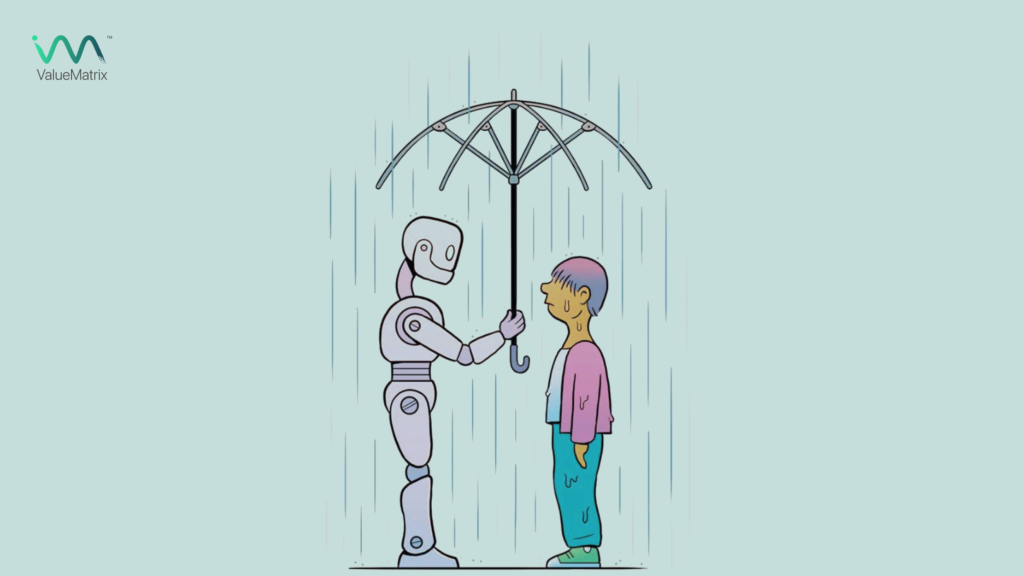
HR has undergone rapid AI automation in recent years. In fact, HR was the first thing to be hit by the AI sludge. It started with the Applicant Tracking System(ATS) in early 2000’s, which made it possible for the companies to parse thousands of resumes in minutes. Then came the era of Analytics which saw the rise of Predictive Models that could forecast metrics like performance, longevity and culture-fit of the candidates.
All this progress was done keeping one thing in mind; to reduce the time and manual effort it takes to onboard a candidate.
Now, the AI has gone beyond helping you compress your hiring cycle. It can write the job descriptions based on market needs, read the chemistry between teams, and even suggest the skills you should be hiring for.
This has put tremendous pressure on HR to succeed every time. You must be able to hit the deadlines of parsing resumes, keeping in mind the culture-fit requirements. And if the company faces high bounce rates, the blame falls on the HR.
Why prioritizing AI-efficiency over empathy could be a recipe for disaster.
Blindly chasing efficiency has its own perils. Oftentimes, efficiency is at odds with ethics. Recently, the IT services giant Cognizant introduced a monitoring system that tracks its employees’ laptops and marks them “idle” after an inactivity of 5 minutes. Such actions can leave the workforce feeling alienated, de-personalised, and surveilled. And when organisations take such extreme steps to enhance efficiency, it usually has a negative effect; employees spend more time and effort trying to look busy than actually being productive.
It creates a low-trust and high-stress environment that ultimately affects psychological safety; a metric that is important for a well-functioning, cohesive organization.
Psychological safety
This is a belief that an employee will not be punished for making mistakes at the workplace. Psychologically safe environments have an atmosphere of security. The employees know that they are allowed to ask questions, have differing views to their seniors and are actually allowed to say, “I don’t know.”
When psychological safety is present in an organization, teams are more innovative and coordinated. When psychological safety ranks low, teams become rigid and disjointed. Everybody tries to save their neck instead of finding creative solutions to their problems.
In this maddening race to AI-led efficiency, Psychological safety is often the first casualty. And as a result, productivity suffers.
Why empathy matters in HR?
HR has always been a human-driven field. It has always dealt with human elements. Settling workplace conflicts, breaking good/bad news to employees, extending help to a struggling employee requires a great deal of humanity. No automation can replace it.
Employees find it more comforting telling their grievances to a human being than a chat bot. And some situations require human intervention because of their complexity, you can’t write code for every lived human experience. In a survey done by Paychex inc in 2024, it was revealed that 79% of employees still want humans to handle conflict-resolution and human relations aspects of the HR function.
This stat is further corroborated by successful HR managers whose careers have extended across decades. Business Insider did a profile on Kerris Hougardy, an HR leader whose career has spanned over 22 years. She says that empathy was the top skill that made her successful. She set up employees relations team during the pandemic so that the employees had someone to discuss their personal issues. Even set up a wellness fund for each employee for mental and physical health support.
These actions are the hallmark of an empathetic leader, who is proactive in dealing with the challenges their employees might face in the future.
A modern day HR wears many hats, she juggles between many jobs like AI adoption, expansion and upkeeping culture. So she needs to have traits like domain expertise, resourcefulness, and delegation skills. But empathy remains the bedrock on which other traits are built.
Empathy drives employee engagement and retention.
Empathy is one of the strongest drivers of human engagement. A 2023 survey by EY reveals that employees who feel empathy from the top brass of their company perform excellently on all the important metrics of engagement like efficiency, creativity, job satisfaction, idea sharing and innovation.
Raj Sharma, Vice Chairman of EY Americas Consulting Services, said, “Recent years taught us that leading with empathy is a soft and powerful trait that helps empower employers and employees to collaborate better, and ultimately create a culture of accountability.”
Empathy is also the biggest driver of retention. During the great resignation of 2021, 50% of the employees left their jobs because they didn’t feel they belonged in the organization. According to the Bureau of Labor Statistics, around 47 million Americans quit their jobs, averaging nearly 4 million quits monthly.
US companies lost somewhere between $722 billion and $3.3 trillion in turnover cost alone that year.
But here’s the caveat: employees do not like performative empathy. Employees appreciate if the concern and care is genuine, however, they are repulsed by the fake displays of empathy.
The EY survey also revealed that nearly 52% of the employees believed their company’s efforts towards being empathetic are dishonest. Employees are increasingly growing leery of their company’s lack of follow-through when it comes to making good on their promises.
Employees want the confidence that their company has got their back, and when push comes to shove, they will not be chucked by the roadside with a nice smile by the HR.
Empathy drives performance, but it does something more than that.
Empathy has a direct impact on revenue of the company. Employees who feel cared for and protected out perform those who work in an environment fraught with fear and insecurity.
We have already seen how empathy drives up all the important metrics related to an employee’s performance, but it goes beyond that, it also makes them selfless and more loyal towards their organization. Here’s an interesting stat, Businessolver’s State of Workplace Empathy study says that 77% of employees would not just be willing to work more hours for an empathetic boss, but 51% said they’ll also take pay cuts if necessary.
The same report also says that unempathetic companies stand to lose $180 billion annually in attrition costs.
Empathy promotes psychological safety
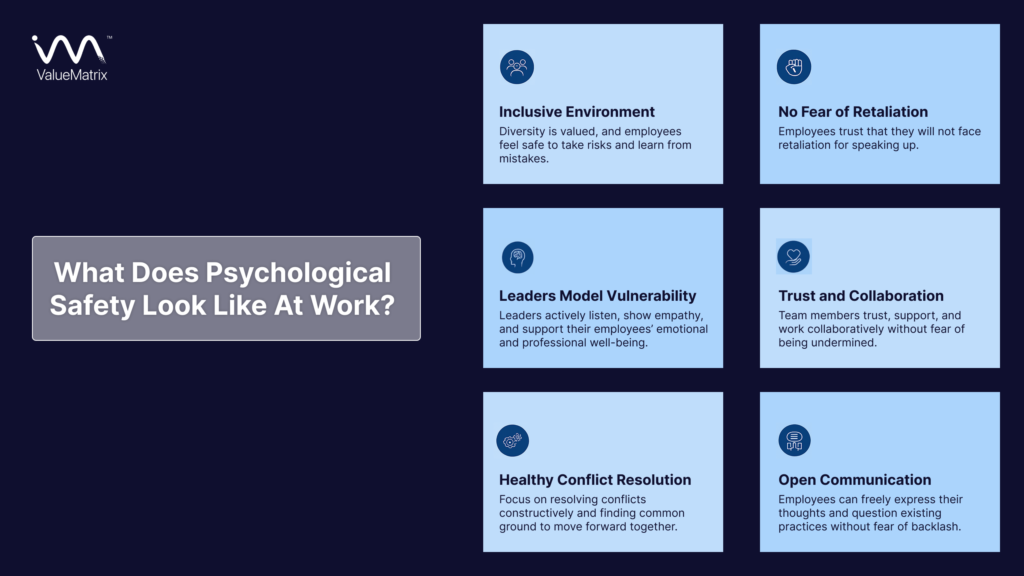
Psychological safety is the belief among employees that they will not be punished for creative errors, raising their fingers when in doubt and replying to a question with, “I don’t know.”
Psychological safety engenders an atmosphere of camaraderie, job security and a sense of belongingness amongst the employees. Employees who feel psychologically safe are more collaborative, productive and creative.
Lack of psychological safety kills innovation and productivity, because employees who do not feel psychologically safe expend most of their time and energy in self-preservation rather than doing what’s best for the organization.
Empathy and Psychological safety has a direct correlation. People working in empathetic companies tend to have a sense of strong psychological safety. A research done by Frontiers Org reveals that bosses who display goodwill, empathy and mindful communication towards their employees enhance psychological safety of their workforce by a sizable margin.
Psychological safety is directly linked to performance. Google’s Aristotle Project studied 180 teams over many years and concluded that teams with higher levels of psychological safety were more productive, innovative and suffered lower attrition rates.
So it makes sense for HR to foster a psychologically safe environment for their employees, and it turns out that displaying empathetic traits is one of the sure shot ways to do it.
How can HR implement responsible use of AI?
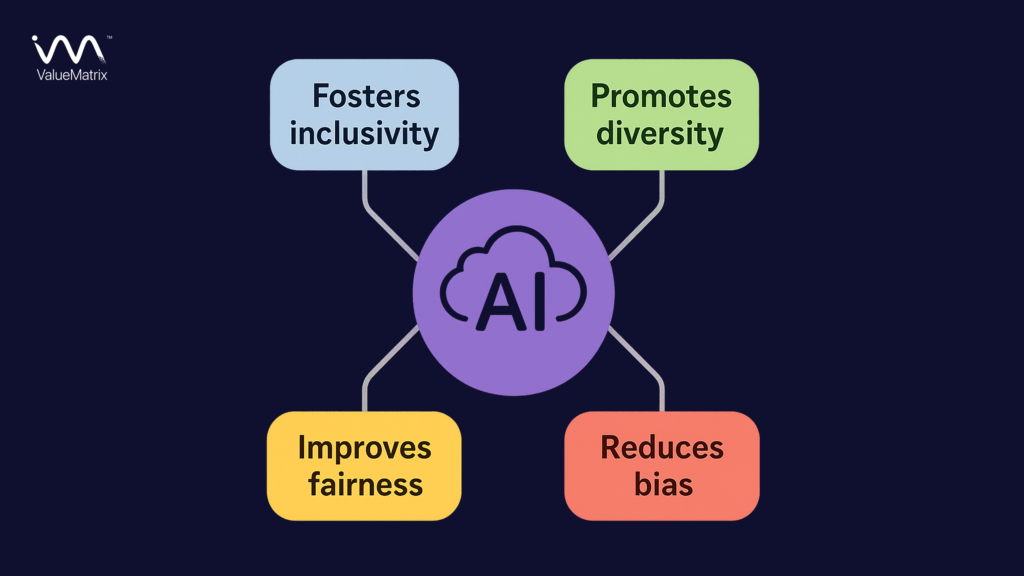
AI is reshaping the workplace environment. Many changes have come about since its inception into the field of HR. AI has done particularly well in scrubbing the status markers from the hiring process like addresses, universities or references and levelled the playing
field by introducing skill-based metrics to assess the hireability of candidates. But these models are only as good as the people operating them, and need constant monitoring.
Here are the steps HR leaders can take to make the HR implementation more responsible and empathetic.
Bringing transparency
Transparency is the cornerstone of any empathetic AI policy because it lays down the law that AI models will not work in secrecy. In traditional corporate settings, new technologies are rolled out with minimal disclosure. There’s usually a pithy, two-line email from the CEO informing their employees of any new technological shift.
But AI is different; its ability to disrupt the workforce is unlike anything we have seen before. AI has an invasive presence in an employee’s professional life. AI has an influence in hiring and firing of candidates and can dictate their future in the company. So it’s only fair that employees are not kept in the dark about its workings.
Here are a few fair practices for HR to keep transparency in the organization.
- The workers should clearly know in which areas AI is being used by the organization, and they should also know the scope and limitations of its uses.
- If AI is being used to assess their performance and predict their future performance, they should know the metrics that are being used to judge them.
- They should also if their data is being collected and processed to train the AI models
Human oversight
AI is still many years away from end-to-end automation. It will require human intervention for some time to come. Humans need to review AI-driven decisions and assess their consequences to ensure complete accountability and fairness.
Critical decisions like hiring, firing, promotion or compensation can’t be left completely to AI. It will lead to distrust and uncertainty. For example, an algorithmic glitch can bypass a candidate whose compensation had been long overdue. Complete automations create Black Box problems where AI models start operating in total obscurity.
Such overambitious efforts by companies to do away with human intervention altogether have resulted in catastrophic failures. In 2021, Uber’s end-to-end automated AI model terminated accounts of thousands of drivers across Europe, flagging them for “fraudulent tips”,“irregular behaviour” and “verification issues.”
This resulted in countless lawsuits accusing Uber of labour rights violations, and cost the company millions of dollars in lawsuits and reputational damage.
Reducing bias
AI has been a force for good in the fight against historical biases that were present in hiring. Back in the day, racial bias, proximity bias or gender bias were commonplace and the culture-fit of a candidate was decided on mere ‘vibes’. All that has now changed.
From using Data Anonymization to scrub out socio-economic indicators that could trigger a response in hiring managers, to moving towards skill-based hiring by introducing Psychometrics and Game-based assessments, AI has made great strides towards achieving an egalitarian workforce.
The results are already visible: 72% of companies using AI interview tools report a reduction in hiring bias, particularly when it comes to gender, ethnicity, and educational background.
But more needs to be done. The companies must keep a vigil on the algorithms, which can behave erratically at times, and cause public embarrassment. Take Amazon, for instance, which had developed an automated resume-screening engine and were one of the first companies to integrate AI automation into hiring.
But their pioneering efforts soon turned into a misadventure when the screening engine started devaluing the word “woman” in resumes. The engine had trained itself on historical hiring data of the past ten years, it also learned all the biases that were being practised before.
This again highlights the importance of human oversight over these AI models. They are capable of training themselves, but they haven’t still developed conscience — a rare human trait.
So, HR managers should collaborate with the backend team and make sure that these algorithms are undergoing quarterly or half yearly audits to weed out any possibility of haphazard behaviour by these models.
Promoting inclusivity
AI has had a positive impact on promoting inclusivity and diversity in the workplace. As we discussed earlier, AI tools like Data Anonymization, Game-based assessments and Psychometrics have been net positive for DEI initiatives in the workplace.
But its implications are not just limited to data masking and behavioural science-based assessments; these new models can also be trained to hire from a more diversified pool of talent.
There are several companies that diversified their talent pool with the help of AI.
Unilever, through AI-powered, video-based screening, was able to save over $1 million in costs and increased their talent diversity by 16%.
IBM achieved similar results by leveraging predictive analytics, sentiment analytics and machine learning; the tech giant was able to increase the participation of underrepresented populations by 20%.
These examples prove that with the right amount of planning and foresight by HR, companies can achieve exceptional results. It was AI, but the execution was done by humans. And with the arrival of AI, HR now has the added responsibility of ensuring their hiring is bias-free.
Whenever procuring new AI tools for integration, HR must treat inclusivity as a non-negotiable, and no trade-offs should be tolerated.
HR should demand the data sets the tools have been trained on and ask for pilot tests if necessary.
Diversity and inclusivity may sound like HR jargon, but they are strong metrics for performance as well, and should be treated as such.
Employee voice & Feedback loops
A successful, full-scale implementation of AI is not possible without hearing from the very people who’ll be most affected by these changes. Most companies still keep their workforce oblivious to the changes in technology they are executing, and tell them only after all the implementation has been done via email.
This sets a very bad precedent and makes employees feel like a third wheel. As if they were not important enough to be roped in during the ideation process, and are only being told right before the implementation stage as a formality.
Such a cavalier attitude conveys a lack of empathy and later on creates Black Box problems.
Keeping the conversation channel open with your employees is not just a ‘feel-good’ PR exercise for the employees. It actually helps you get valuable inputs. A two-way communication often notifies the higher-ups of the problems that might arise in the future.
Conclusion
Markus Buckingham, Senior Researcher at Gallup, famously said: People don’t leave companies, they leave managers.
The quote rings true to this day. The culture comes from people, not AI automation. And it usually flows top-down. In most cases, if the top brass is unempathetic, the lower-level managers follow the lead. And people leave when the culture becomes toxic
But here’s the kicker: 59% of the CEOs consider that empathy is a “nice to have” and not essential. And herein lies the problem, most higher-ups still hold this laissez-faire attitude towards empathy and don’t realise how closely it is tied to efficiency.
Look at the example of OLA, it was the biggest TAXI app in India by 2015, and captured the lion’s share of the EV market with its OLA scooter in 2019.
Cut to 2025, its EV market share is down by 70% and the company has four times the average attrition rate of the market. All because of its toxic work culture.
So the executives need to realise that empathy is not just a soft skill but a very important ingredient for success.
FAQs
Yes, you can use tools and instruments like Amy Edmonson’s Psychological Safety Index and Gallup Q12 and actually measure sympathy on traits like candour, risk-taking behaviour, extraversion and error-reporting openness.
The balance between empathy and efficiency can be maintained by humans and AI working in synergy. The organisations have shifted most of the manual front-loading work to AI so that HR can work on higher ideals like creating a sympathetic workplace.
Some of the advanced models can simulate some patterns of cognitive empathy(recognizing emotions), but we are still far away from achieving consciousness or human emotions in AI.
About Us
ValueMatrix is an AI-powered talent intelligence platform that helps companies hire better, faster, and without bias. We go beyond resumes to assess skills, behavioral traits, and cultural fit using advanced AI and proven psychological frameworks. Our platform delivers data-driven insights that improve hiring accuracy, reduce time-to-hire, and elevate candidate quality.
ValueMatrix AI enables hiring teams to make confident hiring decisions and build high-performing teams at scale.