
Table of contents
- Overview of the Modern Talent Environment
- Is HR Function an Art or a Science?
- Who is a Chief Human Resource Officer?
- Transactional HR Responsibilities Shifted to Talent Leadership
- Analyzing People and Workforce Maturity: A Core CHRO Competency
- How Important is the Role of a CHRO?
- How can ValueMatrix Help CHROs?
- Leveraging ValueMatrix for a “Talent Scientist CHRO” Hiring
- FAQs
Overview of the Modern Talent Environment
The terms hiring and recruitment are not just HR buzzwords—the function has become integral for companies. Nowadays, every organization or business is striving to hire the best-fit applicants, offer skill development opportunities, as well as motivate and retain their employees.
As a company’s business expands, so does the role of human resources personnel. In fact, HR has evolved from just offering basic talent support to creating specific strategies to drive efficiency and success. Of course, it goes without saying that the culture differs across organizations based on the development plans they have for employees. There is also a need for HR to be prepared for future-focused roles, extending their responsibilities beyond day-to-day management, in order to create a connected and flexible workplace.
Is HR Function an Art or a Science?
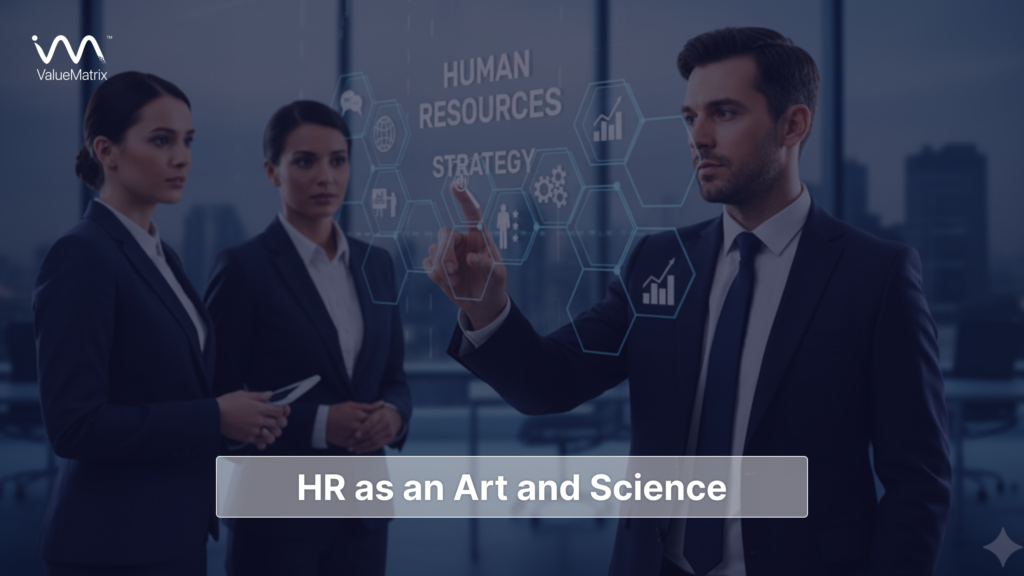
Human resources refers to the management of employees in a business or organization. In addition to recruitment and employee relations, HR staff also calculate bonus, benefits, and compensation, undertake training and development as well as oversee performance and feedback. However, since decades there has been one question that remains unanswered. That is, can HR be considered an art or a science? Let’s look at this through two sides of a discussion.
The role of an HR personnel is to interact with individuals, and resolve challenges that arise. Hence, we can consider it as an art as it takes immense creativity. However, human resources also uses data analytics to make informed decisions. So, we can say it can be viewed as a science as well. No matter the size of a business, there is a need for this function across every company in the corporate world.
How crucial is managing talent for success?
Though HR was always viewed as a support function, that view has now changed to a revenue-driving team. The function is not just enabling a high-performance culture, but also driving the company’s success by giving considerable growth opportunities. Therefore, HR personnel enable an organization to attract best-fit candidates as well as boost their growth, retention, and contribution to a company’s success. With artificial intelligence increasingly assisting companies in HR-related decisions, and designing and delivering value, the HR function has an exclusive opportunity to transform businesses as well.
Who is a Chief Human Resource Officer?
A chief human resource officer (CHRO) oversees all branches of an organization’s policies and practices as well as human resource management or people management. A CHRO is recognized as a strategic leader who ensures the company has the requisite human capital for success.
While the erstwhile CHROs focused only on organizations’ human resources in one or two countries, today they oversee complex networks of employees across more than one continent and implement workforce development strategies on a global scale. In the current scenario, CHROs are necessary to enable companies in new market expansion and development of appropriate labor policies for different regions while preserving their core culture.
Understanding the roles of CPO and CHRO
Though a Chief People Officer (CPO) and a CHRO are considered to be similar, there are, nevertheless, differences in their roles.
While the CPO’s role is more focused on strategy, operations, and compliance, a CHRO is employee-centric, demonstrating a change in the way companies are recognizing individuals’ value for prolonged success. Moreover, such CHROs emphasize on the importance of people management as the main driver of innovation, stability, sustainability, and organizational growth. They also have a people-first mindset and ensure these strategies are considerably integrated with business goals.
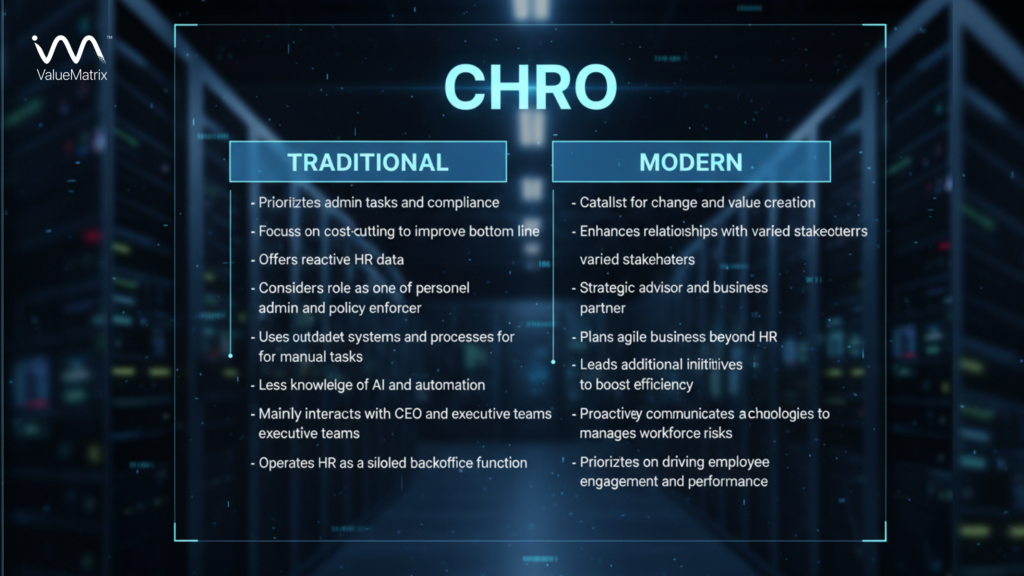
Comparison of traditional and modern CHROs
The main role of CHROs is to uphold the company’s purpose and values. In fact, they need to role-play the desired employee mindset and behavior by recognizing the important points in a company’s culture and decoding those into employee norms and expected behaviors. However, traditional HR and modern HR don’t work the same way.
The way forward for modern CHROs
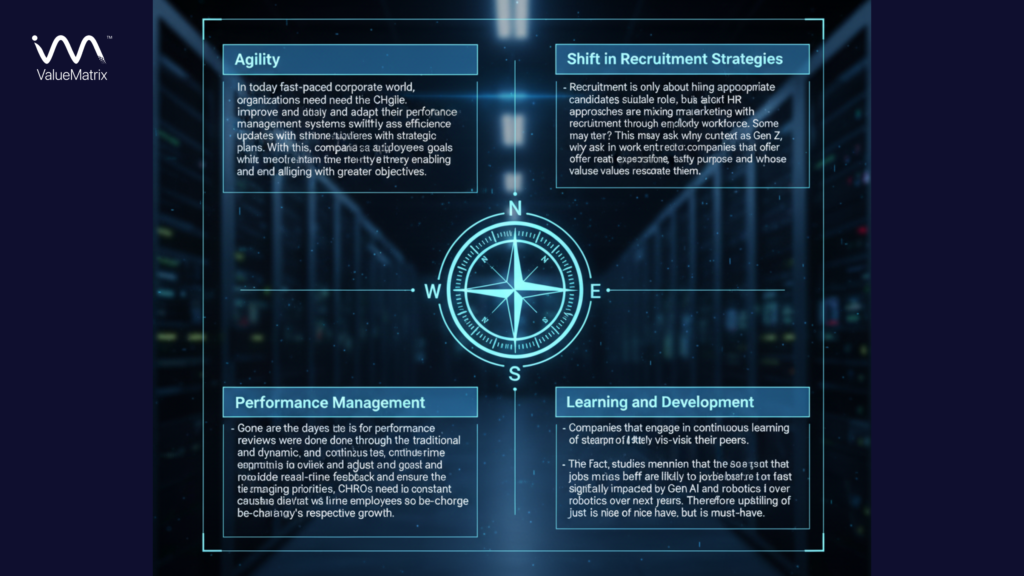
HR processes have largely shifted from bureaucracy and control to one of responsive and flexibility, built around the four integrated pillars of: (i) decreased transaction costs; (ii) unmatched automation; (iii) demographic changes; and (iv) higher connections. Modern CHROs are expected to have three future-ready characteristics: (a) operate by focusing on simplicity and speed; (b) understand what the company stands for; and (c) grow by extending their ability to innovate and learn.
What Does a Chief Talent Scientist Imply?
The role of a chief human resource officer, also known as a chief talent scientist, goes above and beyond basic HR functions. This refers to a strategic data executive who is data-driven and uses data analysis, behavioral psychology concepts, and scientific methodologies to optimize the employee lifecycle. A CHRO also needs to use data and analytics for evidence-based decisions related to selection, development, and retention of best candidates, and thereby boost the company’s growth.
In recent times, most of these skilled and connected CHROs are rooting for accelerated and continued reinventions by adding value across the length and breadth of an organization through new avenues. Interestingly, globally, most companies are going through some form of digital transformation, irrespective of the industry or sector they are operating in.
How should a “talent scientist CHRO” plan for this new world?
A CHRO talent scientist who is digitally-enabled needs to be receptive to a wider audience of internal and external stakeholders and adopt decision-making on the basis of several data points. As a result, scientific hiring leadership needs to constantly reinvent themselves. In fact, the new generation of CHROs are required to have a growth mindset far superior to the conventional HR processes.
How are CHROs Reinventing Themselves?
These days, several data-driven CHROs are experts in the use of predictive models, talent metrics, and data versus just intuition. They are considered a talent scientist in HR and business leaders, playing a pivotal role in operations and offering their recommendations as how a company can achieve its strategic and commercial objectives. In fact, a CEO and the CHRO are the sole C-suite individuals who manage the entire spectrum of an organization: from business units and functions to geographies.
Considering staff as digital consumers
Digital-native employees, especially Gen Z, prefer to interact via a digital device with HR instead of a face-to-face conversation. They look for products and programs that appear similar to the work they are doing. They believe the processes and products should be easy to use as everyday products like an iPhone etc. As the technological HR tools are progressing at a gradual place, a CHRO’s evolving role is to undertake experimentation and risk-taking to a certain extent.
CEO’s trusted partner
Having expertise in functions outside of HR is key for the success of next-gen CHROs due to higher prominent responsibilities. Going forward, leadership using HR data are likely to be business heads first and technical HR experts thereafter. The CHRO’s is evolving from conventional HR to one of enhancing presence in other parts of the business operations.
Offering great experiences to employees
Employee retention is as important as attracting new talent. A company’s staff feels motivated to work, included, and valued due to a robust employee experience. Due to the extended efforts of CHROs, workspaces are transforming as inclusive and transparent, where employees know their roles, growth path, roles and are also aligned to their company’s success vision.
Encouraging diversity and inclusion
A chief human resource officer combining diversity, employee engagement, inclusion as well as social responsibility strategies is likely to be more important to today’s talent pool. With technological upgrades continuing to be an integral part of business operations, the primary differentiator among companies is going to be the use of advanced tech tools for planning diversity and inclusion programs, employee experiences, and data-driven strategies.
Awareness of data science
CHROs need to use data and predictive analytics to update executive teams on every operation in the company: right from workforce planning to recruiting capacity and retention. Machine learning and automation tools are expected to help CHROs use data for deriving insights, improving employee experiences, and enhancing the overall agility of a company.
Transactional HR Responsibilities Shifted to Talent Leadership
At times, work-related experiences have resulted in instant disruptions for CHROs as well as long-term challenges. Organizations have to enhance their ability to engage and retain top talent to stay competitive. As a result, CHROs have to add-on roles and responsibilities, especially the four capacities given below.
Supervising flexi working
Most companies have continued with their hybrid working styles so as to enable employees to have work-life balance after the COVID-19 pandemic. Therefore, one of the major tasks for a CHRO is to engage and motivate employees across a dispersed workforce. They need to adopt tech tools and new ways of working for effective collaboration and human capital management.
Increasing productivity
Conventional productivity measures are not appropriate for a company’s decentralized teams. As a result, CHROs are urging managers to prioritize outcomes versus working hours, thus shifting to a project-led culture. Highlighting the most important expectations, maintaining communication, and proactive goal setting initiatives are required for boosting productivity.
Enhance and monitor organizational culture
For the current workforce comprising millennials and Gen Z, culture is a major factor while considering a job opportunity. Though the onus of developing workplace culture rests with the CHROs, leadership executives are equally responsible for supporting the dynamics.HR personnel should undertake surveys and sentiment analysis to understand the vibe of employees, thereby effectively monitoring the cultural progress. They also need to build trust and maintain a fine balance between employees and company values through the use of corrective actions as and when needed.
Representing the correct talent
Recruiting the best-fit individuals is an ongoing task for CHROs, especially in the backdrop of the recent candidate pool shortage having necessitated a quick shift to varied processes. Drivers like hybrid and remote work options, and giving the much-needed flexibility, especially to women returning to the workforce after a career break, are required for appealing to a large modern audience and Gen Z job seekers.
Analyzing People and Workforce Maturity: A Core CHRO Competency
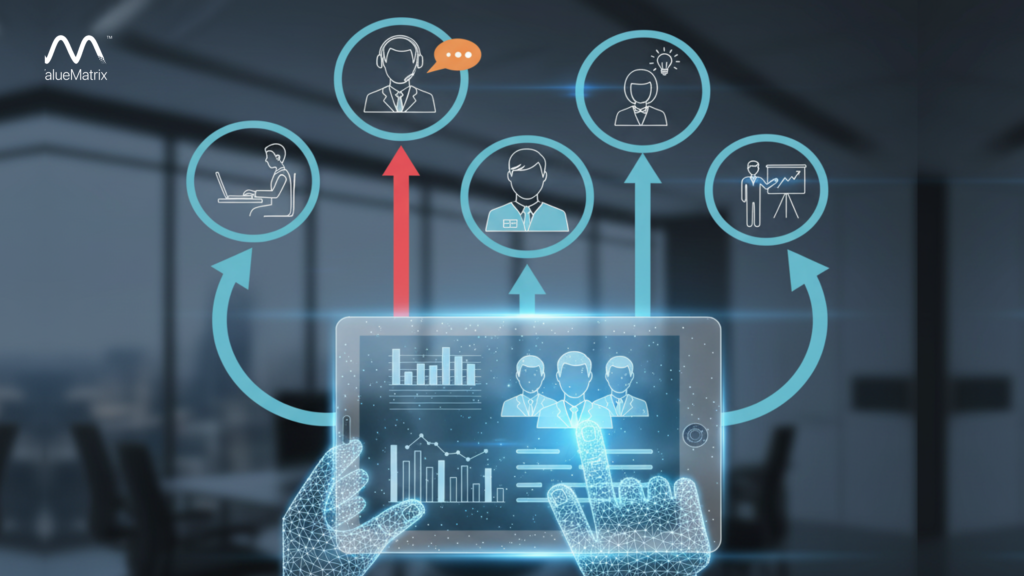
Business leaders, along with CHROs, need to have a multifaceted view of their workforce’s health, especially one that goes well beyond the basic metrics and into actionable insights. This is where people analytical skills for a CHRO as well as workforce analytics and maturity can help HR personnel act swiftly to boost employee well-being and business performance as well as enhance their retention approaches.
One of the foremost capabilities of a CHRO is the ability to gather and analyze employee data with the use of dashboards to obtain meaningful insights. Analyzing people in the workforce is considered as a positive for HR to connect talent with a company’s business strategy and actual results. However, the reality is different for several organizations.
CHROs need to capitalize on people analytics tools and tech in order to remain ahead in terms of engagement, shaping culture, and managing performance. They can undertake this change by merging conventional metrics with real-time and human-centric data as well as partnering with machine learning tools and industry veterans.
Workforce maturity: What does it mean?
When it comes to workforce and individual analytics, businesses are categorized by maturity stage, where every stage reflects the extent of capabilities and strategic impact.
Groundwork reporting: This is the first stage, where CHROs physically monitor important parameters like employee turnover, headcount as well as engagement scores. The focus is mostly conventional, offering a critical perspective on historical insights.
Operational contextual reporting: Here, companies add more contextual layers through benchmarking across teams or against industry standards with business intelligence tools. With this CHROs gain insights and try to understand the occurrence of certain trends vis-à-vis what and why it actually happened.
Modeling advanced statistics tools: CHROs assess varied data streams, including recognition patterns, engagement surveys, and feedback to identify significant correlations. These insights can move HR teams to more proactive initiatives for problem solving.
Predictive analytics: Once companies are in the expansion phase, they increasingly combine real-time data with project workforce trends, and thereby drive proactive decision-making. Hence, it is at this stage that CHROs transform from reactive to proactive culture shapers and potential business partners.
How Important is the Role of a CHRO?
Considered as the heartbeat of any organization, the CHRO’s primary task is to sail the company through turbulent times. An HR team is not all about hiring and firing employees, it also entails overseeing the culture, employee engagement as well as strategic workforce planning.
Besides, CHROs are also entrusted with the task of behavioral science hiring, talent management, retention, and ensuring the workplace is safe and inclusive. They directly interact with the CEO and leadership teams to form corporate strategies. There are also other core responsibilities for a CHRO.
Appropriate work culture
A CHRO’s primary responsibility is to ensure a safe and engaging work culture, where employees feel motivated and valued.As per a Gallup study, such companies’ earnings per share surpassed their competitors by almost 147% since the last decade.
Emergence of the digital era
Amid the current digital transformation, CHROs need to integrate automated technologies into HR functions to streamline the processes and increase accuracy. So, they have to be as well-versed with a data dashboard as they are with a board members’ meeting.
Navigating regulatory compliance
There are numerous labor laws and rules that companies need to adhere to. Though being compliant is no small feat, CHROs are considered the custodians of compliance. They need to have a detailed understanding of legal concepts to soften risks and ensure a fair and unbiased workplace.
Decision-making through data
Data is increasingly being used by CHROs for decision-making. Some research studies indicated that organizations leveraging HR analytics enhance their hiring decisions and employee retention by a great deal.
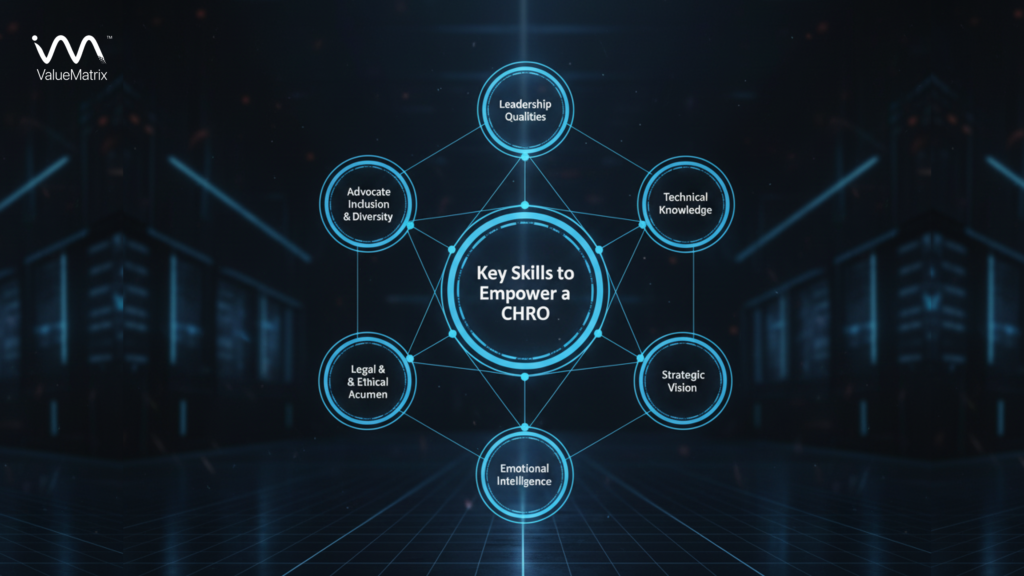
All said, these competencies support the CHRO’s strategic skills to perform tasks efficiently and also ready them to take on additional leadership roles. With further evolution of organizations and businesses, CHROs need to become experts in these key areas so as to tackle future challenges and be a key contributor to their company.
How can ValueMatrix Help CHROs?
ValueMatrix uses computational psycholinguistics, behavior-analytics like keystrokes and response time, voice/expression, and psychometrics clues to assess how a candidate would fit-in with the team dynamics, role requirements, and culture within an organization.
The company also lays emphasis on culture, values alignment, and team fit in its model. This can be of help to a CHRO leading talent strategy at an enterprise level, has core technical HR competence, and aligns with a company’s lead capability building and culture. ValueMatrix also offers predictive modelling for forecasting performance, alignment, and fit rather than mere verification of a candidate’s credentials. As you can see, this clearly aligns with the “talent scientist” concept where a company wants their CHRO to be forward-thinking, use data, and run experiments to predict workforce needs.
CHRO Trends and Priorities

Based on insights from a Gartner survey, there are top three priorities for CHROs in 2026.
Defining work in the human-machine era
CHROS need to create a “now-next” engagement strategy for a mixed workforce. They also have to plan for people-AI scenarios so as to be better prepared for the future of work.
Capitalizing on AI to transform HR
HR needs to create and follow a clearly defined AI strategy. In line with this, CHROs must upgrade their HR operating models for improving AI productivity gains.
Devising action steps to power performance
Across organizations, CHROs need to establish the desired outcomes into the day-to-day work of employees. By doing so companies can significantly boost their staff performance.
Leveraging ValueMatrix for a “Talent Scientist CHRO” Hiring
In 2026, CHROs are not going to be recognized by processes, but by humanity as even with the evolution of algorithms and digital workplaces, empathy, creativity, curiosity, and leadership are expected to shape the future of workplaces.
A CHRO hiring needs to be evaluated for behavioral, strategic, and technical skills. ValueMatrix’s platform rightly allows you to map these traits at the screening stage itself. Besides, culture-fit assessment is essential, particularly at senior levels, to gauge the “talent scientist” mindset. ValueMatrix offers culture-alignment tools to help assess a CHRO fit with the existing board members and business strategy through metrics such as behavioral fit, adaptability, and alignment scores.
ValueMatrix’s platform also allows the setting up of primary performance indicators for workforce planning, talent analytics, capacity building, and internal mobility. Thus, using the data insights obtained from hiring via ValueMatrix’s model, a new CHRO’s impact can be benchmarked and tracked effectively.
FAQs
The term CHRO in the garb of a chief talent scientist can be defined as a modern CHRO’s shift from an administrative HR or people leader to a data-informed planner applying scientific methods to talent management.
Ability to use data for employee planning is one of the most important skills for a chief talent scientist. Besides, they need to showcase empathy, curiosity, and behavioral science competencies. In addition, CHROs are required to be knowledgeable on strategic storytelling and digital tools to effectively capitalize on insights for action steps.
As companies are starting to rely on data for every major initiative or decision, CHROs are necessary for combining their understanding with analytics, and thereby increase innovation, workforce agility as well as quantifiable business impact.
CHROs are likely to enable companies to shift their mindset by encouraging experimentation, upgrading HR technologies and processes, and becoming the prime architect of organizational intelligence.
About Us
ValueMatrix is an AI-powered talent intelligence platform that helps companies hire better, faster, and without bias. We go beyond resumes to assess skills, behavioral traits, and cultural fit using advanced AI and proven psychological frameworks. Our platform delivers data-driven insights that improve hiring accuracy, reduce time-to-hire, and elevate candidate quality.
ValueMatrix AI enables hiring teams to make confident hiring decisions and build high-performing teams at scale.