
Candidate ghosting happens due to poor communication, slow hiring, and better offers elsewhere. Solutions include timely feedback, streamlined processes, and personalized engagement.

Table of contents
- Executive Summary
- How do long hiring cycles lead to candidates ghosting employers?
- How can recruiters prevent candidates from ghosting employers?
- How does AI identify at-risk candidates before they disappear?
- Why is strategic pre-boarding vital to stop first-day ghosting?
- What are the new “Anti-Ghosting” laws coming in 2026?
- How does recruiter burnout fuel the cycle of candidates ghosting?
- What role does pay transparency play in reducing ghosting rates?
- How can mobile-first application designs prevent drop-offs?
- Why is the “Post-Interview Debrief” a critical touchpoint?
- FAQs
Executive Summary
Candidate ghosting-the sudden ceasing of all communications by a jobseeker during the hiring process, often leaving recruiters with vacant jobs and stalled projects-was put under the spotlight in 2026 when candidate ghosting was seen to have reached a critical peak; 44% of candidates acknowledged that they had, at some point, disappeared during the hiring process, mainly triggered by the “employer ghosting” stimuli, as well as prolonged waiting periods in hiring (Source: Greenhouse 2025/2026 Ghosting Index). With the implementation of tools that can de-risk candidate ghosting and compliance with the new transparency requirements, organizations could reduce drop-off rates by 30% and could save an average of $ 22,500 in lost productivity per hire.
Ghosting & Recruitment ROI: 2026 Benchmarks
| Metric | 2026 Industry Average | Target for Success | Business Impact | Source URL |
| Ghosting Rate | 44% of Candidates | <15% | Lower Sourcing Costs | 4 Corner Resources |
| Time-to-Hire | 68.5 Days | <20 Days | 30% Higher Acceptance | The Interview Guys |
| Financial Leak | $22,500 per Process | $7,800 (Optimized) | Direct ROI Boost | Joveo |
| Post-Offer Ghost | 20% No-Shows | <5% | Project Timeline Security | Staffing Industry |
Why are candidates ghosting recruiters in the current market?
Now, ghosting was never really considered an offense in the first place. It is only a form of reciprocity, wherein the job seeker would reciprocate the silence imposed on them when it was their turn to initiate contact with the employer. An October 2023 UNLEASH report stated that 61% of candidates felt ghosted by employers after an interview, which over time has become a method of self-preservation on the market. Job seekers now very well know they are numbers in a database, and in such cases, they deem it hostile to send withdrawal notices.
In fact, many jobs that are posted are actually never filled; in this age, candidate mistrust has been the sole thing that has eroded. Today, candidates apply to so many jobs that they lose track of which recruiter is calling them. In cognitive overload, this ghosting is a mechanism that candidates tend to use in order to screen their own high-volume applications.
This new generation, where digital natives are now, sees ghosting as a socially acceptable way to avoid confrontation or an “uncomfortable” conversation about rejecting their offer. Ghosting candidates find it almost inconceivably easy to disappear these days since much of the early recruitment is now managed by bots. The future of recruitment depends not on the transactions but on inviting back relationship-driven recruiting.
In conclusion, ghosting is merely an act expressing the breach of a human contract, and it is the restoration of such a contract through human dialogue.
How do long hiring cycles lead to candidates ghosting employers?
Long hiring cycles allow candidates to ghost you with an “opportunity gap” where only elite talents pick faster offers from more nimble competitors. This is the reason why the median time-to-hire for 2026 stretches to 68.5 days, whereas the top-notch candidates are generally off the market within 10-15 days. Every day that a concrete update is not given to candidates, they feel less prioritized and more likely to cast about.
Candidate burnout sets in very quickly as the process will have more than three interview stages or recurring assessments. Actually, research shows that 21% of candidates tend to mentally check out at that point, and candidates begin ghosting recruiters when scheduling takes more than one business week. The feedback “black hole” leaves candidates simply looking for the next opportunity.
Speed is the key difference in very competitive sectors such as AI development or cybersecurity. Clearing internal approvals will take your organization three weeks, but you might have to forget about that ghost candidate; it will have vanished by then. Improving administrative friction is not only about efficiency; it is about ensuring that the emotional rhythm that keeps candidates excited about joining your company.
Conclusion: Speed has become a necessity when a candidate signs your offer, one above which he or she vanishes.
What is the financial impact of a ghost candidate on a business?
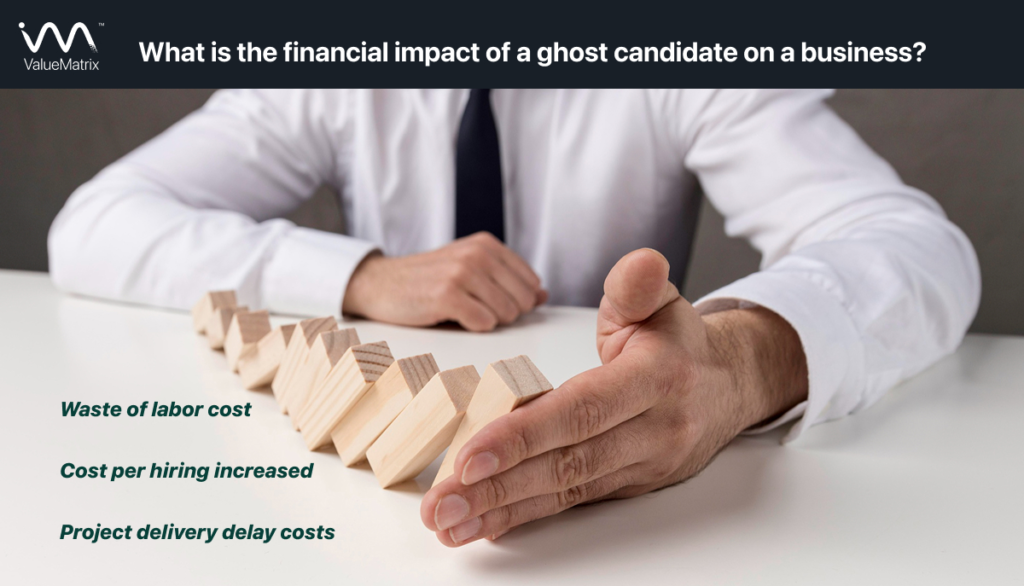
What the Cost Of A Ghost Candidate Is To The Business: Waste of labor cost; Cost per hiring increased; Project delivery delay costs cost organizations between $7,800 and $22,500 for each failed process. Even when candidates ghost recruiters at the last stage, it leads to an average of 47 hours of recruiter work going in vain. This includes initial sources, screenings, and more collaboration with several hiring managers.
Apart from the costs of the recruitment team, there are indirect financial leaks from lost business opportunities. Such cases keep critical roles vacant because of a ghosting incident at the end of the hiring process, thus delaying some project timelines that may affect the client delivery as well as revenue targets. This “Cost of Vacancy” is one reason businesses in 2026 prioritize tools that reduce candidate ghosting.
Ghosting also has adverse effects on team morale and internal productivity. Existing employees would usually work extra hours to replace the missing hire, but, instead of motivation, such work leads to fatigue and a growing likelihood of turnover within current staffing. Recruiting hours, vacancy gaps, and lost team efficiency build up the costs of ghosting, which is a threat to the HR budget.
A silent tax on recruitment, ghosting is throwing away a huge part of your annual human resources budget if you ignore the issue.
How can recruiters prevent candidates from ghosting employers?
This practice is “Radical Transparency,” which prevents ghosting by candidates at the end of the hiring procedure: undesired behaviors such as revealing salaries, disclosing interview stages, and announcing feedback timelines must be disclosed at the very first contact. Those expectations will not allow so many late-stage surprises like low salary offers or unexpected in-office requirements, thus making candidates less likely to disappear. Candidates who see salary information upfront in 2026 are 44% more likely to engage until the end.
Another aspect is that consistency in follow-ups should be ensured. With a “48-hour feedback loop, candidates would rarely feel as if they were not being cared for or forgotten. At the same time, any such message is better than silence as it emphasizes exercising the human connection and solidifying the professionalism of the situation, making ghosting by candidates unlikely against recruiters’ consciences.
For the last piece, stressing the recruiter as a “Growth Manager” would form a depth of trust. In discussing not just immediate job requirements but the entire long career path and cultural fit, one moves from an encounter that is greatly transactional into a partnership. It is this emotional investment that then becomes the psychological barrier preventing ghosting by simply cutting ties without a word of explanation.
Conclusion: You gain professionalism, causing silence if and only if you treat the value of the candidate’s time equal to that of the CEO. Which tools that reduce candidate ghosting are most effective?
Tools that reduce candidate ghosting include self-scheduling links powered by AI, automated SMS nudges, and chatbots that provide instant replies, working 24/7. The tools that are most effective at reducing candidate ghosting eliminate the administrative delays that often cause candidates to lose interest. Systems that allow for “one-click” interview scheduling prevent the back-and-forth email chains that lead to 21% of candidate drop-offs.
Yet another must-have in the 2026 recruitment toolbox: fully automated “stay-warm” campaigns that send personalized content (team videos or company news) to candidates during the gap periods between interviews. This keeps the organization top of mind while protecting against “candidate drift,” where the candidate begins to look into other offers simply because he hasn’t heard from your team in several days
Furthermore, communication platforms that are mobile-optimized are no longer an option. With modern talent intelligence systems, however, recruiters can now talk to candidates via SMS or WhatsApp. This new mode is likely to receive much higher open and response rates than emails. Recruiters can answer any quick questions from candidates and keep the momentum going so as not to lose the candidate to ghosting.
Conclusion- Technology would be a concierge in the hiring process, smoothing away every tiny friction point that could send candidates drifting away.
How does AI identify at-risk candidates before they disappear?
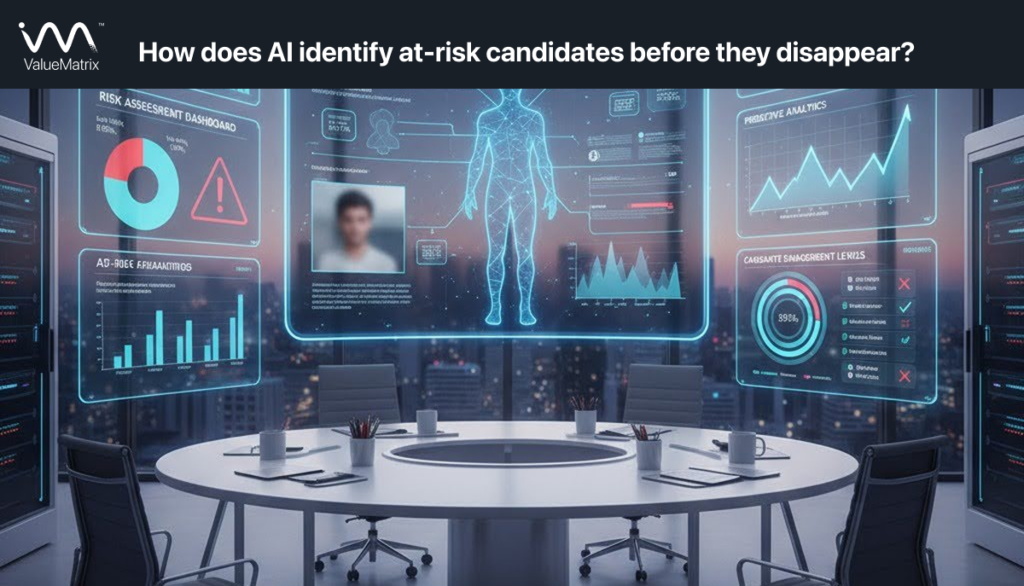
AI identifies candidates at high risk of disappearing. Using predictive analysis to monitor response lag and engagement patterns at every digital touchpoint, AI analyzes historical data to ascertain its potential to spot ghosting with 95% accuracy. For instance, a candidate who regularly takes a few minutes to open interview invites takes an unusual 48 hours for the same, notifying the system to flag the candidate as “at-risk.”
Early warning systems such as these can spur proactive recruiters to intervene before a completely wasted no-show opportunity happens. After getting “activated” by an absence-in-an-important-step prediction by a hired AI, it triggers a task for reaching out personally on the phone, especially a human-to-human check to reverse the damage before it spreads. This is the best strategy to possibly save a relationship already beginning to cool with AI-powered tools and a little sprinkle of human empathy.
Sentiment analysis tools also churn out written communication by a candidate, for instance, telltale signs of hesitation or flagging interest. Subtle shifts of tone found in overuse of non-committal language often catch those kinds of things in the early stage; then recruiters can start addressing concerns below the surface early. This data-driven approach makes no ghost candidate disappear without having given a recruiter a chance, at least, to provide the light or reassurance needed.
Conclusion: Instead, it allows one to save a relationship, which inevitably might ghost one day, via predictive insights rather than waiting to save a dead lead.
Why is strategic pre-boarding vital to stop first-day ghosting?
Strategic pre-boarding is important because that is the point where the “Psychological Contract” really solidifies between offer and start date. This 20% ghost rate happens during the very high-risk period. It is also usually the moment where candidates are most vulnerable to counteroffers or cold feet. By initiating the whole onboarding process immediately after signing, candidates tend to feel as if they are part of the team already, making it much harder for them to disappear.
Good pre-boarding is the sending of a “Welcome Kit,” connecting them with a peer buddy, and giving them access earlier to the company’s internal social portal. Those touchpoints bridge the “silence gap” that usually occurs right after signing a contract and before the first day of work. Candidates engaged in that period are much more likely to report for their first day ready to work.
When candidates complete the required paperwork and compliance training online before Day One, this is just one more way to pre-board digitally. This alleviates some of that pressure on the first day, so the new hire can focus more on meeting their new team and learning about their new role from the first day on, and creates an almost smooth, professional transition, reinforcing the strength of the employer brand, probably, to almost castrate the possibility of final-day ghosting by candidates.
Conclusion: The hire is not complete until the candidate is seated; pre-boarding is absolutely the final, critical bridge over the gap to ghosting.
What are the new “Anti-Ghosting” laws coming in 2026?
The new “Anti-Ghosting” laws come into effect in 2026, for instance, in Ontario, Canada, whereby notice must be given by employers to candidates personally interviewed by them within 45 days of such interviews or face penalties. This global paradigm shift turns it from merely best practice to compliance risk as far as candidate “communication” is concerned. Documentation of every interaction, in fact, now becomes compulsory for the HR teams to ensure compliance with the labor board’s standards for transparency.
These were in direct response to the effects of employer ghosting. By getting the “government” to stop candidates from being trapped in such states, it hopes to restore professionalism within the labor market. Similar rights on disconnection and pay transparency laws are sprouting further across Europe and the US, with communication being part of firm governance by 2026.
Now the recruiter must utilize the tools provided so that the above causes for phantom placement are not just for process effectiveness, but because, legally, they provide a level of protection. Feedback in audit trail form helps to protect the company from possible claims of noncompliance. As this law becomes standard practice, black hole applications could create one liability no organization could afford to ignore.
Conclusion: If professional ethics aren’t enough to stop ghosting, legal compliance soon will be; it’s time for a “Response-First” culture.
How does recruiter burnout fuel the cycle of candidates ghosting?
It decreases the quality of communication and empathy in such a way that the candidates begin to feel they are in discussion with a machine and not a human being. If they know, for instance, that there are X numbers of task functions that they must satisfy, burnt out, over even high volume and manual tasks, then one can opt not to send as many follow-up emails or give some sort of no-value-for-money generic feedback. In turn, the candidate feels that there is no such social pressure for him to maintain the communication on his side.
Always, the burnt-out recurs are those most likely to miss the red flags. When he is merely “checking boxes,” he may fail to notice the candidate’s lack of interest or dropping involvement levels. As such, he is likely to know only of the problem when ghost candidates have disappeared. This ends up furthering a cycle of history restarts and burnout.
To break this, automating low-value tasks such as scheduling and data entry must be brought in. Feedback time for recruiters may be allocated to the emotional posturing that must go into establishing authentic connections. This goes beyond the cliché of an engaged recruiter being less likely to prevent candidates from ghosting. A recruiter with an energetic, sunny disposition-and of course, this comes from being well-rested-creates that human touch that merely keeps candidates engaged.
Conclusion: A perspective is thus formed that sees investment in mental wellness programs for the recruitment team as a direct investment toward the reduction of candidate drop-out rate and improvement of hiring ROI.
What role does pay transparency play in reducing ghosting rates?
Pay transparency is extremely important in ghosting reduction because it ensures that the only candidates who come into the hiring funnel and stay in it are those who match the compensation package. By 2026, most job seekers expect to see a clear salary range even before they apply, while companies that hold this information until the last stage are likely to experience ghosting by candidates who realize that the pay is unacceptable and do not want to face money confrontations.
Also, there is immediate brand trust in the transparency. Therefore, candidates are viewed as more ethical and inclusive who are open about the pay. This gives a positive perception to the applicant and will be more likely to treat the recruiter with professional respect. In this, a fair pay employer may achieve a significant competitive advantage to keep a secure pipeline at a time when ghosting is prevalent in the candidate market.
Besides, pay transparency saves time from mismatched candidates. Recruiters who are open about budget from the first call do not waste weeks on talent that was never going to accept the offer. They can spend their time focusing on a smaller, more qualified pool; fewer candidates mean less risk that applicants will ghost recruiters later due to mismatches in compensation.
Conclusion: Money is the number one reason for late-stage drop-offs; solving the pay question early is the best way to keep your offer stage secure.
How can mobile-first application designs prevent drop-offs?
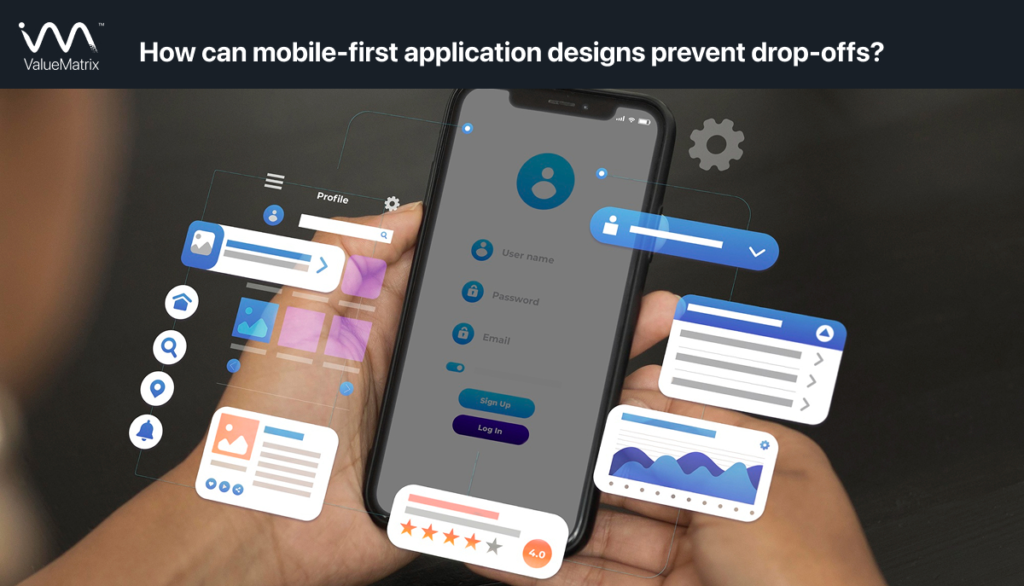
In the very initial application, mobile apps prevent dropout charges by minimizing that initial friction, preventing any candidate from getting fed up halfway through the process and disappearing into the funnel. By 2026, more than 70 percent of applications will begin on a smartphone. The more cumbersome your application portal – one that can be accessed only through a desktop to upload resumes – and the more than 10 fields you have, the more likely it is for you to lose up to 60 percent of your top-funnel talent.
Once that candidate begins the journey, it becomes highly unlikely that the candidate will ghost you. Extend the mobile-first design throughout the entire communication process. Having optimized feedback portals through mobiles and SMS alerts keeps candidates informed while on the go. This “always on” connectivity keeps the momentum high and does not allow distraction on the part of the candidate to forget about the role in between daily commitments.
Conclusion: The easier it is to stay in touch, the harder it is to go ghost; mobile optimization forms the base of a high-engagement hiring process.
Why is the “Post-Interview Debrief” a critical touchpoint?
Post-Interview Debriefing, where anxiety has reached its peak, is the stage for the candidate most likely to be a trigger for ghosting. The moment the interview gets over, the clock starts ticking. A candidate will have no reason to think they might not have done well, and after waiting 24 to 48 hours without any feedback, they have come to assume that the firm is just not serious about them, much to that invisible mind-checking ghost candidate.
An automatic “Thank you,” and let’s say, reasonably approximate guessing the timeline for the next steps would suffice as a response within hours of the interview. It would validate the candidate’s effort and keep that candidate emotionally tethered to the opportunity. Then, ringing in around midweek with something like, “we’re still evaluating,” will continue to keep these sources open rather than candidates ghosting recruiters out of frustration over internal decisions taking longer.
The debrief is also that space from which most recruiters accumulate their data. An inquiry into how the interview went for the candidate provides insight into interest levels at that particular point. If the candidate seems less enthusiastic than before the interview, that is a clear indicator. The sooner the problem comes to light, the sooner the recruiter can address the causes before a candidate completely readies to ghost.
An interview with the one who keeps closing the loop will not be a courtesy act only, but will be a tactical necessity to keep the best candidates from disappearing.
FAQs
In places like Ontario, it is now a legal violation not to respond to an interviewed candidate within 45 days. More and more of these transparency laws have turned employer ghosting into an issue of compliance, making formal feedback documentation an HR stewardship.
Yes. By avoiding manual scheduling delays and instantaneously answering candidates’ most frequently asked questions through chatbots, AI maintains the momentum. Companies using agentic AI see dramatic reductions in cost-per-hire through preventing these drop-offs (Source: Skillscaravan).
It’s basically a best practice in which candidates should not be without status updates for longer than two business days. Keeping this practice up will preserve the “initial enthusiasm,” which is dulled when there’s a week of silence and greatly reduces their chance of looking elsewhere.