
Table of contents
A healthy and resilient workplace is not an ideal world concept. On the contrary, it’s quite important for any company to survive in today’s cut-throat environment. The numbers are quite concerning: around 41% of employees globally have spoken about concerns of daily stress, and just 23% feel they have a good work engagement. The stakes are now critical for HR professionals and leaders. Building a modern workplace that has strong systems supporting employees’ mental and physical well being can go a long way in improving productivity and innovation. It can also contribute to cutting down turnover and retain top talent. The time is now to change our focus from simply talking about building such a workplace, and actually start building it.
Why a Healthy and Resilient Workplace Matters?
There’s a good reason why business leaders are now waking up to the power of resilience. Companies that put money into employee welfare programs have reported 20% higher productivity. They could also see a considerable decrease in absenteeism. Not only do these initiatives help the bottom line of the company (a $4 return for each dollar spent, as per a Deloitte report), but they also help in retaining employees better and improve the market reputation.
We may be through with the pandemic, but the burnout hasn’t. Over half of the US employees reported burnout in 2024, with the newer generations (millennials and Gen Z) particularly exposed to stress, lack of psychological support, and disengagement. This crisis can trigger high turnover rates coupled with absenteeism and presenteeism. It can also erode business performance over time.
What are the Four Cornerstones of Workplace Resilience?
Over the years, successful companies have developed strategies that have proved to be very effective. According to the World Health Organization, there are three core interventions:
- First is the managerial training to identify issues of mental health.
- Next is to provide mental health literacy sessions to all employees.
- And finally, offer access to individual support for managing their stress.
But companies that are successful go a step further. They weave resilience into culture, social systems, daily operations, and leadership.
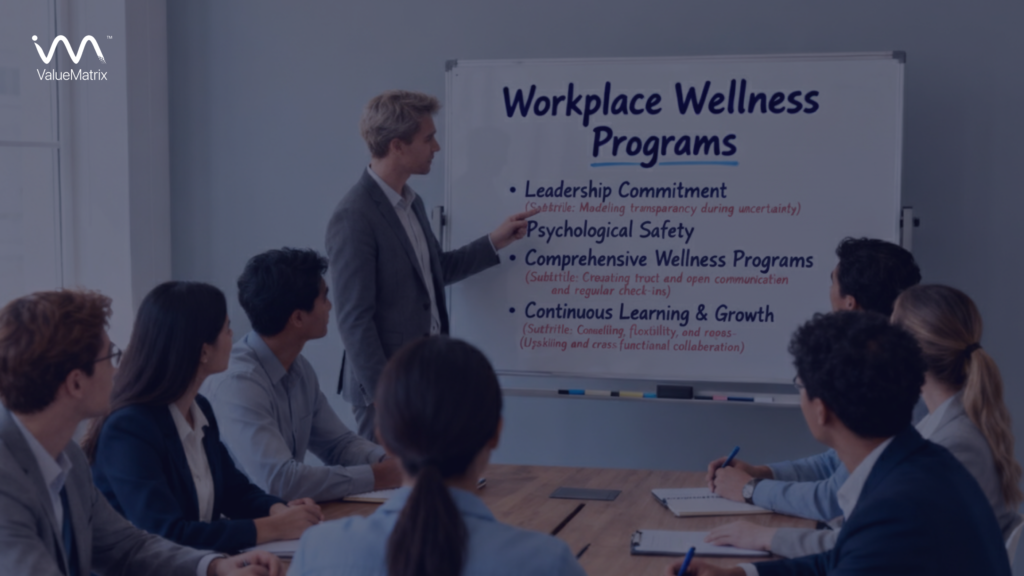
- Leadership Commitment
- Leaders must work as champions for adaptability and mental health. They need to be the model of transparency during uncertainty.
- Leaders also need to regularly communicate about well-being, explain business challenges, and identify people openly for resilience.
- Culture of Inclusion and Psychological Safety
- Foster collaboration and trust, keeping open communication.
- Encourage employees to openly talk about their issues or concerns without any fear. 63% of Gen Z employees lack this feature.
- Fight stigma around mental health. Normalize the use of available resources.
- Employee Wellbeing Programs
- Gym subscriptions or mindfulness apps are a thing of the past. You need to offers confidential consultations to understand people’s concerns. Also add flexible working options regular wellbeing checks to understand your employees’ psyche.
- Find out more about the workplace pulse through survey and one-on-one talks. Understand how your employees are juggling their work and life.
- Provide them help where it really matters – like financial counselling. Encourage them to use the healthcare resources, attend stress management workshops, and get nutritional advice.
- Continuous Learning and Growth
- Invest in both reskilling and upscaling of employees. Help them improve their technical skills. This will make them more adaptive.
- Support peer reviews and provide top class mentorship programs. Let your employees work across different departments. This will improve their social connections.
What are the Strategies for Building A Healthy and Resilient Workplace?
The road to a healthy and resilient workplace is not built overnight. It is all about deliberate implementation. Across the globe, only 7.5% of employees have reported daily stress in 2024. This number is down from 15% back in 2023. However, workplace stress continues to remain a big problem across some regions, such as Japan (14%) and Thailand (12%)
For the US employees, burnout is the “new normal.” Almost 59% of employees are facing this issue.
Companies who have run well-thought wellness programs have seen some great results.
- Employee focus improved by 56%
- Decision-making sharpened by 50%
- Creativity rose by 38%.
These are some impressive results. Moreover, companies who think employee wellbeing is a business strategy have seen 10% higher retention and stronger employer brands.
What are Some Practical Steps That Work?
- Train managers to spot signs of stress and encourage them to initiate supportive conversations.
- Set up peer-led support groups. With proper mentorship and resource programs, employees can come out of their silo. This is particularly true for hybrid and remote working staff.
- As a company, you need to offer some flexibility in terms of work policies. Give remote work where possible. Create flexible work schedules and give dedicated time offs.
What is Burnout and Loneliness?
Burnout among employees is more of a systemic problem. It is not a failure of an individual’s grit. Companies must look at a variety of metrics, such as workload management that can bring down burnout. In recent years, especially post-pandemic, we have an increased sense of isolation, thanks to remote work and digital fatigue.
This is particularly true for younger workers. As a company, you must actively facilitate authentic social connections – both digitally and in person.
- Set up regular check-in meetings. Even casual virtual coffee meets or “walk-and-talk” meets can make a big difference.
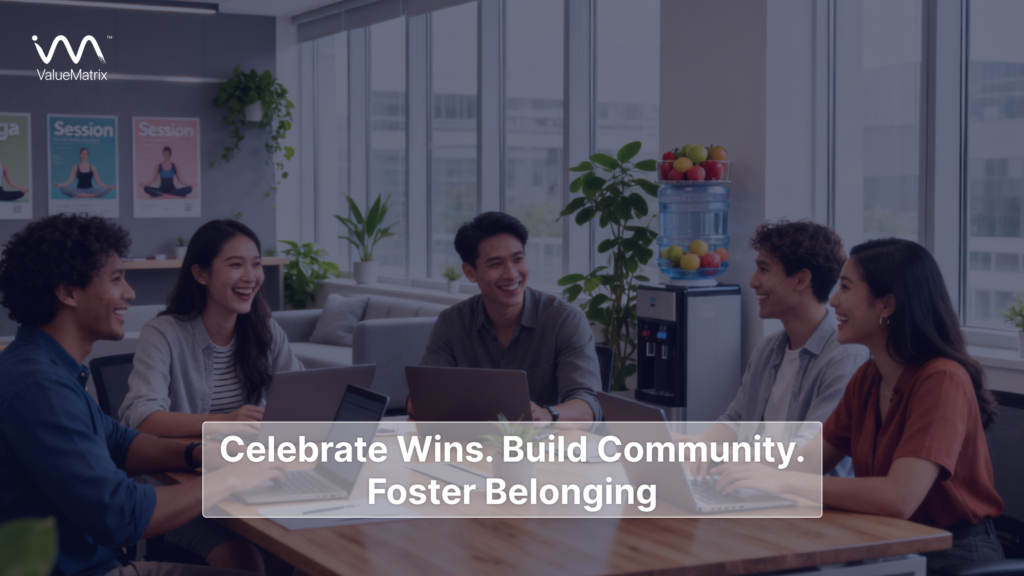
- Celebrate wins – no matter big or small. It creates lasting moments for employees. They feel seen, heard, and appreciated.
- Invest in physical spaces that support collaboration. Such spaces help increase focus and decompress screen time.
How Do You Measure Impact?
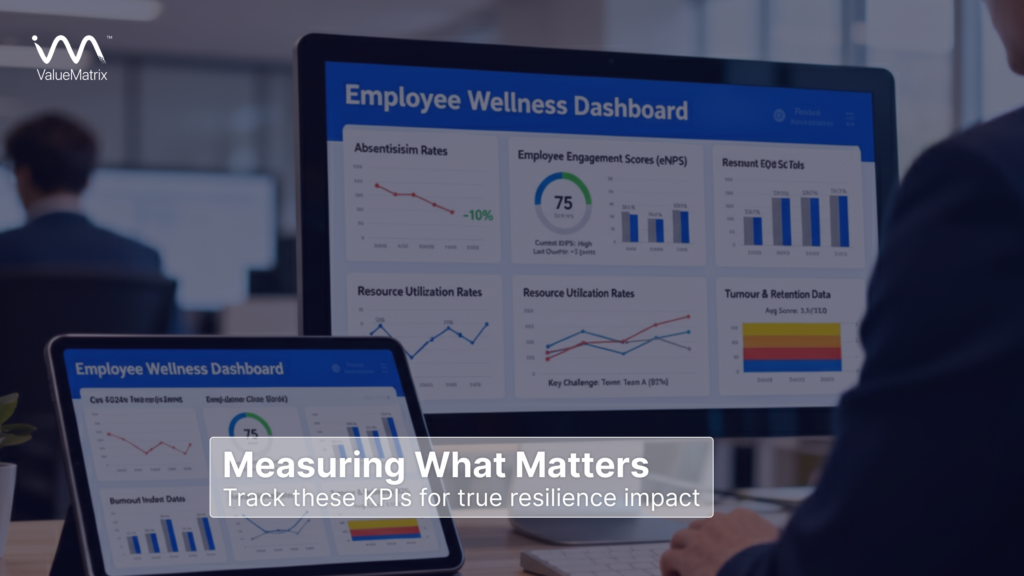
If you can measure something, it can be managed. But setting it up needs a little more effort.
You need to have clear KPIs in order to build a healthy, and resilient workplace. Some of them could be: usage of wellbeing resources, turnover ratio, or employee Net Promoter Score (eNPS). At the same time, you must also look at qualitative metrics. These metrics could be pulse survey feedback, employee stories, and leadership assessment.
- Regularly review these metrics at the executive level. After review, make continuous improvements.
- Share lessons learned and successes as well. It creates collective ownership of wellbeing goals.
- Align wellbeing efforts with business goals. Better engagement and employee well-being will reflect in company’s bottom line.
What is the New Frontier in Building a Healthy and Resilient Workplace?
Personalized well-being is the answer to the question. The one-size-fits-all concept will not work. Modern workplaces succeed by providing individual support. They let employees choose the services and resources they need and tailor them to fit them the best. It can be mental health coaching, financial planning, or a fitness challenge. With technology you can make support more accessible without losing any empathy.
- Build a benefits menu with a different options to choose from. Let employees choose self-care stipends over gym subscription or take a digital therapy over in-person counseling.
- Provide confidential, on-demand services along with in-person programs.
What are Strategies that Can Build Sustained Performance?
Being adaptable is super critical for modern working environments. It can help them recover from challenges ranging from economic downturns and competitive disruptions.
- Company leadership must be ready for a change. They need to undergo scenario planning and “what if” workshops.
- Let the team contribute in decision making. Having members talk about a particular business function can give you a different perspective and solutions. Decision-making doesn’t always need to be the top-down.
- Leaders can be more honest while showing signs of vulnerability. Be worried about the difficulties in front of you, but don’t forget to express confidence in the team to come up with a great solution.
Real World Success Stories:
Johnson & Johnson: Energy Management That Works
J&J has developed one of the most rigorous and evidence-backed healthy and resilient workplace programs in the US corporate world. At the core of the program is a 2.5-day intensive management training developed by their Human Performance Institute, which has shown remarkable success.
The numbers speak for themselves. Eighteen months after finishing the program, employees have shown improvements in their energy levels by 17%. They seem to have a great sense of their general health and purpose of life, which are two of the key drivers of workplace productivity and engagement. Secondary benefits included improved moods, better sleep, higher vigour, enhanced physical activity, and, surprisingly, lower blood pressure.
What makes this program tick lies in its multidisciplinary framework. Participants work closely with trained professionals who integrate performance and exercise psychology along with nutrition to optimize daily energy levels. They develop personal purpose and create actionable short-term as well as long-term goals. The program encourages employees to get feedback from important people in their lives, such as family members, mentors, and coworkers, to create a holistic support system.
The financial impact of the program has been equally impressive. The results showed an estimated annual savings of $565 per employee, with an ROI between $1.88 and $3.92 for each dollar invested. 96% of the employees who were part of the program showed fewer signs of absenteeism. From 1995 and 2009, J&J saw a remarkable decrease in major risk factors across its workforce. It resulted in having a more productive and healthier employees.
Unilever: A Holistic, Data-Driven Approach
Unilever’s Wellbeing Strategy is based on four interconnected pillars: mental, emotional, physical wellbeing, and a sense of purpose. The company believes these areas cannot be addressed individually. True wellbeing needs a comprehensive and integrated approach.
At the center of Unilever’s success is the integration of Mental Health First Aid (MHFA) training into its line management programs. This shift in culture has led to employees being more comfortable reporting their mental health issues as a reason for sickness absence. It has thus allowed the Medical and Occupational Health team to collect more accurate data and have targeted interventions. Since the implementation of MHFA, the absence patterns have become shorter. It has thus resulted in better mental health awarness among workers. Also, it has helped managers to spot potential issues a lot earlier and ask their team members to get help quickly and more efficiently.
In 2023 office survey, around 84% employees said they believe that Unilever cares about their well-being. Since 2021, the number of employees participating in the Team Energy Assessment program has reached nearly 22,000. This program monitors energy levels of employees across different dimensions of well-being including mental, physical, and emotional side. More than 2000 line managers and around 1000 employees have undergone this training on psychological wellbeing and safety in 2023.
The Competitive Edge
A healthy and resilient workplace is not just about the “feel-good” factor. It’s now become a business imperative. Having such a modern and functioning workplace will attract cream talent, drive productivity, and help organizations be agile during turbulent times. With an increasing emphasis on responsible business and ESG, how you support your employees is equally important as the product you sell.
How ValueMatrix Can Help in Bringing Sustainable Change?
With the help of ValueMatrix’s tool, you can bring these strategies into operation. It provides you with data and insights that can help you create stronger systems and frameworks that will help bring your vision to life. With ValueMatrix’s help, you can hire better and create the right culture. It’s the next step in building a more holistic working environment.
FAQs
Start with leadership commitment to build such an environment. It needs to be followed by comprehensive employee wellness programs and policies that create long-term psychological safety and inclusion.
Having a higher resilient workforce can translate into increased productivity, better decision-making, lower absenteeism, and better company reputation.
Organizations need to implement workload management strategies that will provide accessible mental health support. They need to encourage employees to take regular time off and maintain an open and judgment-free communication channel.
Having a psychologically safe workplace helps employees be comfortable in their work and share their concerns. It also helps them to talk about their ideas without the fear of being judged. This not only helps in boosting morale but also increases their engagement.
Technology helps create an accessible channel to mental health support. With the help of wellness apps, digital learning modules, and personalized resources, companies can create a scalable and private safety net for their employees.
About Us
ValueMatrix is an AI-powered talent intelligence platform that helps companies hire better, faster, and without bias. We go beyond resumes to assess skills, behavioral traits, and cultural fit using advanced AI and proven psychological frameworks. Our platform delivers data-driven insights that improve hiring accuracy, reduce time-to-hire, and elevate candidate quality.
ValueMatrix AI enables hiring teams to make confident hiring decisions and build high-performing teams at scale.