
Table of contents
- Introduction
- What Are AI-Powered Workforce Digital Twins?
- How Does Workforce Digital Twin Technology Work?
- What Role Does AI Play in Workforce Decision Simulation?
- What are the Key Use Cases of Workforce Digital Twins in HR?
- Talent Pipeline Simulation
- What are the Benefits of AI-Powered Workforce Digital Twins?
- What are the Challenges and Risks of Workforce Digital Twins?
- How Workforce Digital Twins Aid Strategic Workforce Planning
- Future of Workforce Intelligence Using AI and Digital Twins
- Conclusion — Why Workforce Digital Twins Are the Next Frontier in Workforce Strategy
- FAQ
Key Takeaways
- AI-powered workforce digital twins let organizations simulate hiring, restructuring, and capacity decisions in a virtual environment before committing to them in the real world.
- The core mechanism follows a simple flow: data collection, modeling, simulation, and prediction, turning static HR records into a living, testable model of the workforce.
- AI is what elevates these twins from passive representations into predictive decision engines, using pattern detection and predictive analytics to surface risks and opportunities early.
- The highest-value use cases span workforce demand forecasting, talent pipeline simulation, team performance modeling, and attrition risk detection, all before real outcomes occur.
- The technology isn’t risk-free: data quality gaps, privacy matters, limits on model correctness, and the proper use of employee data all call for careful governance.
- Organizations that adopt workforce digital twins today gain a competitive advantage in long-term planning, positioning them to lead workforce transformation rather than react to it.
Introduction
Every HR leader has faced the same unpleasant reality: workforce decisions such as hiring plans, restructuring, promotions, and attrition responses are usually made with incomplete information and corrected only after the damage is visible in turnover reports or missed targets. AI-powered workforce digital twins are changing that. By building a living, data-driven replica of an organization’s people, roles, and behaviors, companies can now test workforce decisions in a virtual environment before they ever touch the real one.
This shift isn’t just a technology upgrade. It’s a fundamentally different way of thinking about workforce strategy, one where simulation, not guesswork, drives the biggest people decisions a company makes. This blog explains what workforce digital twins are, how they work, where they create the most value, and why they’re becoming central to contemporary workforce planning.
What Are AI-Powered Workforce Digital Twins?
AI-powered workforce digital twins are virtual, data-driven replicas of an organization’s people, roles, skills, and behavioral patterns. Unlike static workforce models, these systems use AI to continuously learn, forecast outcomes, and simulate what-if scenarios—giving leaders a rehearsal space for decisions that used to be made blindly from incomplete information.
A digital twin, in its original engineering sense, is a virtual replica of a physical system and is used to test performance, predict failure, and optimize design without touching the real asset. Applied to people and organizations, this same idea becomes a powerful HR capability.
AI-powered workforce digital twins are virtual replicas of an organization’s teams, roles, skills, and behavioral patterns. Instead of modeling machines or supply chains, these systems create a workforce digital representation: a structured, continuously updated model of who works where, what they do, how they collaborate, and how they’re likely to perform or leave under different conditions.
The role of AI here is critical. Raw data alone doesn’t create a useful twin; it’s AI that turns static employee records into adaptable workforce digital modeling: capable of learning patterns, forecasting outcomes, and simulating “what if” scenarios. The key message is simple: workforce digital twins create virtual models of teams, roles, and workforce behaviors to simulate outcomes before real-world execution, giving leaders a rehearsal space for decisions that used to be made blindly.
How Does Workforce Digital Twin Technology Work?
Workforce digital twin technology follows a four-stage cycle: data collection from HRIS, ATS, and performance systems; modelling that structures this data into linked workforce variables; simulation where planners adjust headcount, skills, or attrition rates and observe modelled responses; and prediction that forecasts capacity gaps, cost impact, and delivery risk before any real change is made.
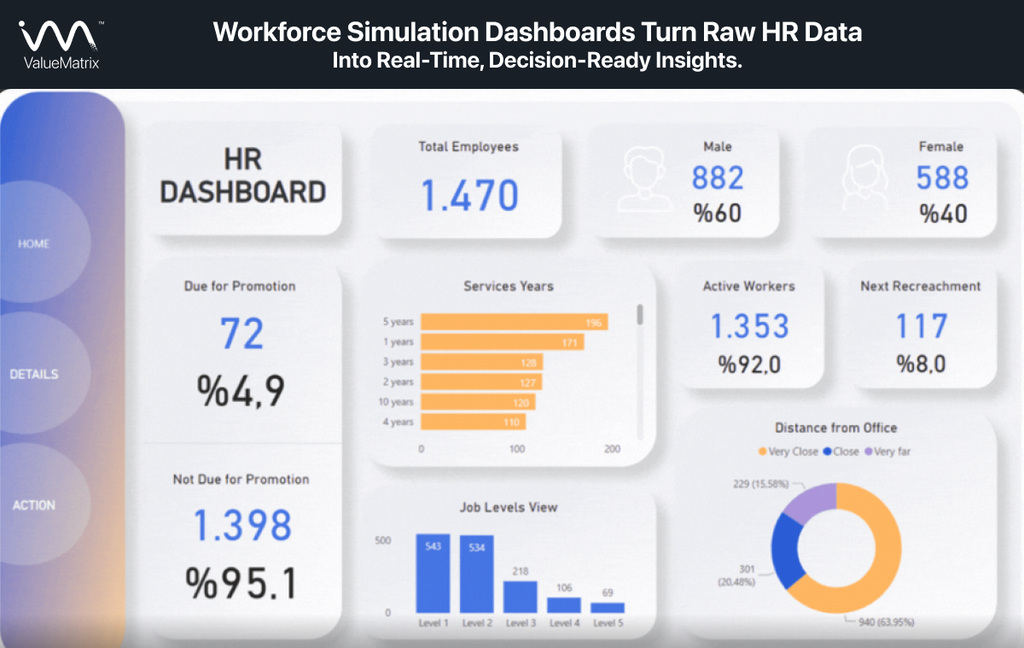
Workforce digital twin technology can feel abstract until you break it into its practical building blocks. At its core, the mechanism follows a simple flow: Data → Model → Simulation → Decision.
- Data collection: The twin ingests HR data like headcount, skills, performance history, engagement scores, org structure, hiring pipelines, and compensation data from HRIS, ATS, and performance systems.
- Modeling: This data is organized into workforce simulation models that represent roles, teams, skills, and reporting relationships as linked variables rather than static spreadsheets.
- Simulation: Inside a workforce simulation environment, planners can adjust variables such as adding headcount, removing a team, shifting skills, and changing attrition rates and watch how the model responds.
- Prediction: The system applies predictive workforce modeling to estimate outcomes: capacity gaps, cost impact, delivery risk, or morale effects before any real change happens.
The value of this flow is found in its practicality. Leaders don’t need to understand the underlying algorithms to benefit. They simply pose a scenario and see a modeled outcome, much like a flight simulator shows a pilot the consequences of a maneuver without any real risk.
What Role Does AI Play in Workforce Decision Simulation?
AI elevates workforce digital twins from passive snapshots into predictive decision engines through three mechanisms: pattern detection that identifies hidden correlations between workforce variables and future outcomes; predictive analytics that forecast attrition, skill gaps, and capacity shortfalls from historical and real-time signals; and workforce intelligence that consolidates these predictions into decision-ready insights.
A digital twin without AI is just a snapshot. AI is what makes workforce decision simulation dynamic, adaptive, and predictive rather than descriptive.
AI contributes in three critical ways:
- Pattern detection — recognizing hidden correlations between workforce variables, such as which combinations of tenure, workload, and manager changes tend to precede resignations.
- Predictive analytics — forecasting future states of the workforce (attrition, skill gaps, capacity shortfalls) based on historical and real-time signals.
- Workforce intelligence — consolidating these patterns and predictions into decision-ready insights, often delivered through workforce intelligence platforms that HR and business leaders can query directly.
Through AI workforce simulation, digital twins stop being passive representations and become active advisors. This is the strong positioning worth remembering: AI transforms workforce digital twins from static models into predictive decision engines, systems that don’t just describe the workforce as it is but anticipate what it will become under different strategic choices.
What are the Key Use Cases of Workforce Digital Twins in HR?
The four highest-value use cases for workforce digital twins are: demand forecasting that projects role and headcount needs months in advance; talent pipeline simulation that models candidate flow and time-to-fill outcomes; team performance modelling that simulates how composition and workload affect team output; and attrition risk detection that identifies high-turnover teams before resignations occur.
Workforce Planning and Demand Forecasting
Digital twins excel at workforce demand forecasting: projecting how many people, and in which roles, an organization will need based on business growth, seasonality, or project pipelines. Paired with workforce capacity planning, this lets leaders see capacity gaps months in advance rather than discovering them during a crunch. Role forecasting adds further precision, helping planners anticipate exactly which job families will be under- or over-resourced.
Talent Pipeline Simulation
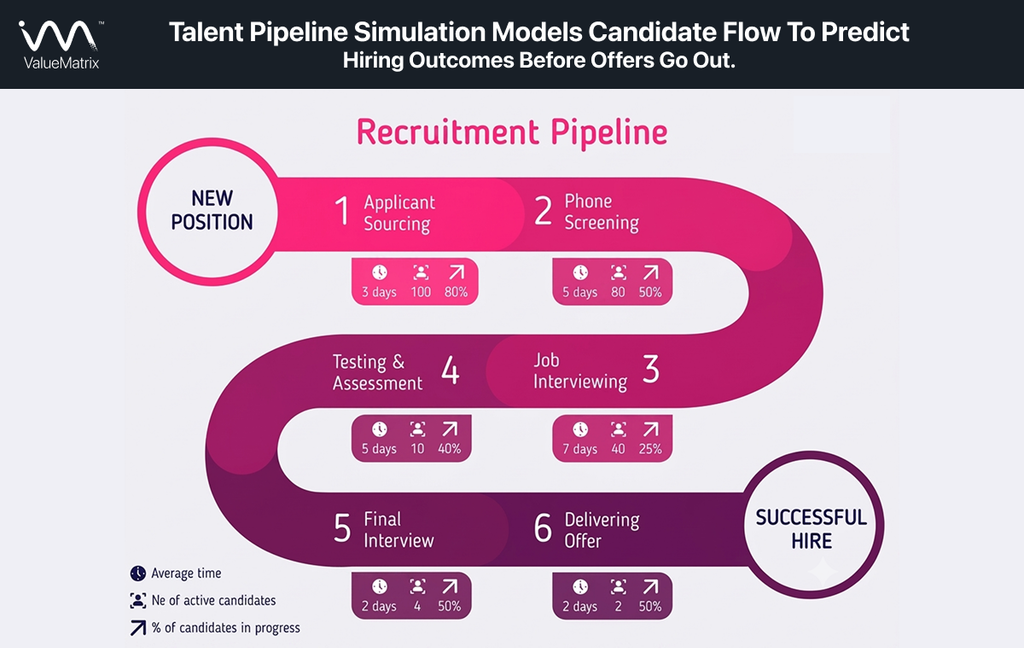
Recruiting decisions carry long-term consequences, and talent pipeline simulation lets organizations model candidate flow through each hiring stage, from sourcing to interviews, offers, and acceptances, to predict realistic time-to-fill and quality-of-hire outcomes. This extends to workforce-readiness modeling, which evaluates whether the incoming talent pipeline will be ready to meet future skill and capacity demands, not just headcount targets.
Team Performance and Collaboration Modeling
Besides individual roles, digital twins support team performance modeling by simulating how team composition, workload distribution, and cooperation patterns affect output. Workforce behavior simulation goes a layer deeper, modeling how individual behaviors such as communication rate, workload balance, and manager interactions aggregate into team-level effectiveness or dysfunction.
Workforce Risk and Attrition Simulation
Perhaps the most valuable use case: workforce risk modeling identifies which teams or roles face the highest turnover risk before resignations occur. Through analyzing engagement trends, tenure patterns, and workload signals, these systems support turnover prediction, giving HR teams a window to intervene: through retention conversations, workload rebalancing, or compensation review, well before losses become final.
What are the Benefits of AI-Powered Workforce Digital Twins?
The real appeal of this technology is found in business outcomes, not technical sophistication. Organizations adopting workforce digital twins consistently report:
- Better hiring decisions – grounded in simulated outcomes instead of intuition
- Reduced workforce risk – through early detection of attrition and capacity threats
- Faster workforce planning – scenario testing in hours instead of weeks of manual analysis
- Improved workforce productivity – supported by workforce productivity prediction that flags bottlenecks before they slow delivery
- Strategic workforce optimization – aligning talent investment with long-term business goals
Together, these benefits feed into a wider capability: workforce strategy simulation, where entire strategic plans such as expansion, restructuring, and skill transformation can be pressure-tested against multiple future scenarios before a single decision is finalized.
What are the Challenges and Risks of Workforce Digital Twins?
No workforce technology is without trade-offs, and honest evaluation matters more than hype.
- Data quality issues: A digital twin is only as accurate as the data feeding it. Incomplete, outdated, or siloed HR data produces misleading simulations.
- Privacy matters: Modeling individual behavior and predicting outcomes, such as attrition, raises legitimate questions about the use of employee data and consent.
- Forecast precision: Workforce behavior is affected by factors like market conditions, personal circumstances, and management shifts that even sophisticated workforce risk modeling can’t entirely capture, so predictions should inform, not replace, human decisions.
- Ethical workforce analytics: Using predictive scores to make consequential decisions about real people demands transparency, fairness audits, and clear boundaries on how predictions are applied.
Accepting these risks isn’t a weakness in the technology — it’s a prerequisite for using it responsibly.
How Workforce Digital Twins Aid Strategic Workforce Planning
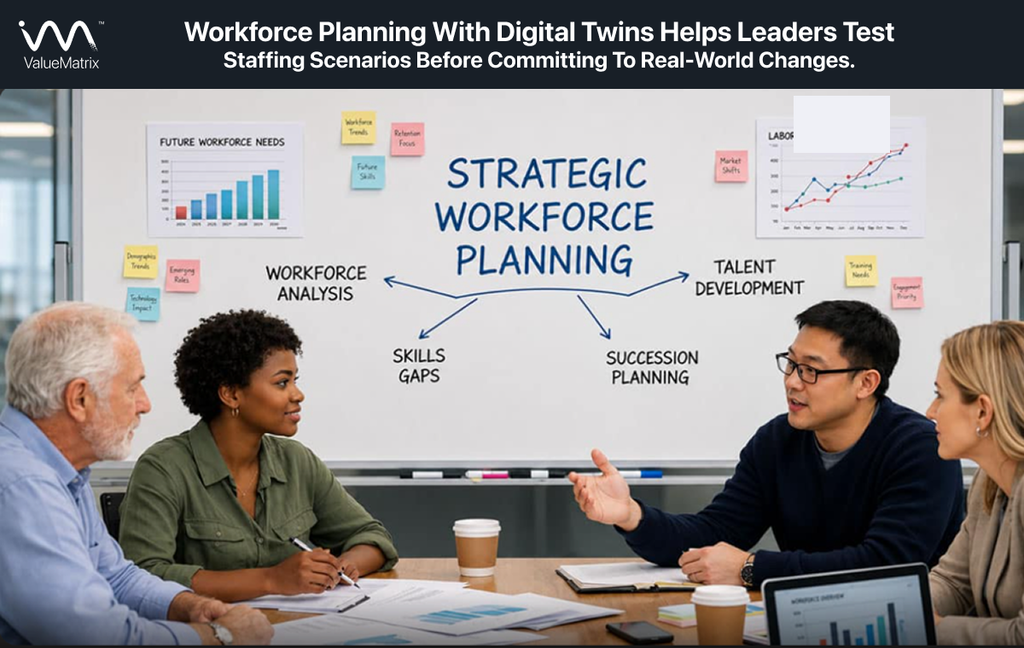
Beyond day-to-day HR use cases, workforce planning with digital twins plays a central role in enterprise-level strategy. Long-term workforce strategies such as entering new markets, restructuring for efficiency, or building future capabilities all depend on understanding how today’s workforce will evolve.
Digital twins support this through workforce skills forecasting, which projects future skill demand against current capability, revealing where reskilling, upskilling, or external hiring will be needed years in advance. This forward view is essential for future workforce readiness, ensuring organizations aren’t just reacting to talent shortages but intentionally preparing for them as part of their core business strategy.
Future of Workforce Intelligence Using AI and Digital Twins
Going forward, workforce digital twins are set to evolve from planning tools into always-on strategic infrastructure. Several trends point the way:
- Predictive workforce ecosystems, in which digital twins connect among departments, geographies, and even partner organizations to model workforce impact at a much broader scale.
- Digital-first workforce management, where scenario simulation becomes a standard step in every major people decision, not a specialized exercise.
- Autonomous workforce decisions, where AI systems progressively recommend — and in narrower, well-governed cases, execute — routine workforce modifications based on simulated outcomes.
Supporting this future are increasingly sophisticated workforce visualization models and workforce simulation dashboards, giving leaders real-time, interactive views of workforce health rather than static quarterly reports. As these tools mature, workforce intelligence will shift from a reporting function to a future-oriented, continuously simulating capability embedded in everyday leadership decisions.
Conclusion — Why Workforce Digital Twins Are the Next Frontier in Workforce Strategy
AI-powered workforce digital twins represent a genuine change in how organizations approach people decisions, replacing after-the-fact analysis with before-the-fact simulation. From workforce demand forecasting and talent pipeline simulation to attrition risk and long-term strategic planning, this technology touches nearly every major HR decision point while remaining grounded in real business outcomes such as reduced risk, faster planning, and stronger productivity.
The organizations moving early aren’t just adopting a new tool — they’re building an entirely new muscle for workforce strategy. Organizations that simulate workforce decisions today will lead workforce transformation tomorrow.
FAQ
1. What are workforce digital twins?
Workforce digital twins are virtual, data-driven replicas of an organization’s people, roles, and teams. They mirror real workforce frameworks and behaviors so leaders can test decisions in a virtual environment before applying them in the real world.
2. How do AI-powered workforce digital twins work?
They work through a continuous cycle of data collection, modeling, simulation, and prediction. HR and operational data are structured into a workforce model, scenarios are run inside a simulation environment, and AI generates predictions about likely outcomes for each scenario.
3. What are the benefits of workforce digital twins in HR?
Main benefits include better hiring decisions, reduced workforce risk, faster workforce planning, improved productivity through early bottleneck detection, and stronger alignment between talent strategy and business goals.
4. How are workforce digital twins used in hiring decisions?
Through talent pipeline simulation, organizations can model candidate flow, predict time-to-fill, and assess whether incoming talent will meet future skill and capacity needs, helping refine hiring strategy before roles go unfilled or pipelines stall.
5. Can workforce digital twins predict employee turnover?
Yes. Through analyzing engagement, tenure, workload, and behavioral signals, workforce digital twins support turnover prediction and workforce risk modeling, flagging high-risk teams or roles early enough for HR to intervene.
6. What data is required to build workforce digital twins?
Typically, organizations need HRIS data, applicant-tracking data, performance records, engagement survey results, compensation data, and organizational structure information. Data quality and completeness directly affect the accuracy of the resulting simulations.
7. Are workforce digital twins secure and ethical?
When deployed responsibly, yes—but this demands careful attention to data privacy, employee consent, clarity about how predictions are used, and ongoing fairness audits to prevent biased or harmful decision-making through automated predictions.