
Table of contents
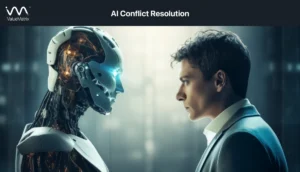
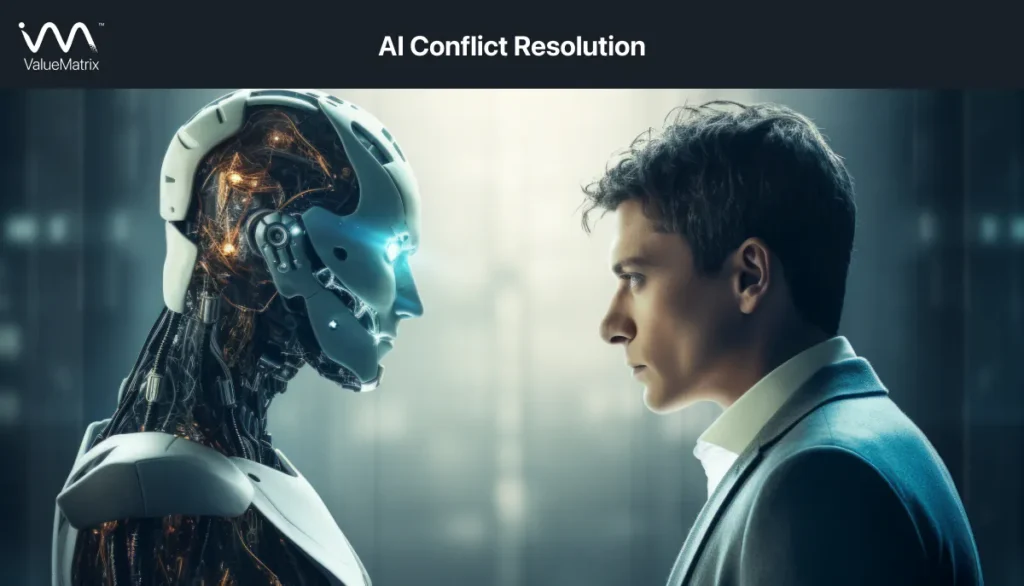
Whether it’s miscommunication among dispersed teams or generational tensions regarding hybrid work policy, conflict is a fact of life in the fast-moving workplace. It also drains productivity and morale. This is where AI conflict resolution comes in: artificial intelligence acting as a neutral arbitrator, setting the stage for companies like ValueMatrix.
AI conflict resolution tools are transforming conflict management and resolution for organizations, businesses, and individuals with data-driven insights and objective recommendations. This blog post will explore AI conflict resolution technology, applications, and benefits, and include ValueMatrix case study examples and a vision of the future of conflict resolution. If you’re an HR manager at a scaling startup, or a supervisor or manager trying to resolve some team conflict, conflict management and AI can help remove the bias.
The Rising Need for AI in Workplace Conflict Management
Gallup found that disengaged employees, which can be caused by workplace conflict, cost the U.S. economy $550 billion each year. In India, diverse workforces are influenced by the cultural details of high-pressure tech environments, leading to varied conflicts over promotions/work distribution.
Customary conflict resolution methods rely on human resources (HR) mediators, who may be biased or have heavy workloads, while AI could automate the process. AI uses communication frequency, sentiment and historical trends to give objective advice. Sentiment analyzers can compare the tone of emails or Slack threads and flag rising tension.
ValueMatrix is a pioneer in HR recruitment automation. The company’s AI technology can also be used for conflict modules and integrated with ATS systems.
Understanding AI Conflict Resolution: Core Mechanisms
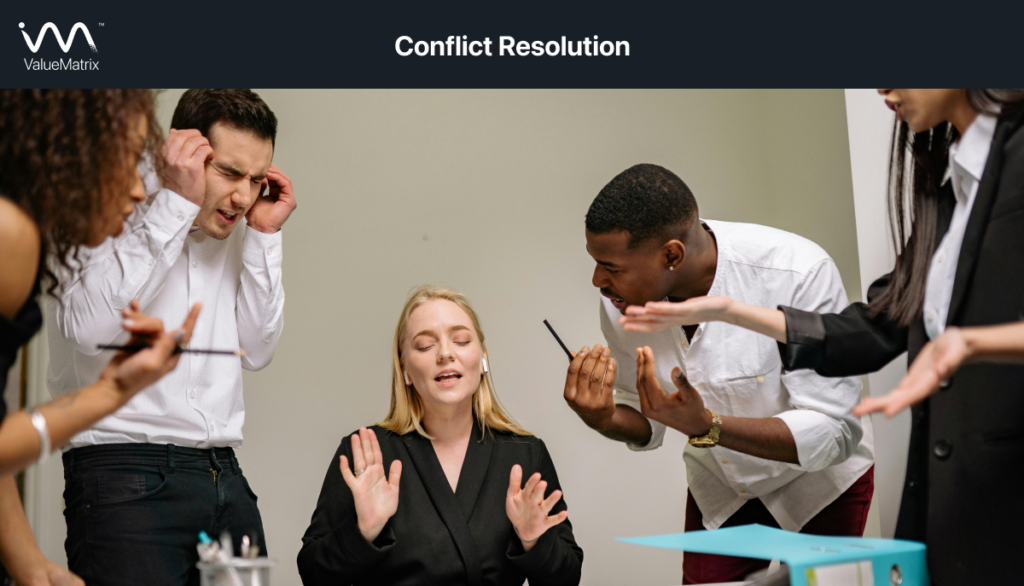
It’s all about grasping how algorithms understand mediation, and how AI uses natural language processing (NLP), machine learning (ML), and emotional AI to interpret conflicts.
Key Components of AI-Powered Systems
- Sentiment Analysis: Tools such as IBM Watson Tone Analyzer can determine if the text denotes anger, frustration, or sarcasm.
- Pattern Recognition: ML can help models detect when problems become routine, such as ”always late” complaints.
- Predictive Analytics: Forecasting escalation risks using historical data.
- Recommendation Engines: Solutions can be as specific as scheduling mediated calls.
ValueMatrix’s AI engine processes multilingual inputs and is ideal for Indian enterprises.
Here’s a quick comparison of AI vs. traditional methods:
| Aspect | Traditional Resolution | AI Conflict Resolution (e.g., ValueMatrix) |
| Bias Level | High (human subjectivity) | Low (data-driven neutrality) |
| Speed | Days to weeks | Minutes to hours |
| Scalability | Limited to HR bandwidth | Handles thousands of cases |
| Cost | High (training, time) | Low (subscription-based) |
| Accuracy | 60-70% (varies by mediator) | 85-95% (refined models) |
Anonymity is also important as employees can submit complaints via chatbots and receive instant answers without fear of being identified.
AI-Driven Conflict Management Strategies in Action
Integrating AI conflict resolution tools with established human resources (HR) tech stacks is vital. ValueMatrix, for instance, embeds conflict resolution within its recruitment automation platform.
Strategy 1: Early Detection and De-escalation
AI analyzes collaboration tools (e.g., Microsoft Teams) for red flags. ValueMatrix warns of overloaded candidate pipelines to avoid conflicts between recruiter teams.
Strategy 2: Personalized Mediation Plans
Employee profiles are used by the AI to customize plans, with ValueMatrix noting the importance of recruitment personas (e.g., async for high-volume hirers).
Strategy 3: Post-Resolution Analytics
AI tracks the results and improves future interventions. ValueMatrix’s dashboard showed a 40% faster resolution for pilot firms.
For example, a Mumbai-based fintech integrated ValueMatrix with its Jira system, reducing HR tickets by 35%.
Benefits of AI in Conflict Management for Modern Workplaces
Along with the general benefits of AI-based dispute resolution, ValueMatrix offers even more.
- Improved Fairness: The algorithms eliminate biases using the ValueMatrix’s DEI-tuned models.
- Productivity Increase: SHRM estimates 20-30% of reclaimed hours and productivity increases
- Employee Retention: 50% lower turnover with improved retention forecasting.
- Cost Savings: Up to $1.5M/year, with an ROI of 3x in Year 1.
- Cultural Sensitivity: Support for Indian work environments in regional languages.
This allows HR tech leaders to control and influence recruitment using AI-powered conflict resolution.
Conclusion
AI conflict resolution empowers HR. ValueMatrix provides effective AI conflict resolution frameworks. Book a demo at valuematrix.ai.
FAQs
ValueMatrix automatically detects and resolves issues in recruitment workflows.
AI conflict resolution is the use of machine learning to resolve workplace disputes objectively.
The method is fast and scalable, and reduces bias, but can be augmented by human empathy in some cases.
Yes, if encryption and anonymization tools are implemented according to India’s DPDP Act.
Top AI-driven conflict management strategies include early detection, personalized treatment, and analytics-driven follow-ups.