
Table of contents
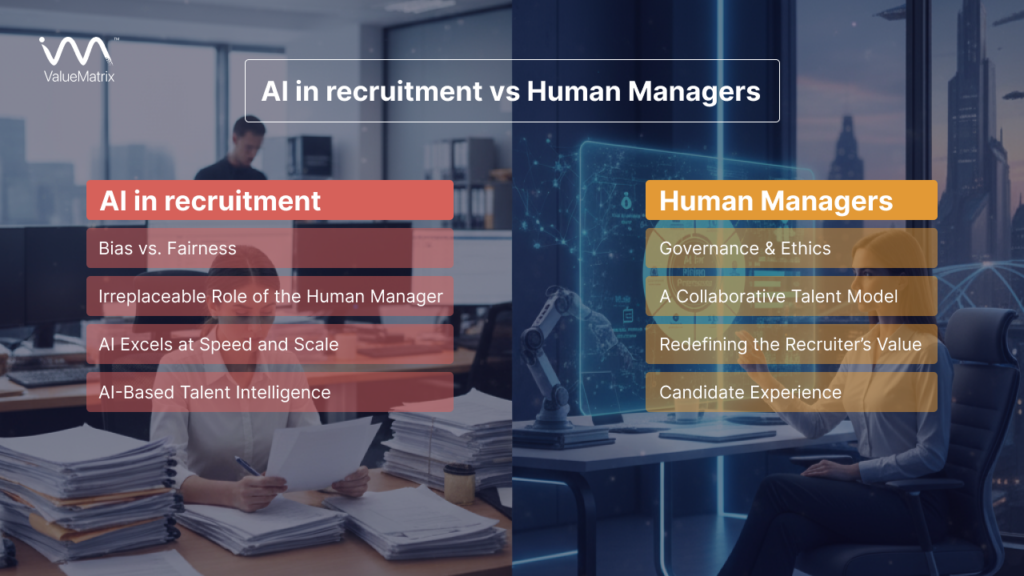
For the CEOs and CHROs, it is to maximize returns on investments made in talent vis-à-vis the roles technology and people play in the hiring process. The speed and efficiency with which AI in recruitment applications are managed from routine tasks process massive amounts of data for recruitment into unparalleled objectivity. The emotional intelligence, strategic judgment, and all-important human touch that assessing culture fit and top talent requires are, of course, something a recruitment manager has. The best strategy, therefore, is notAI vs human recruitment; it’s AI in the recruitment process to augment human management in making high-value human-centric decisions.
What is AI-Based Talent Intelligence?
AI-Based Talent Intelligence is a high-tech algorithm and machine learning analytics that works by analysing data from both the internal and external clinical environment for filling a position today, but rather for designing future talent needs. This is a transformative strategic upgrade from traditional, often reactive posting and manual screening into those bright, shiny pipelines. Implement AI in recruitment, and you will be set for predictive power when it comes to knowing who you need, where to find them, and how likely they are to succeed, before that even happens in the mind of the hiring manager.
That makes the whole recruitment function directly contributive to future business strategy and readying the workforce to match future market needs. From transactional function to a high-qualified analytical strategy.
The Shift from Keywords to Predictive Modelling
Keyword scanning used to be the primary method for screening a CV. Talent Intelligence uses predictive models that will check historical success data (for example, transient employees, appraisal score rating, as well as the skills) and then draw prediction conclusions that indicate which candidates are most likely to thrive within your company culture and particular role.
Core Functions of AI in Recruitment
AI in recruiting eases the handling of heavy loads in hiring. It instantly screens thousands of resumes, automates interview schedules, brings application statuses 24/7, and identifies possible candidates in your already dusty old applicant pools.
Strategic Impact on Time and Cost
The companies that are moving into the domain of AI in their functions report astonishing results, such as a reduction of as much as 70% in time-to-hire for some, and reductions up to 30% in cost-per-hire. This will be the important competitive advantage in acquiring the best talent faster.
The summary is that AI is your organisation’s tireless, objective data analyst; it allows your human managers to focus only on those candidates meeting a proven profile for success.
Why AI Excels at Speed and Scale
Algorithms process massive quantities of information with unmatched speed and consistency. AI in the recruitment process is just an obligation to survive, given that a majority of giant companies around the world receive thousands of applications every week. AI doesn’t get tired-it won’t take a day off-and would process every single application based on the same objective criteria.
That means operating 24/7 at a huge scale to respond instantly to candidates, revolutionising the CAS experience, and ensuring you don’t lose a top role to a slower competitor. Speed in hiring is now one of the critical metrics of any business.
Processing Massive Applicant Volumes
Thousands of resumes and profiles would be put through AI processing in a few minutes; a human team of recruiters would take an entire week to complete what AI does in minutes. Talent continues to flow through the pipeline, assuring rapid movement without interruption.
Ensuring Consistent, Objective Screening
AI operates on standardised and predefined criteria for all applicants to ensure fairness and consistency among all hiring managers and locations. Such objectivity is also crucial for compliance and the reduction of subjective judgment in the early screening phases.
Predictive Sourcing for Future Skills
AI tools neither just skim off current applicants; they also search the outside world, whether it be LinkedIn or industry skill trends, to source passive talent proactively for roles that may be needed in the next 12 to 18 months.
The true strength of the machine lies in its repetitive, high-volume tasks, which frees the human manager for strategic human interaction.
The Irreplaceable Role of the Human Manager
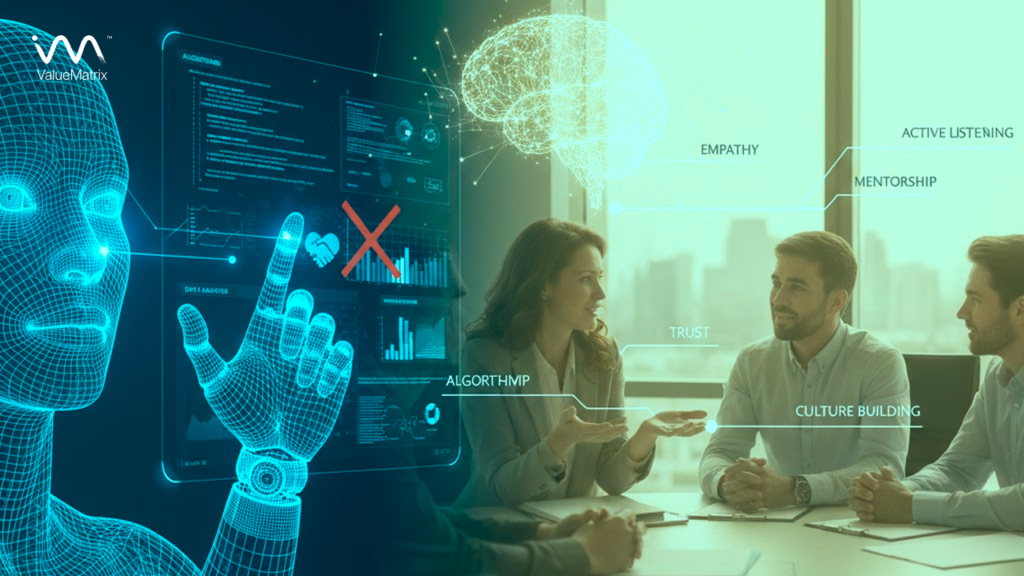
While algorithms can carry much weight, the recruitment process remains a people business. A human recruitment manager provides the context, empathy, and strategic judgment that no algorithm can replicate. Few things are as critical in hiring as its high stakes, influencing team dynamics, culture within the company, and long-term success within the organisation. All of these depend most on human intuition and experience, not just data points.
Your human managers play important roles as cultural gatekeepers and brand ambassadors. They help foster a work scene for new hires that reflects not just the skills they have but also shared values and emotional makeups for succeeding in your organisation.
Assessing Cultural and Team Fit
AI is capable of scoring skills, but to understand communication style, adaptability, and how personality and values fit within an existing team dynamic and overall company culture, it is only a human manager who can judge.
The Power of Emotional Intelligence (EQ)
A human recruiter can pick up on small signs: changes to the tone of voice, body language, and the emotional context behind a candidate’s career choices or long gaps in their resumes. This is invaluable information for making a judgment, one that is quite complex among people.
Negotiation, Trust, and Relationship Building
Recruitment means selling the opportunity and establishing trust. Only a human negotiates salary, handles sensitive requests, and offers the personalised reassurance that wins a top candidate for your offer over a competitor’s.
This is where the human difference comes in. It means that for that person, for that student, for that human, skills have been acquired, but they are considered a valued individual in the organization.
AI in Recruitment Process: Bias vs. Fairness
The ideal promise of AI in the recruitment process is the removal of bias, but in reality, things are a lot more complicated. Aeons ago, AI could pick any number of factors that may affect a person, including unconscious human bias, and ignore public names or other demographic touchstones. But the risk is huge: algorithmic bias. The moment you expose an AI to historical hiring data in training it, it will just repeat the same unfair hiring action, and even copy its prejudices
As executive leaders, your position has to focus on governance. The human managers would need to act as the final checks on ethics, which meant really auditing the AI output to ensure it promotes diversity and fairness, not the opposite.
How AI Can Mirror Historical Bias
If an AI is trained on data stating that successful engineers over the past 20 years mostly were males, it might learn to favour male-coded language or experience patterns, thus excluding candidates who are women and highly qualified.
The Human Manager as the Ethical Auditor
It’s a job for the human manager to keep a watch on the AI short lists. If, say, it eliminates over a certain type of group population, the human team must get in, investigate the data inputs, and either correct the underlying code or amend the training data.
Achieving Equitable Outcomes through Collaboration
The most optimal fairness is partnership: AI quickly identifies objective skill-match or match, and then the human manager’s judgment covers to ensure that the final pool for interview is diverse with equity in mind at the company.
Fairness is not only from the installation of AI, but also from strategic steering with ethical human oversight and intervention.
The Critical Element: Candidate Experience
The hiring process, as perceived by CHROs and CEOs, is a direct representation of the brand of your company. Heavy reliance on recruitment AI automation risks creating a frigid and frustrating experience for the crème de la crème of candidates, and rightfully so. To further kill the offer acceptance, fewer candidates will even recommend your company if they feel they were machine-processed.
Leverage your AI, minimize administrative time, even as the human touch is brought in to ensure excellent interactions. Protecting your employer brand requires a seamless humanistic candidate experience.
The Impersonal Risk of Over-Automation
Candidates diminish in excitement if they feel they were somehow treated by a robotic mechanism from whichever touchpoint, ie, from application confirmation to initial screening. Poor candidate experience by research has been found to lure candidates into accepting positions with rival companies, with even less pay.
Maintaining Human Touchpoints in the Process
Let AI do the updates and scheduling; let the human manager do the personal outreach, collect feedback from interviews, and provide empathy for questions or concerns. This helps in creating a lasting Employer Brand Building.
Building a Lasting Employer Brand
Recruiters define your business. Even if a candidate is rejected, a positive, high-touch experience with a knowledgeable manager makes a solid positive impression, thereby nurturing the talent pipeline for the future. Your brand is defined by how you treat candidates. Use AI for efficiency while giving warmth and respect to the human managers.
Redefining the Recruiter’s Value
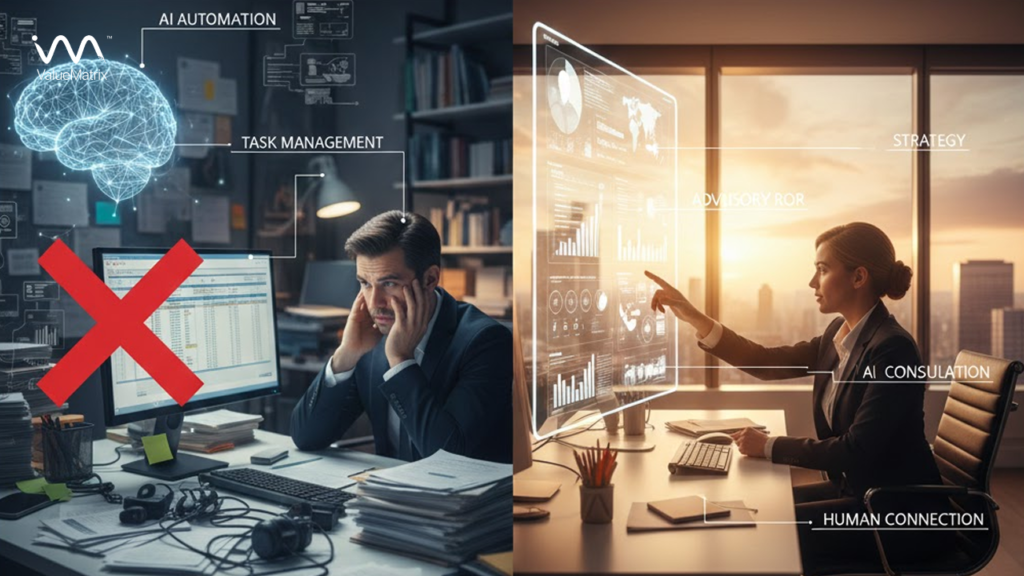
Collaborative is the future of talent acquisition. AI-based Talent Intelligence serves as the engine of efficiency, data, and scale, while Human Recruitment Managers provide the steering wheel of strategy, empathy, and ethical judgment. The successful organisations in the market will reconcile the debate on “v.s.” into an augmentation model so that every strategic decision is a blend of machine intelligence with irrepressible human wisdom.
Statistics: The Hard Facts of AI in Recruiting
| Fact/Figure | Source | Implication |
| Time-to-hire shrinks by as much as 70 per cent, with a 30 per cent reduction in hiring costs. | MokaHR | Direct, quantifiable gains in efficiency and cost reduction are mandatory. |
| Candidate matching accuracy comes through AI at an 85 per cent rate, as opposed to the reliable but human means, which give around only a 60 per cent score. | MokaHR | Algorithms deliver superior precision in skills-based matching. |
| A total of 87 per cent of the companies today employ AI at least in part for recruiting. | Homans | AI adoption is mainstream; it’s a competitive necessity, not an option. |
| 52 per cent of companies have reported an improvement in candidate experience through the use of chatbots to manage scheduling and frequently asked questions. | SHRM / AIHR | Automation, when used correctly, improves, not harms, the candidate experience. |
Case Studies: Real-World AI-Human Balance
Case Study 1: Unilever’s Hybrid Recruitment Model
- The Fix: Unilever decided to use AI to conduct the screening for millions of applications through gamified assessments for an objective measurement of skills. In the last mile, it was a fully human, personal video interview.
- The Result: The process reduced the time-to-hire from four months to two weeks, thereby considerably enhancing efficiency, while holding human assessment in reserve for cultural fit.
Case Study 2: IBM’s Boost in Recruiter Productivity
- The Fix: AI tools had been used for automating candidate sourcing, scheduling, and screening. The AI was engaged in providing a high-quality shortlist and taking care of all administrative correspondence.
- The Result: This strategic implementation of AI opened up a 30% overall productivity increase for recruiters. The human managers are now spending less time on administration and more time establishing relationships with top-tier candidates.
FAQs
No. AI eliminates unconscious human bias, as it ignores demographics, but it can also create algorithmic bias when training data is based on history with bias. Human managers should continuously audit and improve the system to truly prepare it for fairness.
Negotiations, the final judgment on cultural fit and team fit, all sensitive discussions (like feedback or rejections), and providing mentoring or career advice should be exclusively handled by human managers.
Recruiting software automates tasks, such as scheduling. Talent Intelligence is about machine learning and predictive analytics, giving foresight and being strategic- identifying future skill gaps, predicting turnover, and advising where the best talent is going to be in the next 6-12 months.
AI allows quicker and more transparent communication (such as instant chatbot responses and immediate application acknowledgements). Together, great efficiency and expediency constitute a very strong modern employer brand.
About Us
ValueMatrix is an AI-powered talent intelligence platform that helps companies hire better, faster, and without bias. We go beyond resumes to assess skills, behavioral traits, and cultural fit using advanced AI and proven psychological frameworks. Our platform delivers data-driven insights that improve hiring accuracy, reduce time-to-hire, and elevate candidate quality.
ValueMatrix AI enables hiring teams to make confident hiring decisions and build high-performing teams at scale.